Following an incident this month that claimed the life of a Clark Atlanta University student, neighbors and school leaders are pushing for traffic control measures at an intersection they call “deadly” in a densifying section of the city.
A week after it was launched, a Change.org petition that calls for installing a four-way stop sign at Glenn Street and Hank Aaron Drive in Summerhill has gathered more than 2,100 signatures.
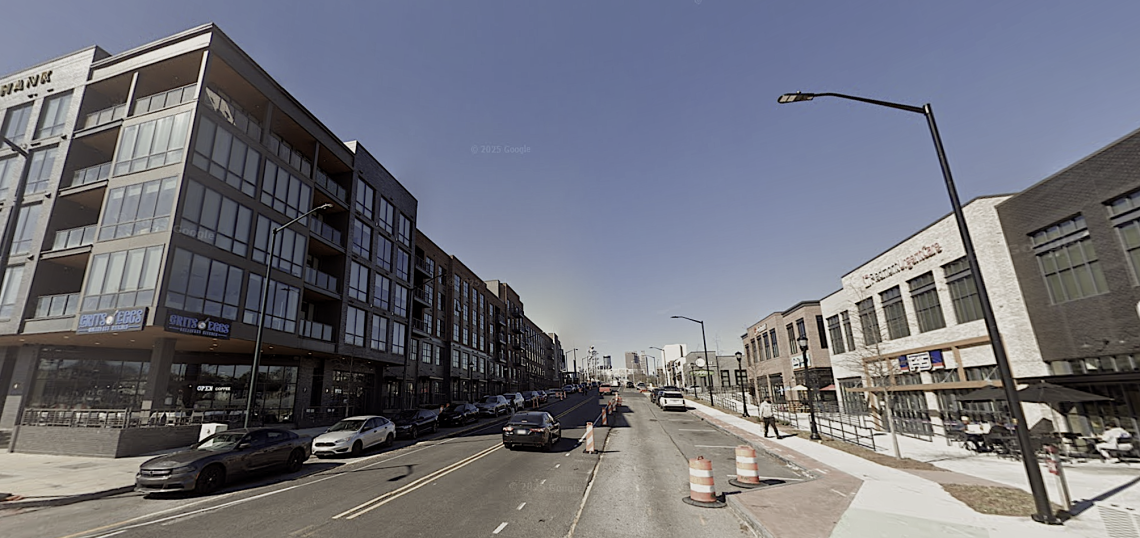
The intersection in question neighbors hundreds of newer apartments and rows of commercial storefronts near a Publix on what been vast asphalt parking lots for the Atlanta Braves’ Turner Field.
The Summerhill district has become popular for neighbors and students at nearby universities, such as Morgan Gamble, a 21-year-old studying mass media at Clark Atlanta who was killed in a vehicle collision at the intersection at about 11:15 p.m. Oct. 13.
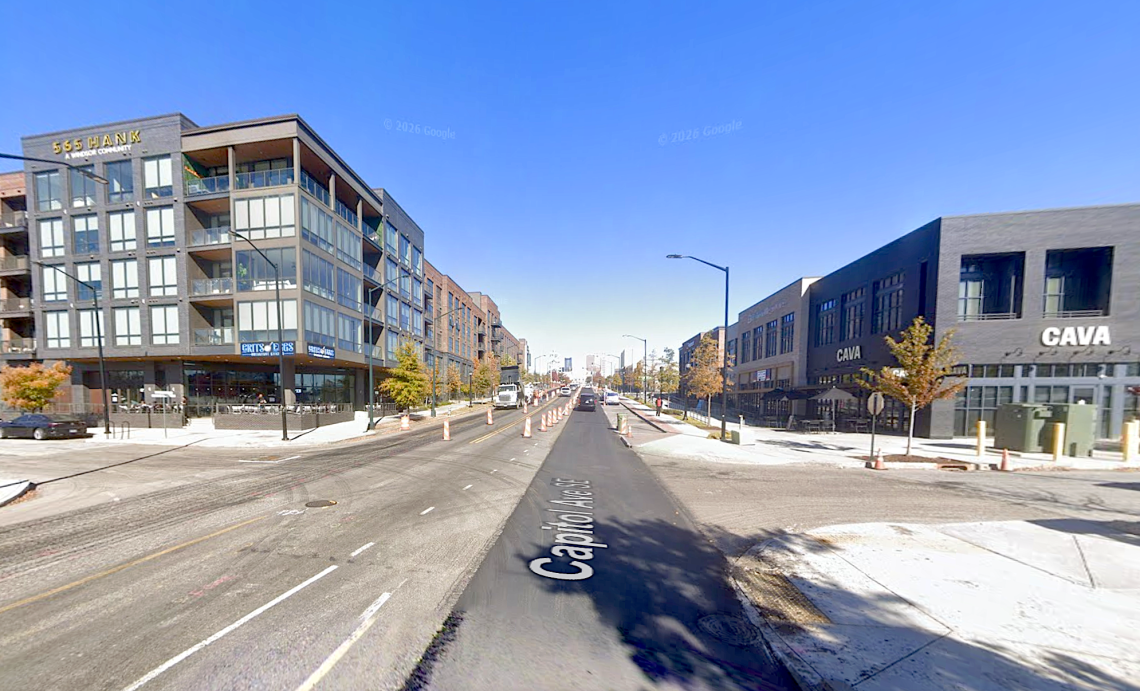 Looking north toward downtown, the Summerhill intersection in question in November 2025. Google Maps
Gamble was reportedly driving west on Glenn Street in a 2016 Mazda CX5 when a driver speeding northbound in a Lexus on Hank Aaron Drive collided with her vehicle. According to Atlanta police, the northbound driver, Nikolai Dunford, was speeding at 94 mph in 35 mph zone. He faces charges of speeding, reckless driving, and driving-homicide by vehicle, first-degree, according to 11Alive.
The Change.org petition, organized by the Clark Atlanta University NAACP, calls for the City of Atlanta to convert the intersection where Gamble died into a four-way stop.
Organizers cite National Highway Traffic Safety Administration statistics showing intersections upgraded to include appropriate signage and signals see significant drops in traffic accidents and fatalities—and an Institute of Transportation Engineers study that indicates intersections with stop signs can reduce pedestrian injuries by up to 50 percent.
“This intersection, located near Yugo Summerhill [university housing], is a critical crossing point not just for university students, but for local families, residents, and countless daily commuters,” the petition reads. “The current lack of adequate traffic controls there poses a grave safety risk to everyone, especially students who cross it en route to classes and other activities.”
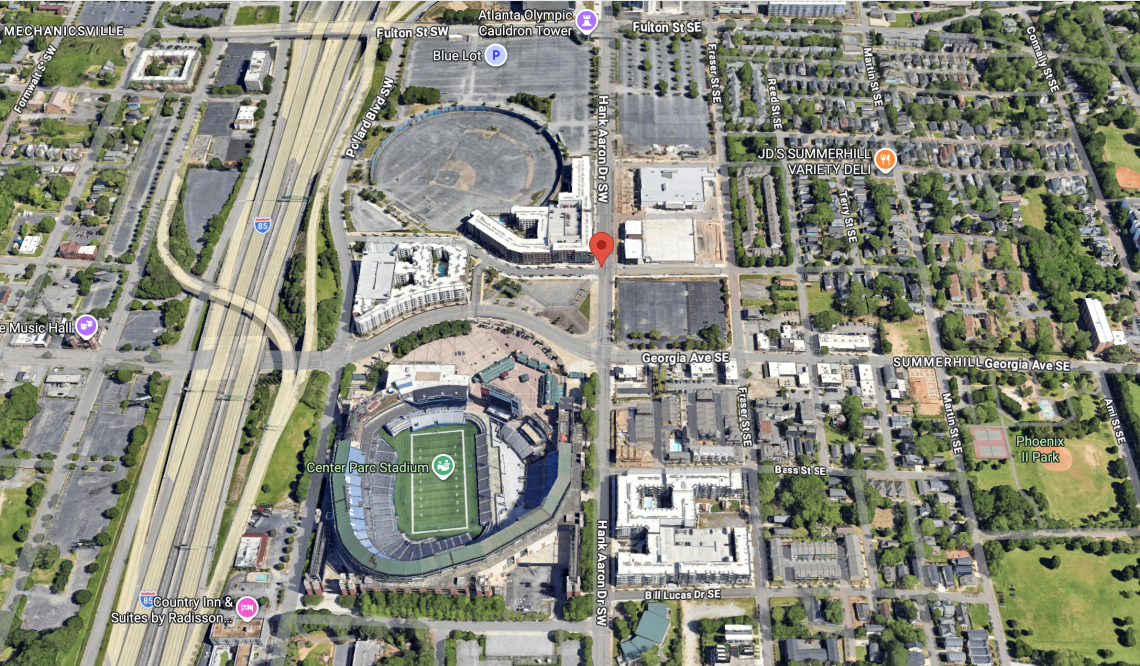 The intersection of Glenn Street SW and Hank Aaron Drive (in red) in relation to Georgia State University's Center Parc Stadium and other landmarks. Google Maps
…
Midtown’s slowdown success
Across the city in Midtown and Home Park, pedestrian and transit safety advocates say a new system of protected bike lanes is doing its intended job of slowing traffic and upping protections on a busy crosstown route.
According to Propel ATL, a nonprofit transportation safety advocacy group (formerly Atlanta Bicycle Coalition), the 14th Street “bike and roll” lane recently built by Georgia Department of Transportation has succeeded in reducing speeds for the majority of drivers to between 31 and 37 mph, as preliminary observations have shown.
Prior to the bike lane installation, most drivers in the area traveled at speeds higher than 37 mph, according to Propel ATL officials, who called the findings an “encouraging indication of potential safety benefits.”
The advocacy group held a ceremonial ribbon-cutting Oct. 21 on 14th Street to celebrate what they call a milestone for Atlanta’s expanding network of protected routes for biking, scooters, and other forms of “rolling.” Propel ATL, the Home Park Community Improvement Association, and other neighbor and commuter groups had pushed for the alternate transportation infrastructure.
“The bike lane on 14th Street makes the parks, museums, restaurants, and other amenities in Midtown and West Midtown more accessible to me and my family,” Aubrey Knudson, a nearby resident and supporter, said in an announcement. “We’re excited to explore more now that we won’t have to deal with traffic or parking!”
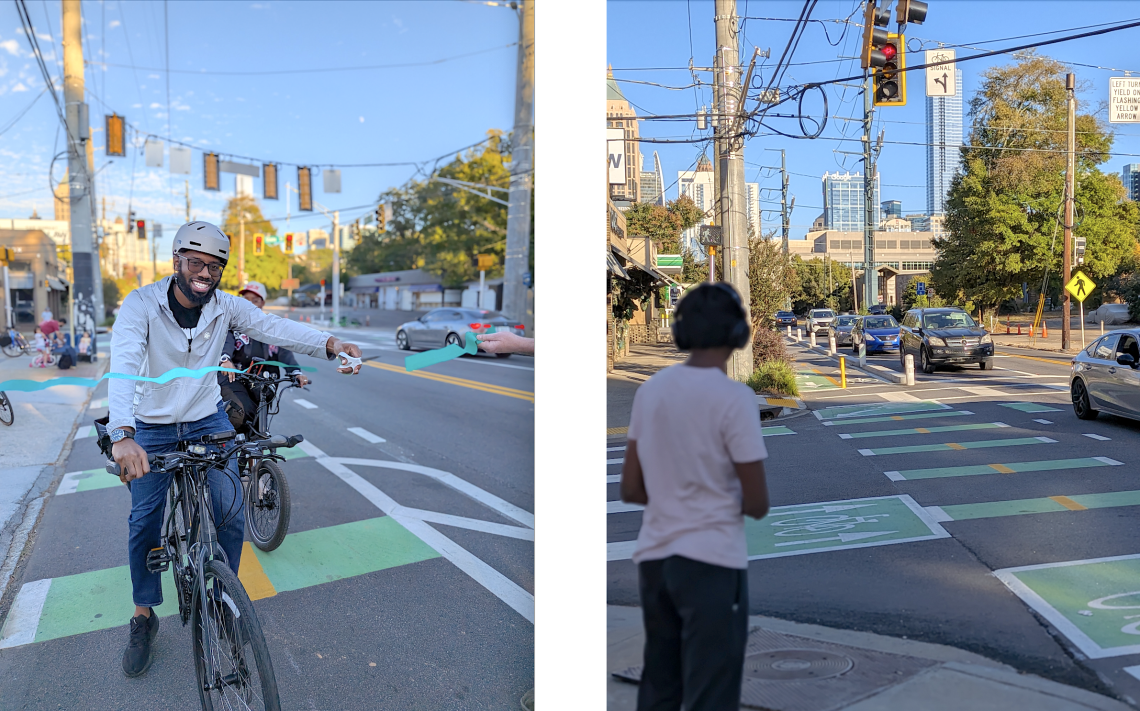 Courtesy of Propel ATL
This past spring, GDOT made quick work of adding the new two-way cycle track on14th Street (also known as Georgia State Route 9) that spans 1.1 miles. It links with existing wide sidewalks to connect Midtown’s core residential and commercial district with Home Park and (almost) the growing West Midtown section that includes The Interlock district and Star Metals.
Spanning between Barnes Street and Northside Drive, the buffered bike lanes are situated on the north side of 14th Street. Most of the roadway was changed from four lanes (two through-lanes in each direction) to two lanes, with a left-turn lane at intersections.
Additional safety measures include Rectangular Rapid Flashing Beacons at crossings for people on foot and bike.
 Where the concrete barrier ends/begins, approaching the downtown Connector. Josh Green/Urbanize Atlanta
Previously, the stretch of 14th Street in question averaged two pedestrian crashes and one documented bicyclist crash per year, in addition to 16 left-turn crashes. According to GDOT’s estimates, the changes will reduce all crashes on the section of 14th Street in question by nearly 50 percent.
The project introduces the safer means of getting across the Connector for non-drivers the area has always lacked. Before, GDOT tabulated that 42 percent of bicyclists who chose to ride 14th Street rode on the sidewalks.
...
Follow us on social media:
Twitter / Facebook/and now: Instagram
• Alternate transportation news, discussion (Urbanize Atlanta)