

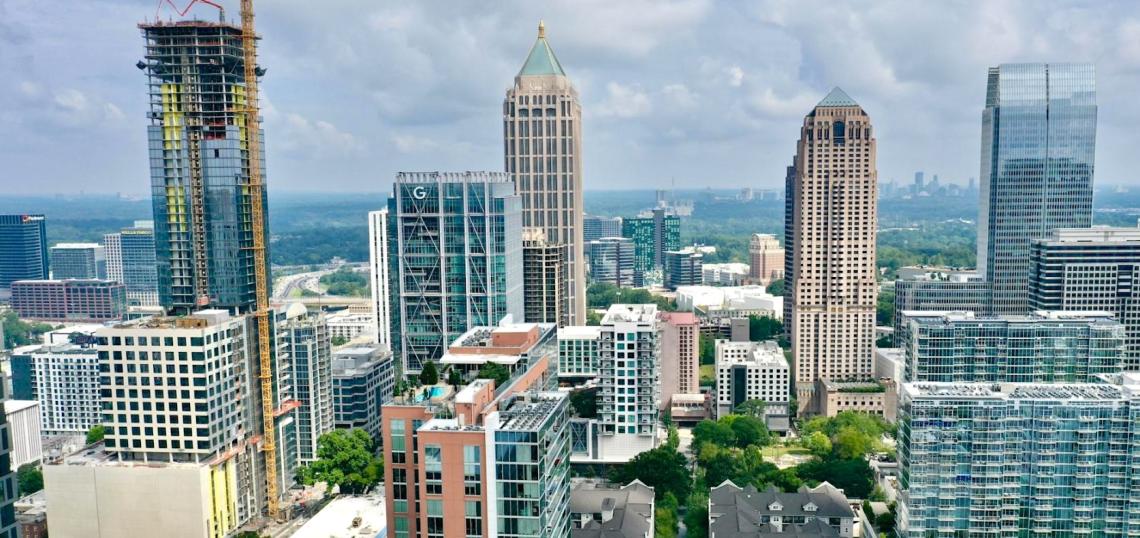
No, that’s not a mirage: The skies over Midtown—metro’s Atlanta booming epicenter of post-Great Recession, high-rise apartment growth—are almost totally devoid of construction cranes right now.
A new second-quarter analysis of multifamily activity in metro Atlanta by Marcus & Millichap, a commercial real estate brokerage with offices across the U.S. and Canada, helps explain why.
According to the Q2 market report, metro Atlanta’s apartment deliveries are on a pace to slow by 43 percent year-over-year in 2026, marking the lowest annual total since 2021, when a “supply wave” began to noticeably swell. Those 9,300 apartments will increase inventory by 1.6 percent.
Still, the tightening spigot of new supply and other factors are pointing to market stability and a potential construction comeback, per Marcus & Millichap analysts.
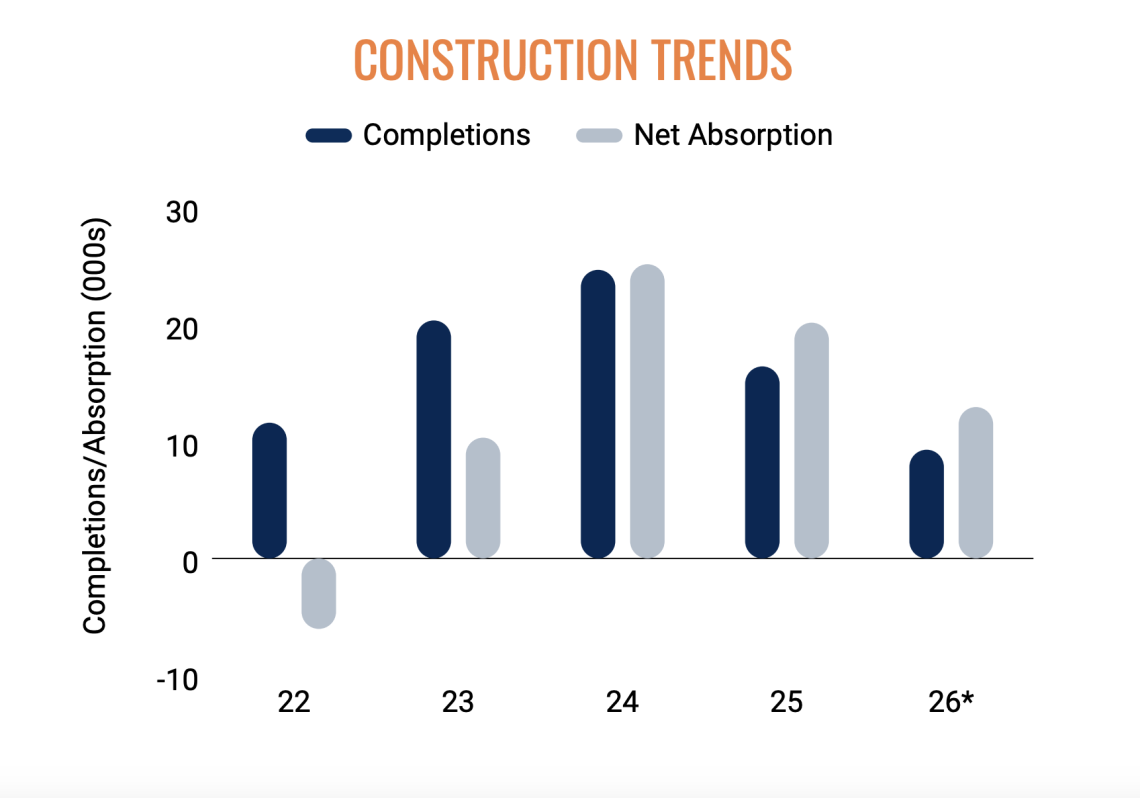 How metro Atlanta's recent multifamily "supply wave" is trending. Marcus & Millichap; sourcesL BLS; CoStar Group, Inc.; RealPage, Inc.
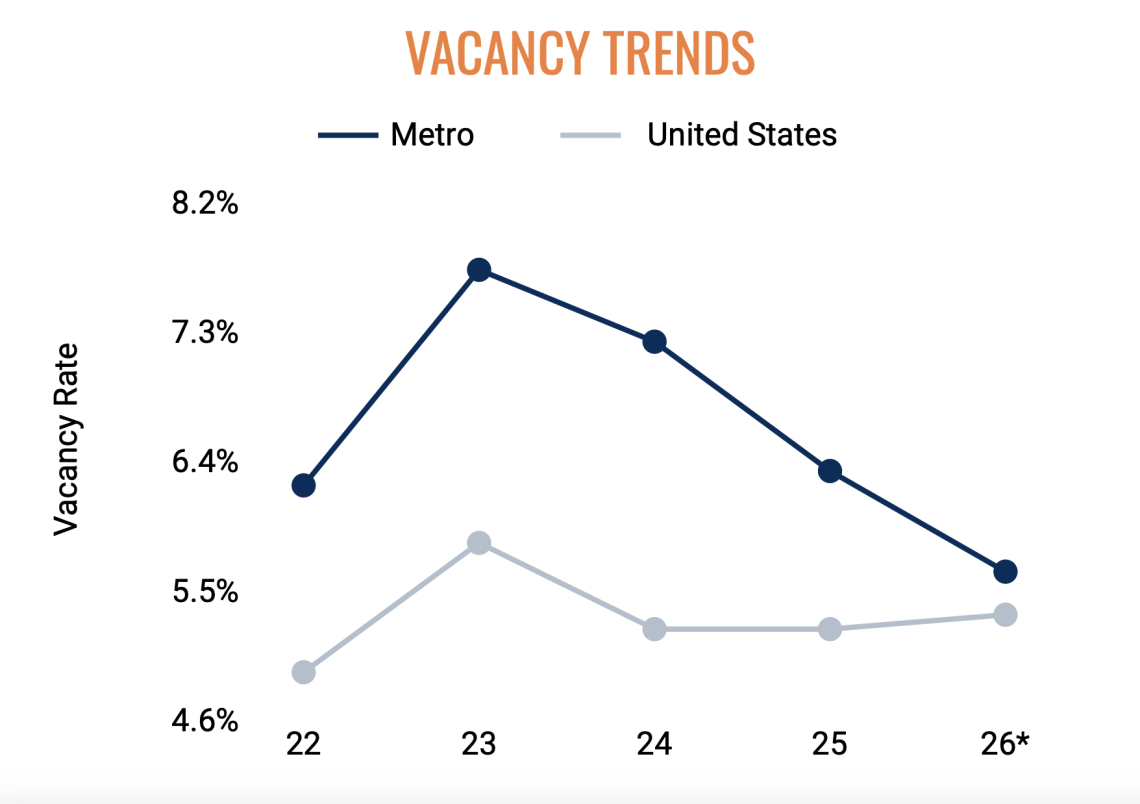
Metro Atlanta is on pace to record the second largest drop in apartment vacancy rates (currently at 5.6 percent) among U.S. metros, as 16,000 jobs are expected to be added to the local economy.
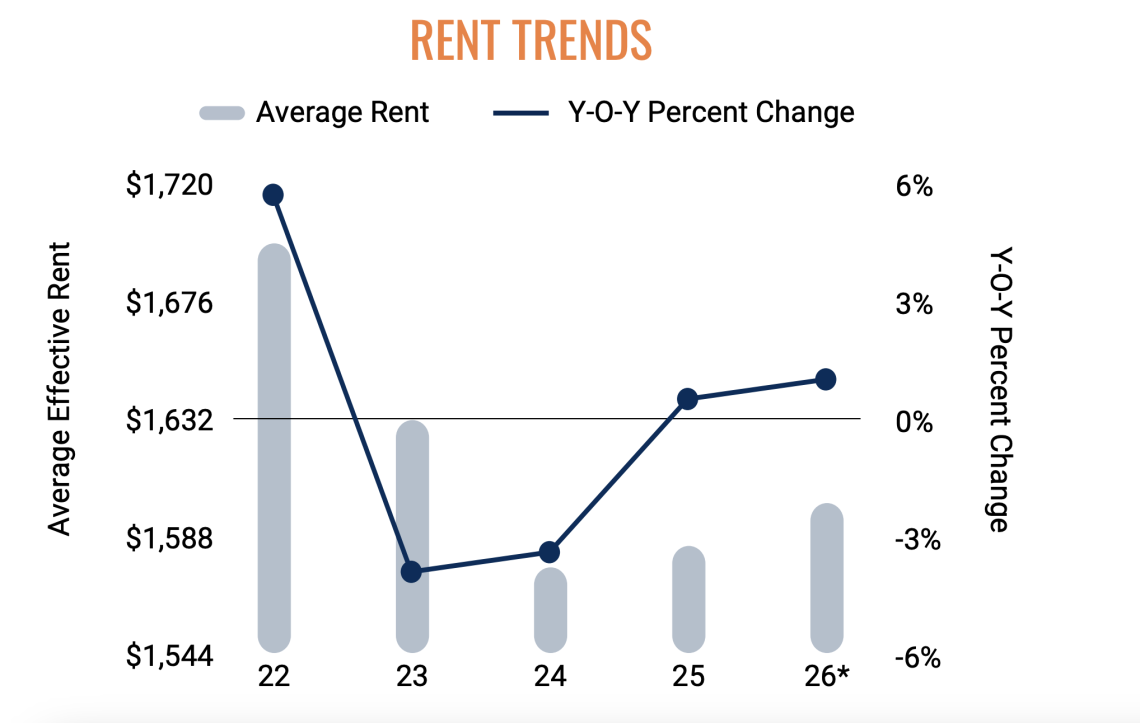
Average rents (sorry, renters) have ticked up by 1 percent across the metro to $1,600 monthly, marking some of strongest year-over-year rent growth in the nation for early 2026, per Marcus & Millichap.
“Atlanta’s multifamily market continues to demonstrate resilience… [and the] market’s ongoing evolution is generating opportunities across both established urban neighborhoods and high-growth suburban communities,” John M. Leonard, Marcus & Millichap’s senior managing director and market leader in Atlanta, said in a summary.
“Institutional investment activity is gaining momentum as market conditions stabilize,” Leonard continued, “while Atlanta’s expanding employment base continues creating opportunities.”
 Marcus & Millichap; sources: CoStar Group, Inc.; Real Capital Analytics; RealPage, Inc.
Below is a potpourri of interesting findings and insights, as cherrypicked from the Q2 multifamily report:
- “Atlanta will record its third consecutive year of vacancy tightening, the second-steepest drop among major U.S. metros.”
- “… for 2026, deliveries are retreating [across metro Atlanta], so even modest job creation may support absorption and rent growth.”
- “…losses in sectors with many foreign-born workers, such as construction, and declines in financial activities may limit overall employment growth going forward. While net job gains this year should mark an improvement over 2025, the total will remain well below Atlanta’s long-term average of about 43,000 yearly jobs.”
- “Vacancy rose annually through March in suburban nodes with high foreign-born representation, including Norcross, Clarkston, Doraville, and Buford, potentially reflecting immigration-related pressures… In the [urban] core, however, limited new supply should continue to bolster fundamentals after it already posted some of the strongest year-over-year rent growth nationally in early 2026.”
- “[Apartment deliveries] should slow by roughly 43 percent year-over-year in 2026. This represents the lowest annual total since 2021 and should aid local fundamentals, particularly after a recent supply wave expanded inventory by 11 percent from 2022 to 2025.”
- “Only two submarkets will receive more than 1,000 units [in 2026]—Johns Creek-Suwanee-Buford and Cartersville-Dawsonville.”
- “Atlanta’s affluent northern suburbs are attracting notable corporate investment. Mercedes-Benz, Equifax, Glytec, Yamaha Motor Co., and UCB Inc. are among the firms expanding or relocating operations to the area. As these projects materialize, nodes such as Kennesaw, Marietta, Sandy Springs, Alpharetta, and parts of Gwinnett County should be well positioned to capture stronger multifamily demand.”
 Marcus & Millichap; sources: CoStar Group, Inc.; Real Capital Analytics; RealPage, Inc.
...
Follow us on social media:
Twitter / Facebook/and now: Instagram
• Atlanta's ascension continues in national, annual ranking of city parks (Urbanize Atlanta)