

Since 2016, the City of Atlanta has leapfrogged nearly one-third of the competition when it comes to what’s widely considered the gold standard for park evaluation.
Trust for Public Land officials announced this week The City in a Forest has placed 18th on its annual ParkScore index for 2026. (A decade ago, Atlanta ranked 51st of 100 major cities studied, and 49th as of five years ago, according to TPL metrics.)
Atlanta’s 2026 placement is the city’s highest ever and four spots ahead of last year, continuing a long pattern of improvement following major park openings.
The ParkScore index found that 85 percent of Atlantans now live within a short walk of a park—a decade ago, that number was a lowly 66 percent—following continued Beltline construction and greenspace additions in places such as the Waterworks Village rapid housing initiative, which opened public greenspace access in an under-parked area, per TPL officials.
Atlanta’s new ranking slots it between San Diego (No. 17) and St. Petersburg, Fla., respectively.
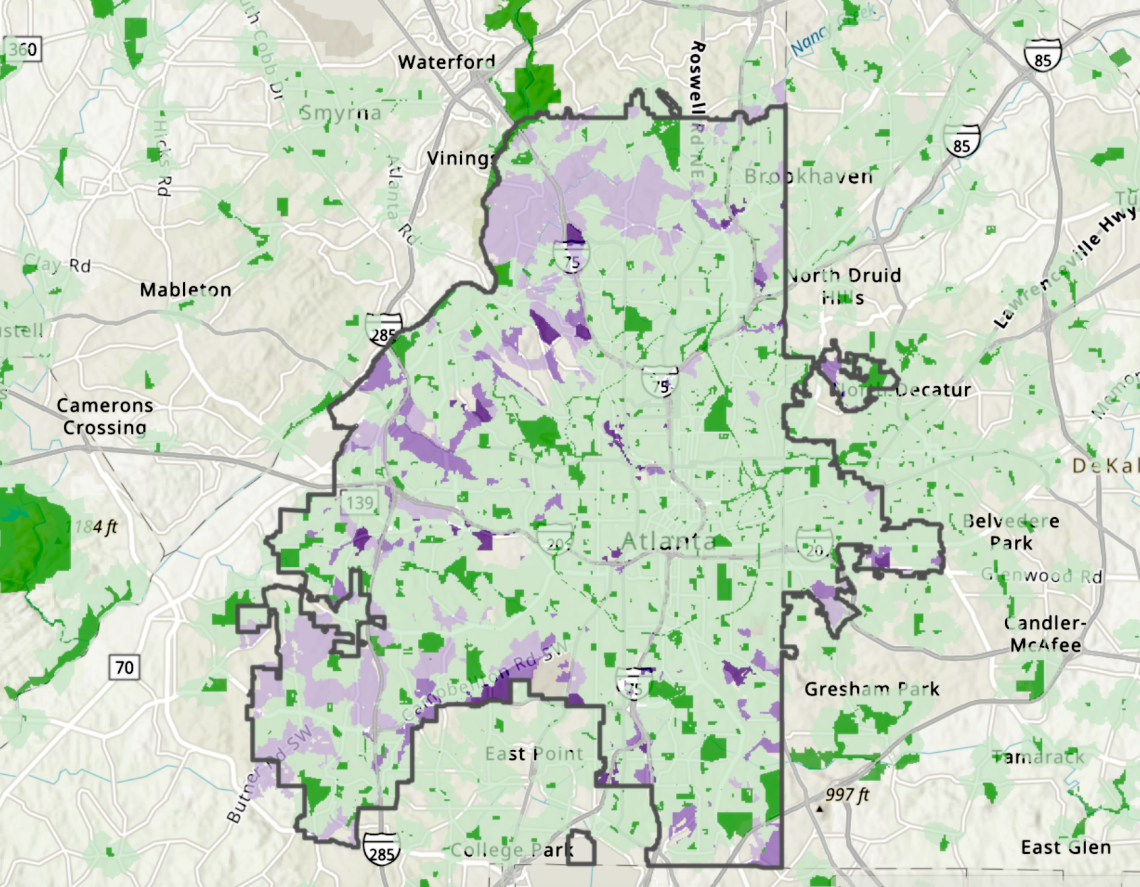 This graphic illustrates where park spaces around Atlanta exist (green) and where they're most needed (purple), according to TPL research.Courtesy of Trust for Public Land
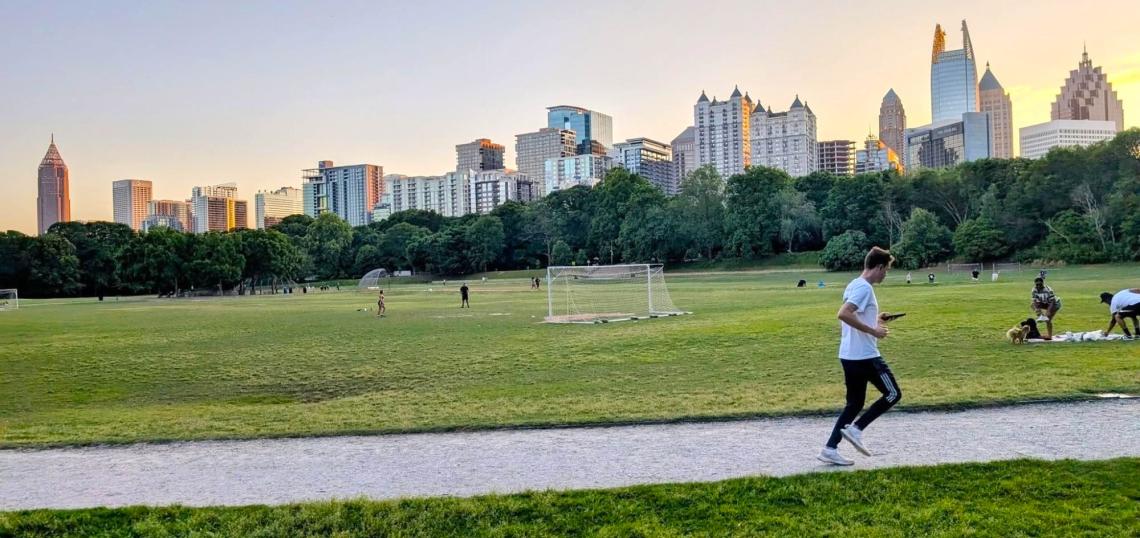
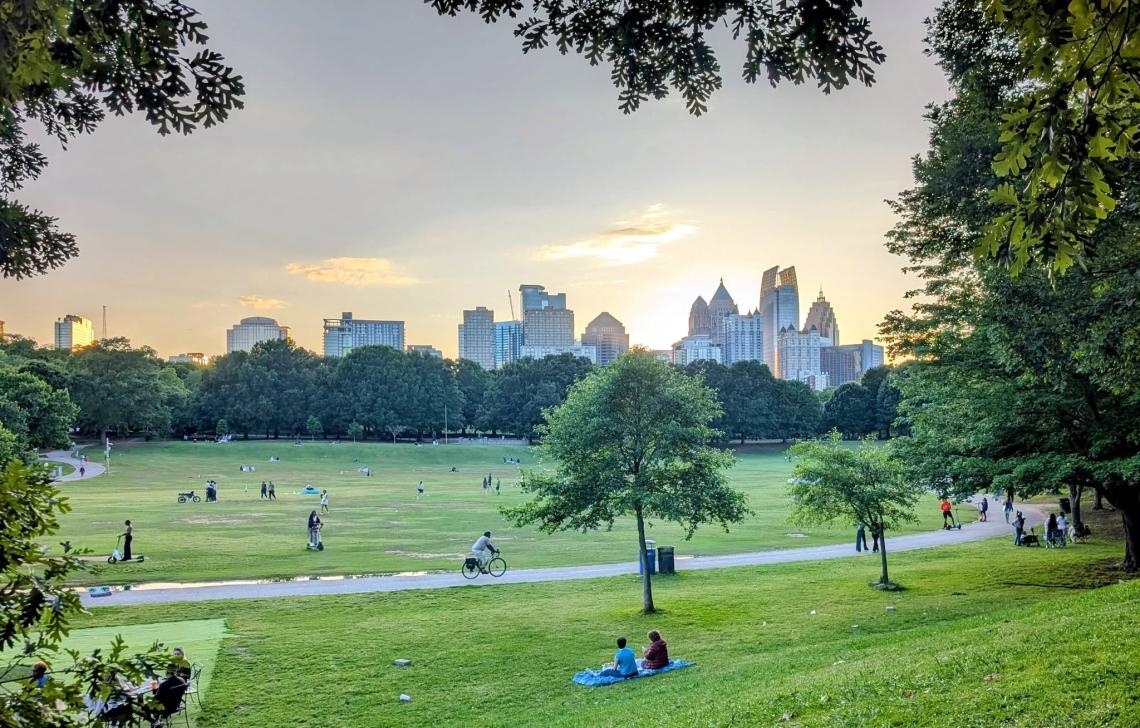 Atlanta's most popular greenspace in May 2025. Josh Green/Urbanize Atlanta
The total number of Atlanta parks, 540, has climbed by 22 since just last year. That includes the city’s ongoing, district-wide push to open schoolyards for public use when schools aren’t in session.
The total number of acres devoted to parks around the city has now climbed north of 7,000, too.
The 2026 analysis found that Atlanta currently invests $312 per person on its park system—that’s more than double the national ParkScore average of $154—but that park spaces here are relatively small overall. The median park in Atlanta is 2.9 acres, versus the national ParkScore average of 5.4 acres, per TPL.
“Parks are essential infrastructure for a thriving city, and Atlanta’s continued progress in the ParkScore rankings demonstrates what’s possible when public, nonprofit, and community partners work together to support a strong and vibrant park system,” Michael Halicki, president and CEO of Atlanta nonprofit Park Pride, said in today’s TPL announcement.
Coming in atop the 2026 list for the sixth consecutive year is Washington, DC, where a whopping 21 percent of land is reserved for parks.
Irvine, California (a massive greenspace redevelopment called Great Park is underway there), Minneapolis, Cincinnati, and St. Paul rounded out the top five, respectively.
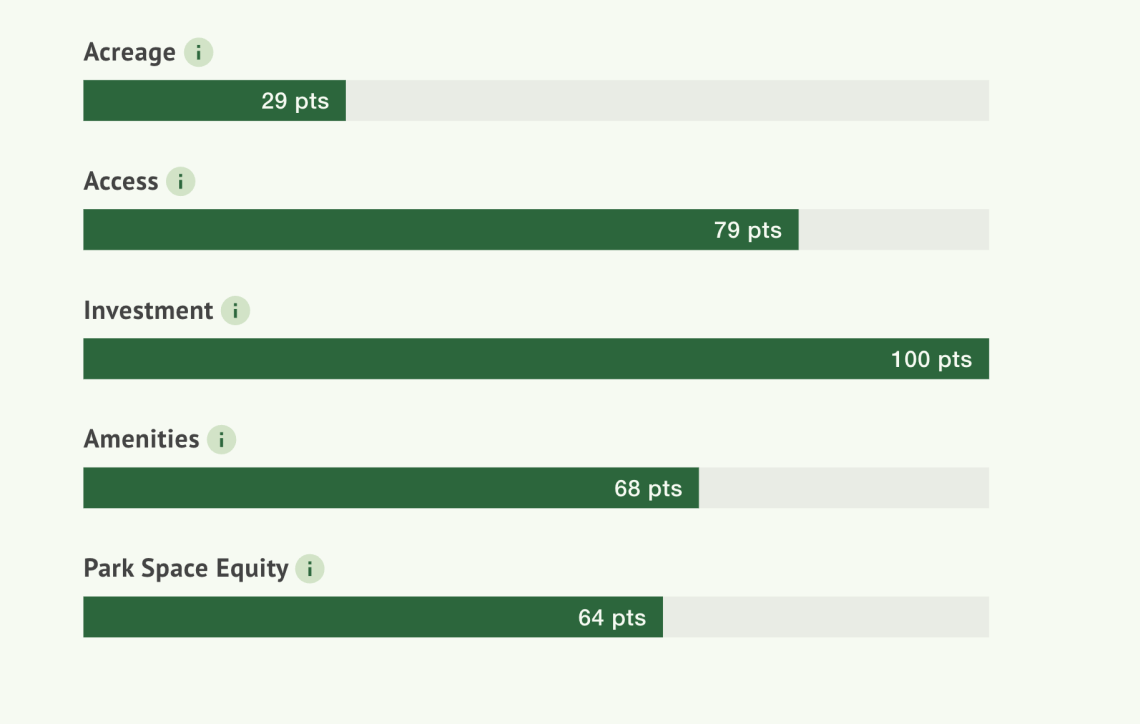 How Atlanta stacks up in key parks categories, per TPL researchers. Courtesy of Trust for Public Land
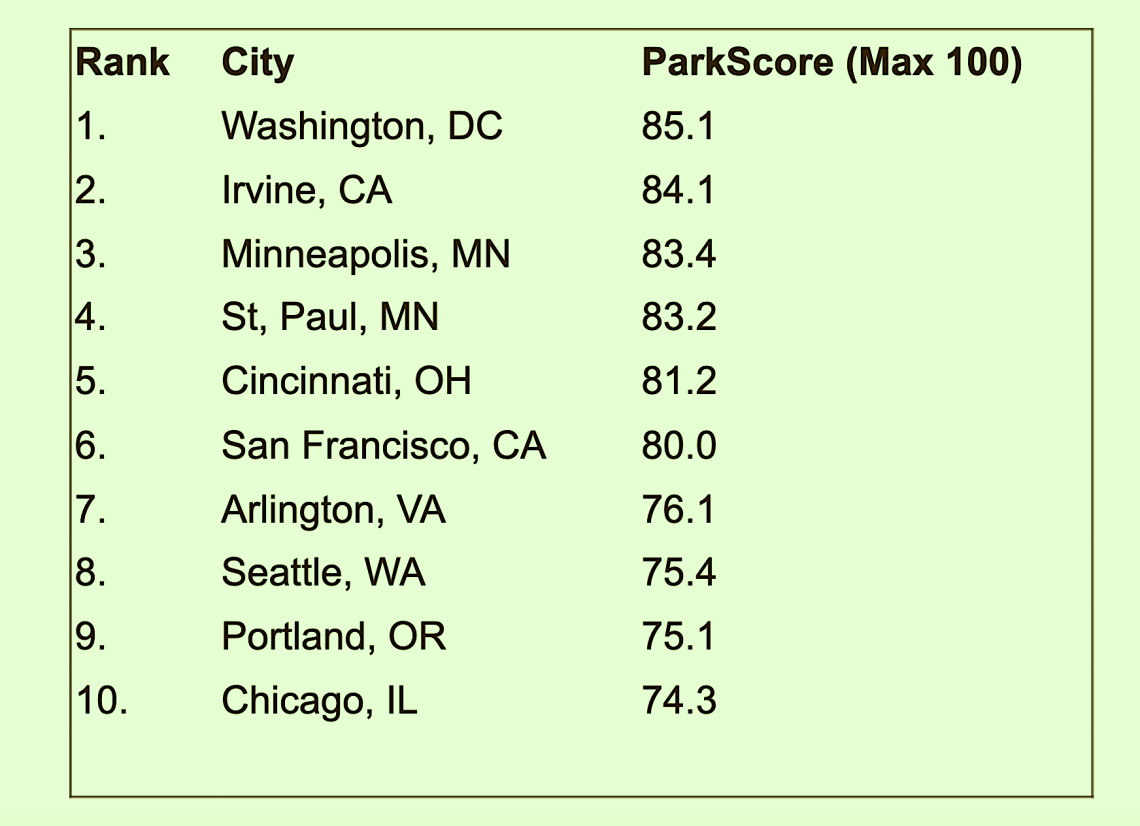 The ParkScore Top 10 for 2026. Courtesy of Trust for Public Land
Current or planned greenspace projects around Atlanta that could help continue the positive momentum include Midtown Green, the Memorial Drive Greenway, the Atlanta Prison Farm’s park conversion, the Peoplestown stormwater vault project, and the Beltline’s Enota Park and Shirley C. Franklin Park’s under-construction mountain bike park and hiking trail system, among others.
Still, there’s room for improvement. TPL found that just 8 percent of the city’s land use is for parks and recreation, when the national median is 15 percent.
Back in 2022, Atlanta rocketed up 22 spots on the ParkScore Index—the biggest mover of that year—following a monumental year in 2021 for new urban greenspaces. Those included the sprawling Westside Park (now Shirley C. Franklin Park), Cook Park in Vine City, and a park-topped parking garage in Grant Park, among others.
The annual ParkScore rankings are based equally on five factors:
Park investment; park acreage; park access (measures percentage of residents living within a 10-minute walk of a park); park equity (compares per capita park space and 10-minute-walk park access in communities of color vs. white communities, and in low-income neighborhoods vs. high-income neighborhoods); and park amenities.
The latter category assesses the availability of seven popular park features: playgrounds, sports fields; basketball hoops; off-leash dog parks; splashpads and other water-play structures; recreation and senior centers; and yes, restrooms.
...
Follow us on social media:
Twitter / Facebook/and now: Instagram
• Study: Atlanta doesn’t crack Top 5 for worst U.S. city traffic. Hooray? (Urbanize Atlanta)