

In what could be tough news for renters, a new national study of markets large and small suggests Atlanta’s more than decade-long wave of large-scale apartment construction has petered out, for now.
The Rental Competitiveness Report, a RentCafe.com analysis of Yardi Matrix data published last week, found the City of Atlanta to be one of only two large markets nationwide that added no new apartment projects over the three months considered peak renting season, spanning from April through June. (Markets with more than 80,000 units were classified as large.)
RentCafe’s research team analyzed Yardi apartment data across 139 markets in the U.S., considering only market-rate, multifamily projects with at least 50 units and excluding affordable housing developments.
Atlanta’s rate of new apartments added was the lowest share on record—and a dip from .83 percent in summer 2025.
“Once a unit becomes available in the city,” notes a summary provided to Urbanize Atlanta, “eight [rental] applicants are vying for it, and it is leased, on average, in 44 days.”
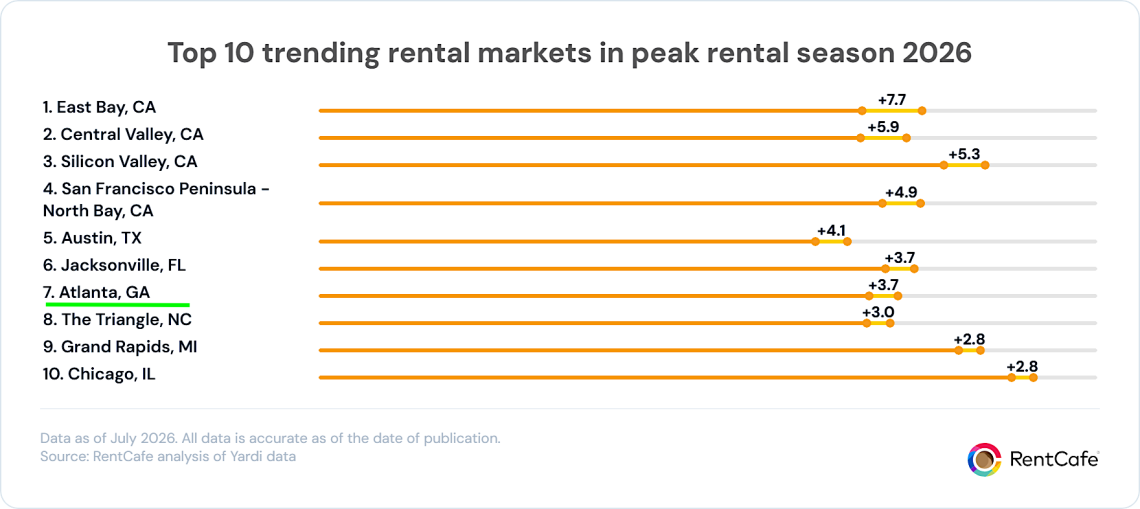 The top U.S. markets for tightening apartment supply, with 2025 and 2026 data points shown. RentCafe
Other tough news for apartment hunters: Analysts found that Atlanta’s lease renewal rate climbed 1.2 percentage points to nearly 64 percent, meaning the majority of current renters are staying put. That’s the highest peak-season rate in the city in four years.
The findings indicate Atlanta is among the fastest-tightening large U.S. markets, climbing 19 spots from last year to 33rd in the country—the city’s highest ranking on record, according to RentCafe.
Renters aren’t finding much relief beyond city limits, per the analysis, as a “sharp pullback” in new apartment construction is also afoot in Atlanta’s suburbs.
Seven people are competing for each new suburban apartment, where new rental projects are accounting for .43 percent of the local stock—the lowest share in more than three years.
Leasing renewal rates have spiked even higher in Atlanta’s suburbs, to more than 66 percent, meaning two of every three apartment dwellers are opting not to move, per the study.
Markets were ranked on a competitiveness score built from five metrics and their averages for the second quarter. Those were: apartment occupancy rate; average total days vacant; prospective renters per vacant unit; lease renewal rate; and share of new apartments completed.
...
Follow us on social media:
Twitter / Facebook/and now: Instagram
• Analysis: Atlanta is No. 1 city in country for hybrid working (Urbanize Atlanta)