

Editor's note: What do the 839 Boone Boulevard project in English Avenue, Atlanta Opera's $45-million new home in Buckhead, and so many other recent, headline-grabbing developments have in common across Atlanta? They wouldn't be possible without major philanthropic backing.
Observers from far beyond Georgia have taken notice.
For our latest Letter to the Editor, Andre Dowell, founder and president of Ohio-based nonprofit National Philanthropic Foundation, makes the case for why Atlanta stands out in the philanthropic field—and why Atlantans should care.
...
Dear Editor:
Atlanta’s growth is often measured in visible terms, cranes on the skyline, capital flowing into new districts, projects reshaping entire corridors. But the city’s physical transformation has never been driven by market forces alone.
Beneath many of its most defining developments is a quieter layer of investment that has helped determine not only what gets built, but how the city functions once it is.
Philanthropy has long played a catalytic role in Atlanta’s evolution. Not as a substitute for private capital or public funding, but as a form of early conviction, the kind that helps initiate projects, close gaps, and sustain efforts that might otherwise stall. From public spaces to education and community infrastructure, philanthropic capital has influenced both the pace of development and the priorities behind it.
That influence is visible across the city.
The Atlanta Beltline stands as one of the clearest examples, a project shaped through a blend of public investment, private capital, and philanthropic support that helped carry it from concept to reality. A similar dynamic is evident in Tech Square, where research, innovation, and investment intersect to drive both economic activity and the built environment.
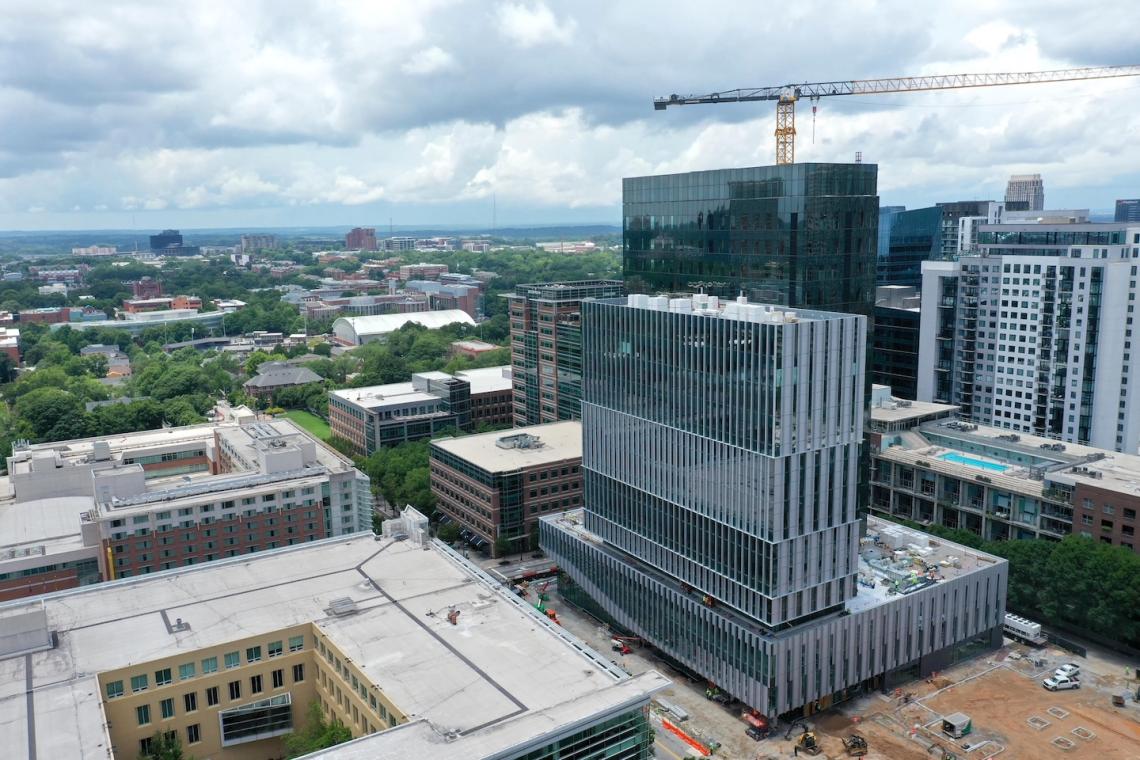 Western view across the Tech Square Phase 3 development toward Georgia Tech's main campus. Urbanize Atlanta
In each case, development did not move forward on capital alone. It moved forward because multiple forms of investment aligned around a shared vision.
What often gets overlooked is that this model is not new. It has deep roots across Georgia, shaped by leaders who approached philanthropy as a form of long-term infrastructure rather than episodic giving.
Abit Massey, a longtime leader in the state’s agricultural industry, reflected that approach. His support of institutions like the University of Georgia and the Georgia Institute of Technology extended well beyond financial contributions. He helped advance research programs, workforce pipelines, and industry partnerships that continue to shape Georgia’s economy.
The Abit Massey Student Internship Program at Georgia Tech is one example of an investment designed to endure, connecting students to real-world challenges in food systems, technology, and sustainability.
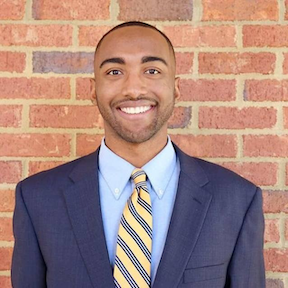 Andre DowellCourtesy of National Philanthropic Foundation
That legacy points to a broader idea. In Atlanta, philanthropy has often functioned as a builder of systems, not just a supporter of initiatives. And that mindset continues to influence how the city grows.
Today, philanthropic capital remains embedded in the city’s development landscape. Organizations like the Westside Future Fund operate at the intersection of housing, community stability, and neighborhood reinvestment, working to ensure that development does not move forward in isolation from the communities it affects. Projects such as Westside Park (now Shirley C. Franklin Park) reflect a similar alignment, where investment is tied not only to physical space, but to broader civic outcomes.
Foundations continue to play a defining role as well. The Arthur M. Blank Family Foundation and the Goizueta Foundation, among others, have directed significant resources toward education, public space, and community-based initiatives. These investments often sit alongside traditional development, expanding both the scope of projects and their potential impact.
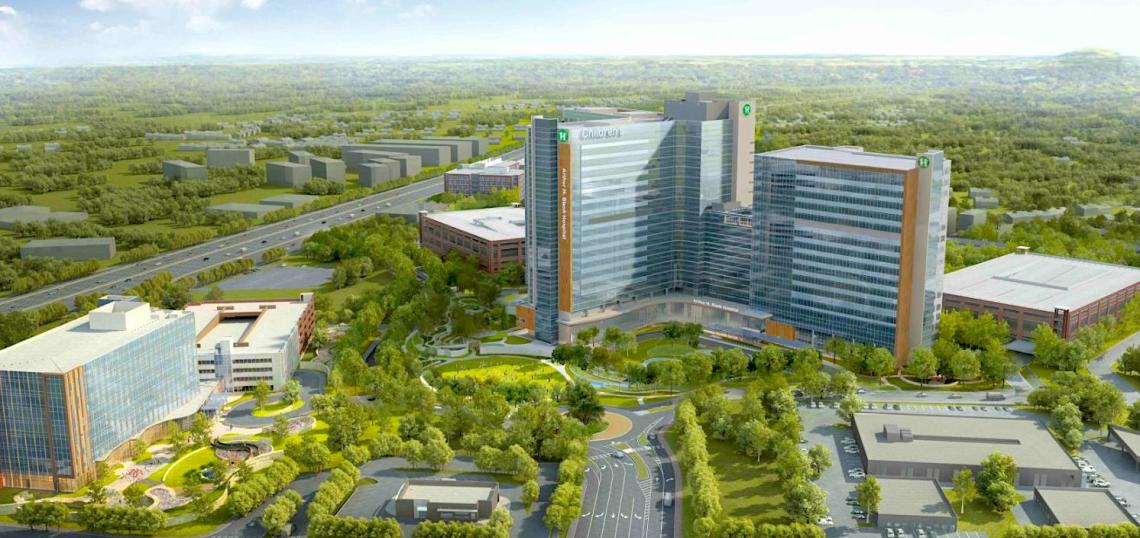
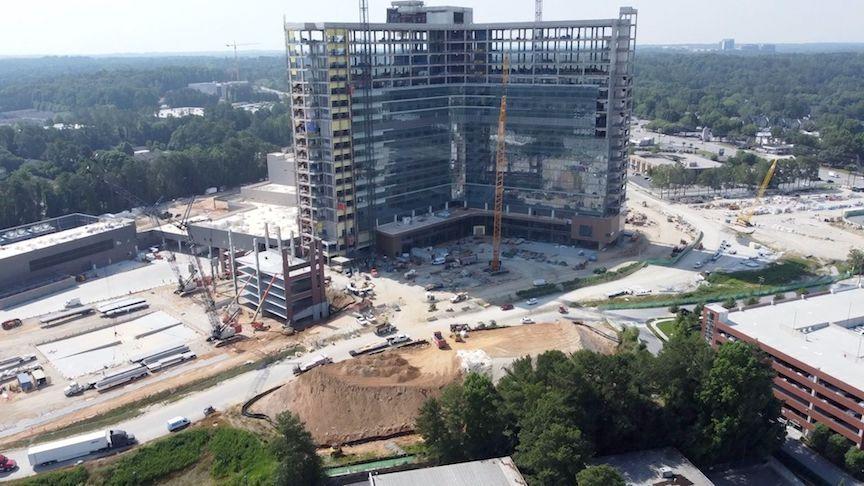 Drone imagery from 2022 of the $1.5-billion Arthur M. Blank Hospital project, which began construction in February 2020. Courtesy of Children’s Healthcare of Atlanta
What distinguishes Atlanta is not simply the presence of philanthropic capital, but the way it has been applied. In many cases, it has helped de-risk early-stage ideas, support community-facing components of development, and provide continuity where other funding sources are more constrained or short-term.
At the same time, expectations around growth are changing.
Development is no longer judged solely by scale or speed. It is increasingly evaluated by how well it connects to the needs of the communities it touches. Investment decisions now carry both economic and civic weight, and the balance between the two is becoming harder to ignore.
That shift introduces a new level of responsibility.
As Atlanta continues to expand through mixed-use development, infrastructure investment, and neighborhood transformation, philanthropy remains a quiet but influential force. Not the primary driver of growth, but a factor that can shape how that growth is experienced.
The trajectory of the city is not in question. Atlanta will continue to grow.
What remains open is how that growth will be guided, and whether the model of investment that has helped shape the city will continue to evolve in ways that support both progress and stability.
In Atlanta, what gets built has always mattered.
But the systems that sustain it have mattered just as much.
— Andre Dowell, founder and president, National Philanthropic Foundation
[CORRECTION: 12:44 a.m., March 31: An earlier version of this story's intro incorrectly stated the foundation is based in Pennsylvania.]
...
Follow us on social media:
Twitter / Facebook/and now: Instagram
• Zillow pegs Atlanta second-most 'buyer-friendly' U.S. market of 2026 (Urbanize Atlanta)