Editor’s note: In the following Letter to the Editor, Reynoldstown resident, transit enthusiast, and aerospace engineer Kevin Porter weighs in on early findings from the Beltline-backed, autonomous-transportation pilot ATL Spoke, now five months after it began.
In fairness, Beltline officials relayed the pods ran efficiently most of the time during the experiment's first quarter, with polled riders calling the service a “lifesaver” from summer heat versus walking and a “great and needed addition” to Atlanta transit, though others complained about lack of bike racks, dwell times at stops, long trip times, and service hours that don’t start early enough for school or work.
…
Dear Editor,
“Automated pods” have been a hot topic in Atlanta’s ongoing transit debate for the past several years. That’s understandable.
Pods are often offered as an alternative to constructing light-rail transit in the Beltline corridor. Sometimes these are legitimate suggestions, but often they’re a red herring “whataboutism” to distract or divert the debate and stall progress.
Well, since June this year, Atlanta has had its first look at real automated pods—and the first numbers are in.
Spoiler: They’re not great.
ATL Spoke is an automated shuttle system operating under Atlanta Beltline Inc. This one-year pilot program was funded by a $1.75-million grant from Georgia Transportation Efficiency Authority, along with up to $1.25 million in matching funds from the Beltline and other local sources.
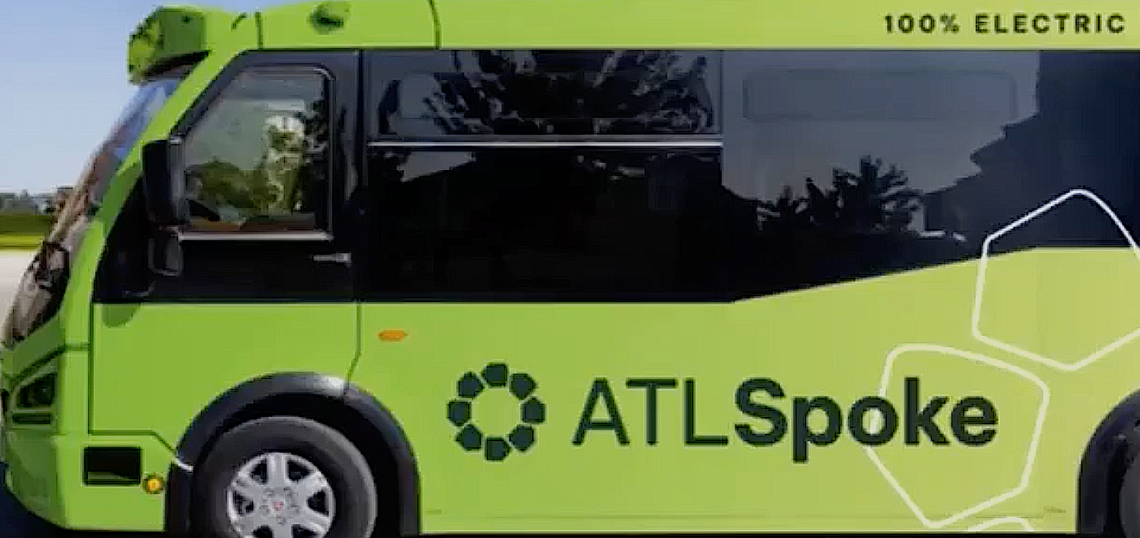
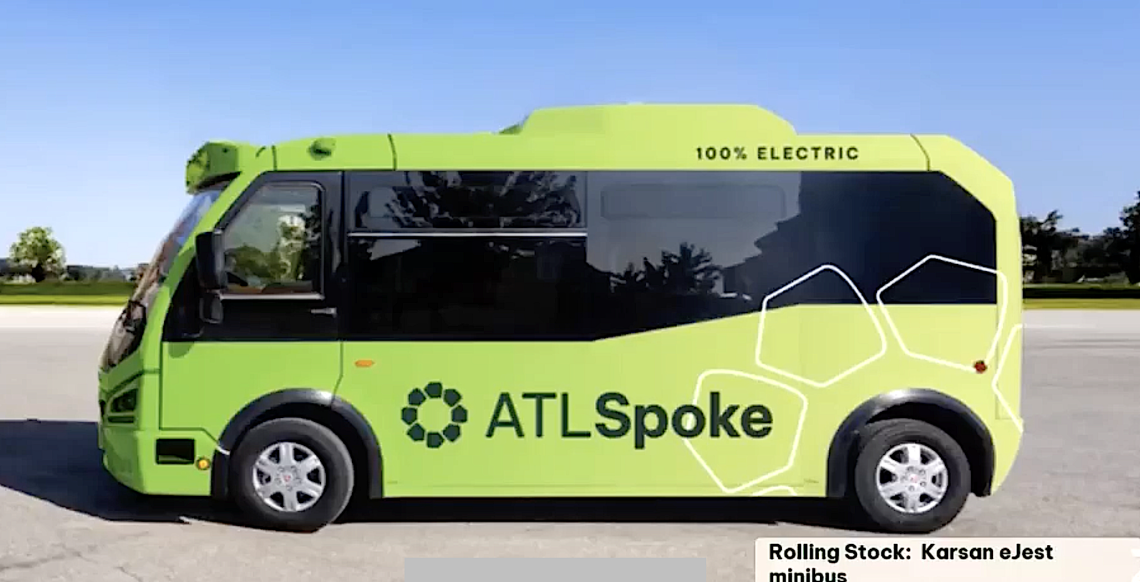
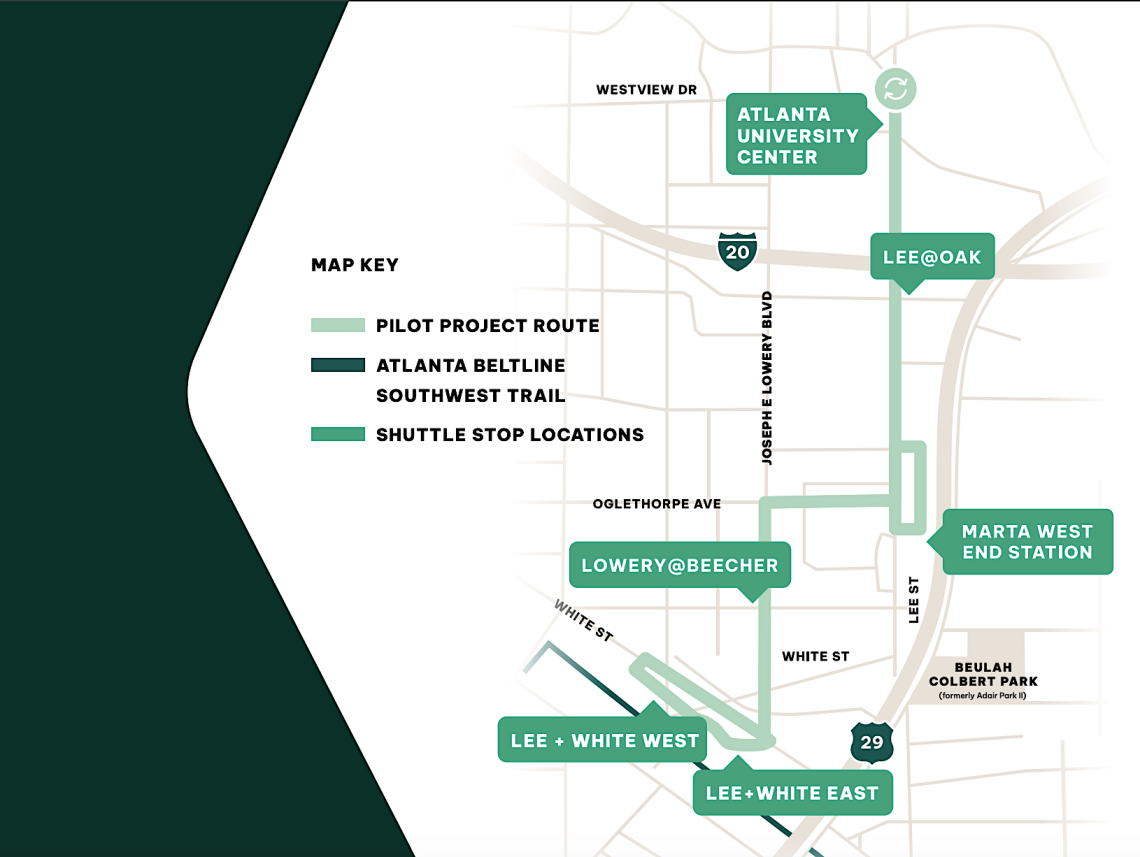
Initially, the pilot program consisted of an automated shuttle linking the Lee + White commercial district to MARTA’s West End station. An extension opened in August brought the service farther north to the Atlanta University Center, with its thousands of college students and employees. The service consists of 12-passenger automated shuttle vans developed by the Florida-based company Beep, running every 12 to 15 minutes.
The way I see it, ATL Spoke and Beep have been embroiled in controversy since the launch of the service (see: BeepThroat)—but setting all that aside, we now have some solid numbers from Beltline officials themselves regarding the shuttle’s operating performance in the ATL Spoke 2026 First Quarterly Report, published earlier this week.
The numbers, again, are not exactly stunning.
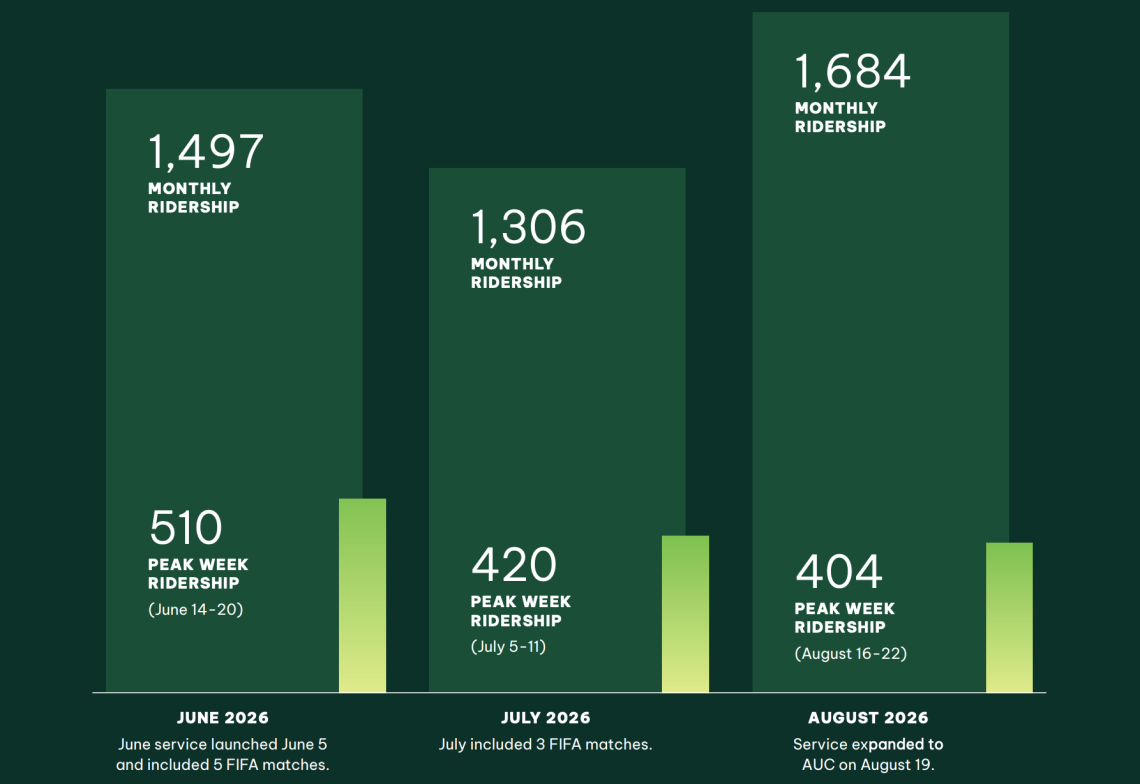
In its first three months of operating, ATL Spoke carried a total of 4,487 passengers, or an average of 48.7 passengers per day.
Running at least 10 hours per day at 12 to 15-minute service intervals, that’s between 0.97 to 1.2 passengers per departure. These numbers cover June to August, including the 2026 FIFA World Cup festivities and the service’s ribbon-cutting.
These should be the system’s highest ridership months (though logic says AUC schools being in full swing at the system’s northern end could help), but the performance has been lackluster. For context, the much-maligned Atlanta Streetcar posted 21,600 boardings in May 2026 (the most recent month with data); summer ridership in 2025 exceeded 30,000 riders per month. The “empty” and “useless” streetcar managed to outperform these pods by a factor of more than 12 to 17 times on ridership; both operate a similar route of around a mile and ½.
 Atlanta Beltline Inc.
 Beltline-backed driverless shuttles debuted on Southwest Atlanta streets before 2026 FIFA World Cup. Atlanta Beltline Inc.
Ridership isn’t everything, though.
Pods are often touted as low-cost compared to other modes. This pilot program is funded by between $1.75 and $3 million in funding from GTEA and the Beltline (funding numbers are sketchy, I believe; ABI has never publicly stated the exact value of matching funds being devoted to this project; many sources report a total cost of $3 million). So, in this three-month period, per my math, that comes out to an operating cost of between $97.50 to $167.10 per passenger carried.
Let’s compare that to other modes for context. The operating cost of MARTA’s streetcar was $21.09/passenger in FY24. Heavy rail was $8.93/passenger. Light rail again comes out ahead by four to eight times on operating cost.
Yes, I acknowledge this neglects capital costs for rail infrastructure. However ATL Spoke’s funding is a pure operating subsidy: Beep retains ownership of the capital assets after the pilot ends. I think comparing operating costs to operating costs is a fair, apples-to-apples metric here, since implementation of any full “pod” system would also require vehicle, station, and right-of-way construction, outside the scope of this pilot.
ABI could have called every single rider a Waymo and ended up ahead on cost by a substantial margin.
And then there’s the “automated” part about these pods. Each pod still carries a driver’s station and always operates with an attendant. In my personal experience riding ATL Spoke, the “attendant” overrode the automation and manually drove the vehicle at every stop sign along the route.
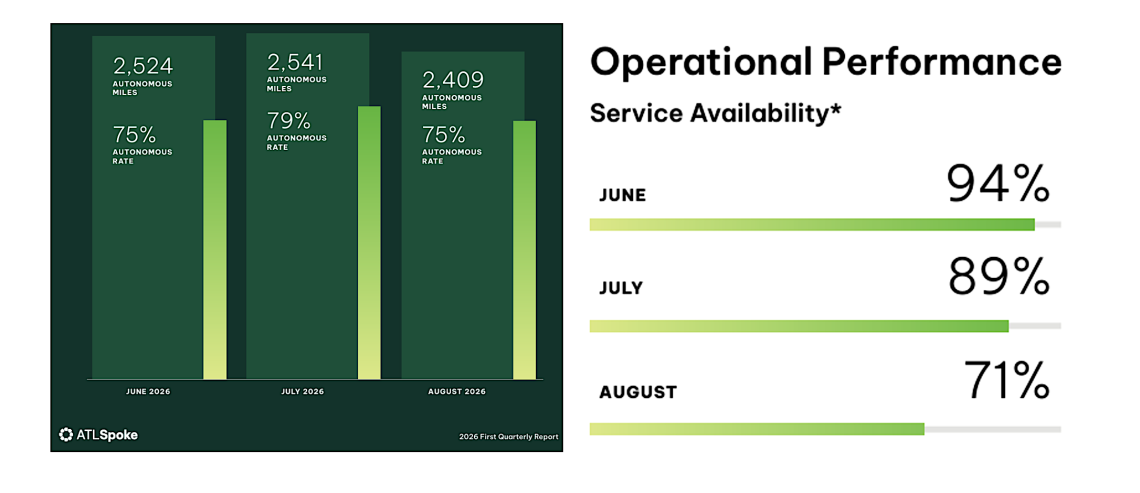
ABI’s data agrees. The service only operated in autonomous mode for between 75 and 79 percent of its service miles, being manually driven the rest. Hardly seems like this technology was ready for prime time.
 Atlanta Beltline Inc.
All that to say this: I think it’s safe to say “pods” are not the future of transportation on the Beltline corridor.
Back in May, Cox CEO Alex Taylor penned in his anti-rail AJC Op-Ed that transportation is headed in the direction of automated pods, and he touted Jacksonville’s Beep pod NAVi program as a “great success.”
As of Jan. 1, in a few weeks, Jacksonville’s NAVi will be suspended entirely due to poor performance and high costs. I hope this isn’t the direction Atlanta’s transportation future is headed.
On the other hand, ABI recently published its Beltline Transit Study with ambitious plans for 22 miles of light rail tracks, running 10-minute headways on high-capacity light rail vehicles, forecasted to move 4.2 million riders per year. The Atlanta City Council recently voted unanimous support for this plan.
Personally, this is the future I want to see: Clean, quiet, high-capacity, rapid transport on dedicated right-of-way that bypasses traffic—not a half-baked van trying to navigate our already crowded city streets. Based on these early numbers from the Beltline, I think the stats work out in favor of rail, too.
—Kevin Porter
Porter is a Reynoldstown resident and volunteer transportation and mobility advocate. His day job as an aerospace engineer has allowed him to "experience many of the globe's world-class transit networks," and he "really looks forward to when we start building more of that goodness back home in Atlanta," he says.
....
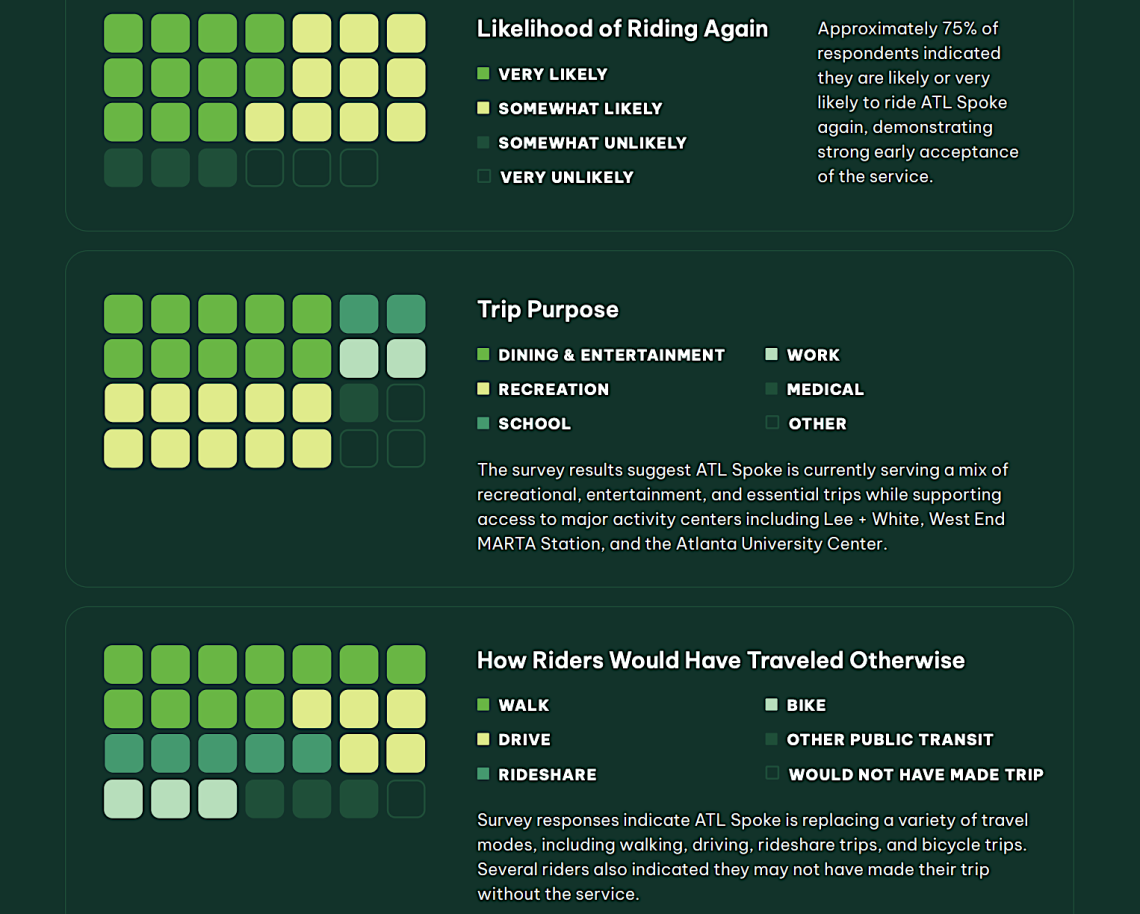
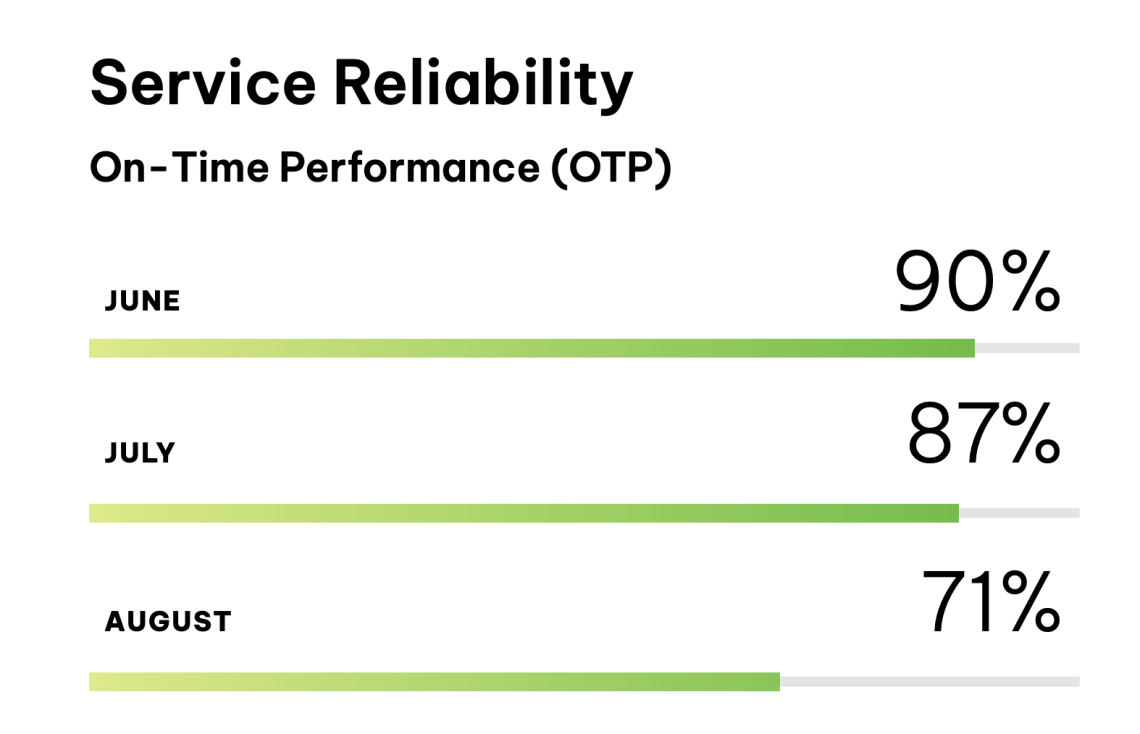
Note: Below are other figures and a current route map relayed in the initial ATL Spoke report:
 Atlanta Beltline Inc.
......
 Atlanta Beltline Inc.
............
 Atlanta Beltline Inc.
...
Follow us on social media:
Twitter / Facebook/and now: Instagram
• Letters to the Editor (Urbanize Atlanta)