

Editor’s note: Taryn Bell, a Westside resident and founder of Bell Liberty Group (a real estate company brokered by Keller Williams Realty), fears the most recent, post-pandemic development cancellation near the Atlanta Beltline’s Westside Trail could lead to a much deeper and complex setback for a multitude of Westside neighborhoods.
In our latest Letter to the Editor, published below, Bell responds to recent news that Atlanta Mission, a homeless support organization established in the 1990s, is under contract to buy a 15.5-acre parcel for a new campus and housing project in Bankhead.
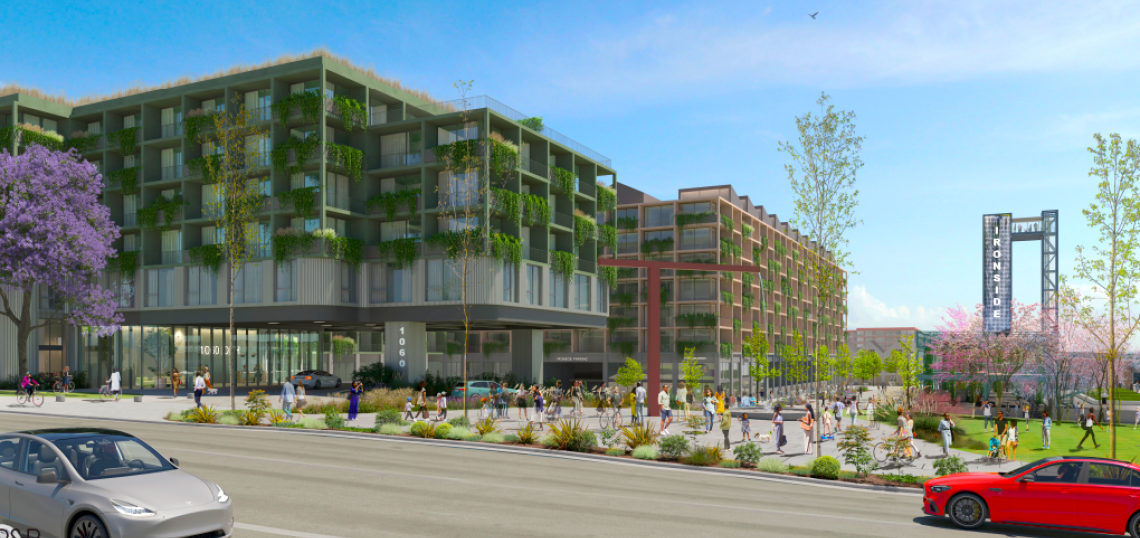
The property at 1060 Donald Lee Hollowell Parkway was previously envisioned by Star Metals District developer Allen Morris Company, the site’s current owner, as becoming a mix of new housing and creative warehouse reuse on an immense scale—enough to potentially change local economies and help reverse decades of disinvestment, posits Bell.
What's the next step? Atlanta Mission has scheduled another public open house and information session from 6 to 7:30 p.m. Tuesday at KIPP Woodson Park Academy to outline the agency’s early plans.
…
Dear Editor,
I am both a Westside resident and a Realtor actively engaged in this corridor’s redevelopment efforts.
The Westside has endured decades of systemic underinvestment, redlining, and stalled catalytic projects. Only recently has it begun to attract the type of mixed-use, transit-oriented development capable of generating sustained economic growth, retail activation, workforce housing diversity, and long-term job creation.
The previously rezoned plans for approximately 1,600 residential units and 700,000 square feet of commercial space at 1060 Donald Lee Hollowell represented far more than density on paper. They reflected projected tax base growth, permanent employment opportunities, neighborhood-serving retail, and a broader signal to the market that the Westside was regaining economic credibility.
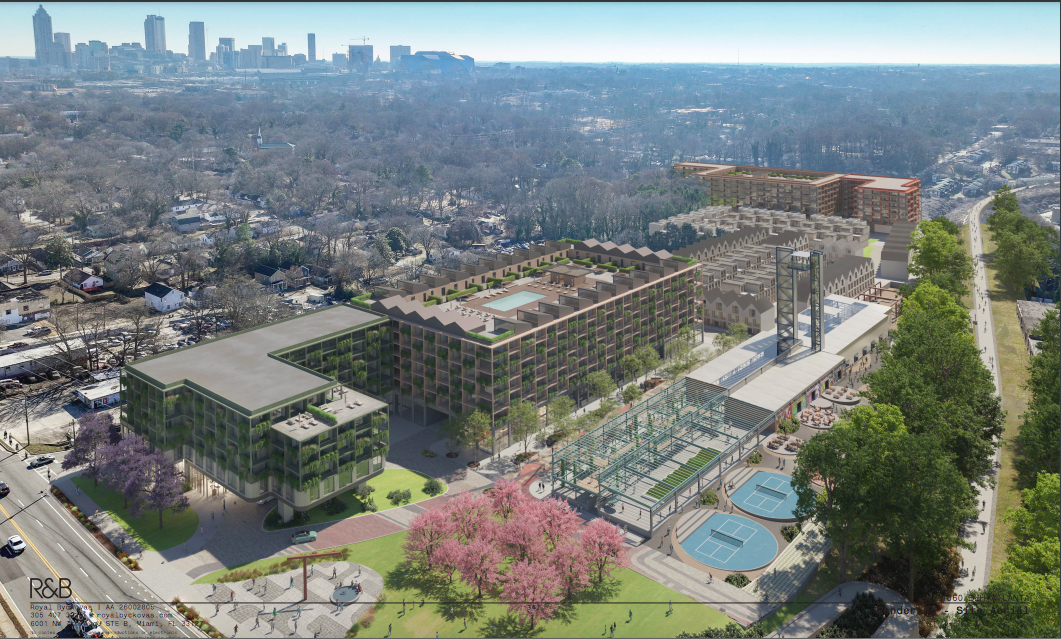 Full scope of Allen Morris' previous plans for the 15.5-acre parcel at 1060 Donald Lee Hollowell Parkway. Royal Byckovas; courtesy of The Allen Morris Company
The withdrawal of Microsoft’s planned campus and the unraveling of the Allen Morris Company mixed-use development were already significant setbacks. When projects of that scale dissolve, they remove not only buildings from renderings, but also momentum, investor confidence, and long-term fiscal projections.
The site at 1060 Donald Lee Hollowell Parkway sits directly adjacent to the Atlanta Beltline and MARTA infrastructure, making it one of the most strategically valuable remaining transit-oriented parcels in the corridor. Land of this nature is finite, and once its trajectory is set, it is extraordinarily difficult to recalibrate.
At its core, this is a highest and best use discussion centered on how limited, transit-adjacent land should be utilized to maximize long-term community benefit.
Supportive housing and homelessness services are essential components of a healthy city. However, concentrating a large-scale shelter campus on one of Atlanta’s most valuable transit-oriented sites raises legitimate questions about long-term economic sustainability, tax-base growth, land-use balance, and how this corridor’s redevelopment potential aligns with the broader vision for Westside progress.
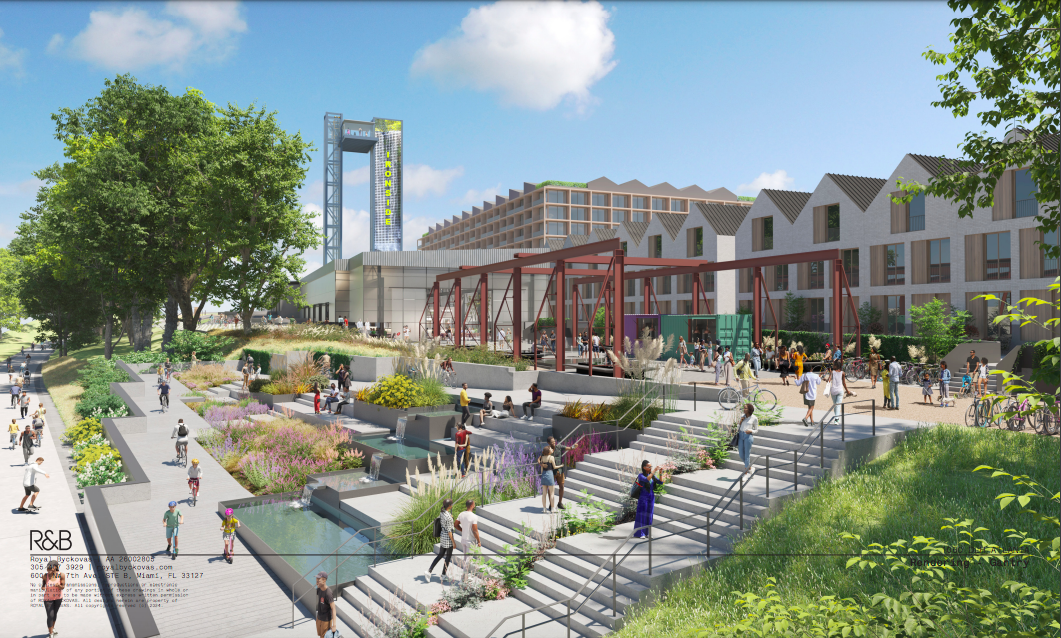 Tiered seating along the Beltline's Westside Trail—Segment 4, per early redevelopment plans. Royal Byckovas; courtesy of The Allen Morris Company
Moreover, residents are seeking greater transparency regarding the full master plan, funding structure, phasing strategy, and long-term operational framework before such a significant shift in land use moves forward. Community feedback has also emphasized the need for operational clarity.
Residents have asked Atlanta Mission representatives what proactive measures will be implemented to manage daytime loitering and unsheltered activity along the Beltline and surrounding streets. To date, responses have appeared more reactive than structured, with responsibility for monitoring largely deferred to residents rather than accompanied by a clearly articulated and comprehensive operational plan.
Importantly, residents are not opposed to opportunity or supportive services. The concern is whether the Westside’s broader economic development trajectory is being deprioritized at a critical inflection point.
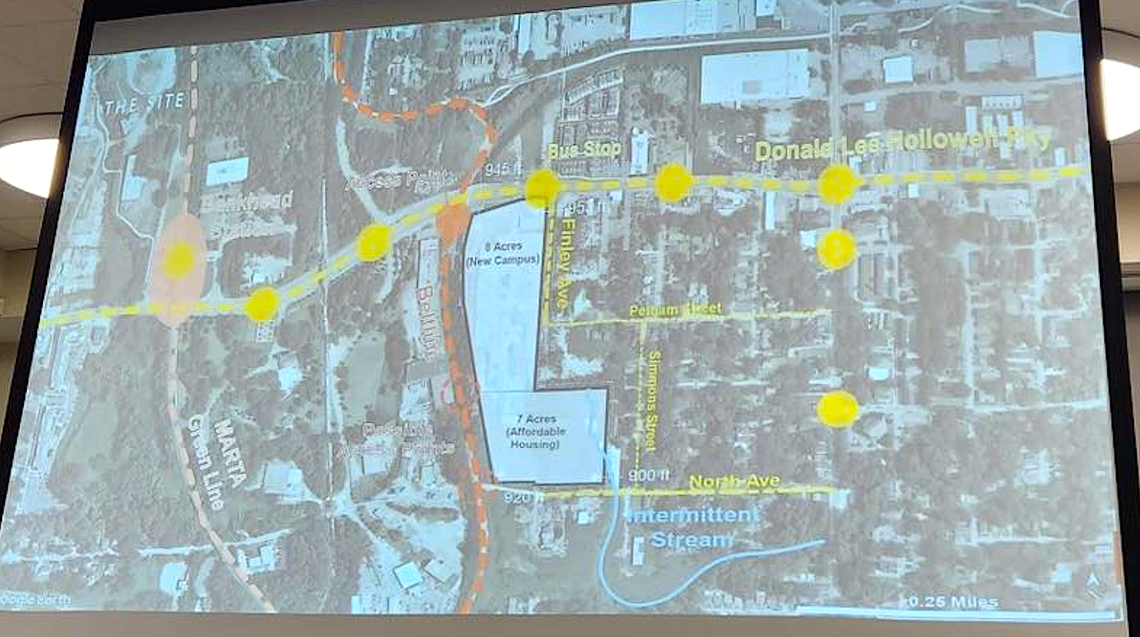 Early plans for the 15-acre property presented during an Atlanta Mission community meeting at KIPP Woodson Park Academy. Submitted photo
After decades of waiting for transformative, transit-oriented investment, many believe this corridor represents one of the few remaining opportunities to deliver lasting economic mobility, private investment, and sustainable neighborhood growth.
The Westside deserves a fiscally responsible framework that protects vulnerable populations while reinforcing economic resilience, market stability, and long-term community advancement.
—Taryn Bell
...
Follow us on social media:
Twitter / Facebook/and now: Instagram
• Bankhead news, discussion (Urbanize Atlanta)