


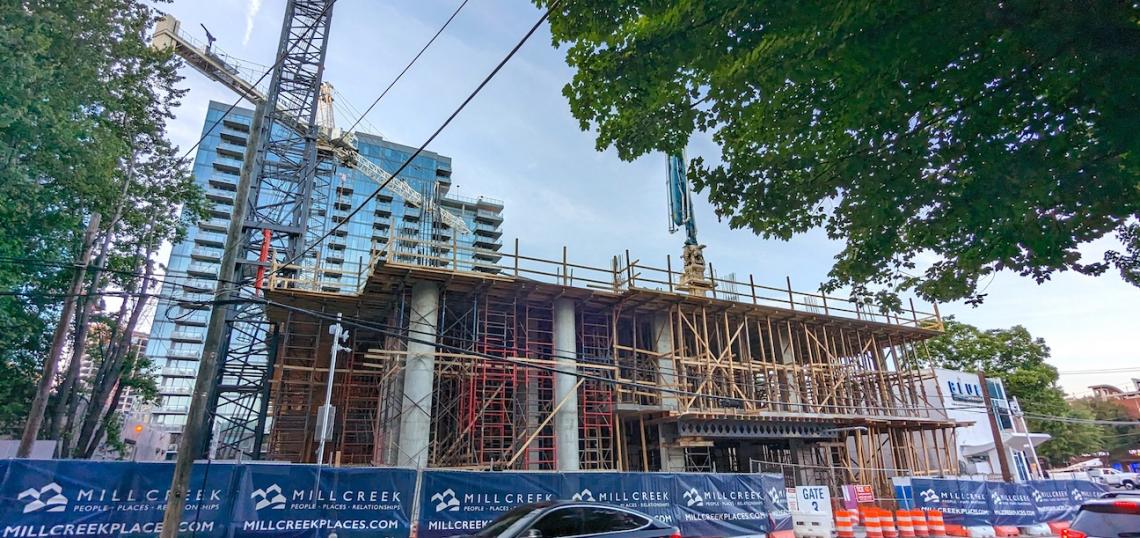
“Is local choice the answer to Georgia’s housing crisis?” That question begins an op-ed column by Georgia Rep. Spencer Frye (D-Athens, District 122) that paints a grim picture of the Peach State’s housing crunch but offers potential solutions—including fixes that could boost quality of life for all Atlantans, he posits.
First elected to the Georgia House of Representatives in 2012, Frye has worked as a small business owner, construction manager, and now serves as Athens Habitat for Humanity’s executive director. In the below column provided to Urbanize Atlanta, Frye lends context to the housing problem, advocates for “missing middle” housing, and extols the virtues of a pending legislative measure called the CHOICE Act (HB 400, 2025). He writes:
...
Dear Editor,
We have a housing crisis in Georgia. It’s raising costs for everybody, catastrophically for some people, and it’s not going to fix itself.
Per the Georgia Health Initiative, every eighth household in our state now spends more than half their income on housing. A financially healthy household should be spending 30 percent on shelter or less.
When housing costs this much, we know people start denying themselves a proper diet and sufficient healthcare, and not because they want to. Folks start sharing overcrowded spaces that become unsafe because their alternative is the street, which is even worse. Families bounce from place to place, their kids get moved in and out of classes, and they find themselves failing, left behind.
There’s a public price tag for these tragedies, too.
It’s not just in the big cities, y’all. This year, our state’s Public Policy Foundation revealed “94 of Georgia’s 159 counties face a measurable housing shortage, with some... counties needing tens of thousands of additional units.” Median shortage is more than a thousand homes per county. And a hefty chunk of that is what’s called the “missing middle,” or “medium-density homes [including] duplexes, triplexes, and single-family housing with smaller geographic footprints [as well as] tiny homes and Accessory Dwelling Units,” or ADUs. It’s the housing in between the big Brady Bunch homes, which are currently profitable to build, and the 100-acre apartment complexes, which are also currently profitable to build. Moody’s Analytics describes it as “the kind of housing police officers, nurses, teachers, and other middle-income earners rely on,” which is not so attractive to build in our current regulatory environment.
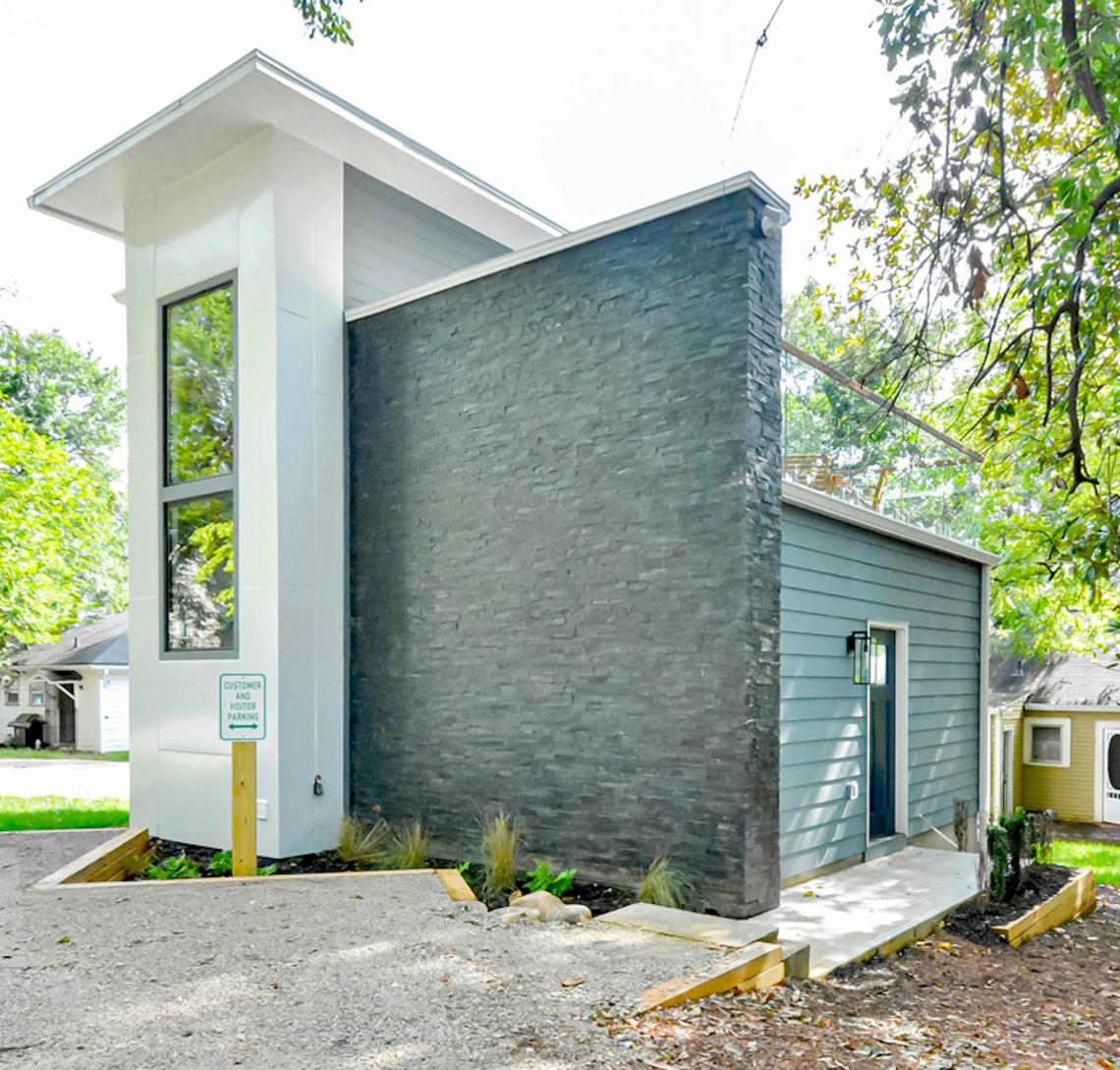 A modern-style facade, second-floor balcony, and parking pad at a 750-square-foot Home Park ADU in a backyard near Georgia Tech, as shown in 2023. Courtesy of Rockethouse Design and Build
To be clear, this is not a problem we can solve entirely by rent control, or property tax reform, or down-payment subsidies or utility assistance or even by stopping Wall Street from buying up the supply. We need more bedrooms. And I do hear the people who say, well, won’t there be more traffic and more crowded classrooms? But these folks, if you’re not among them at the moment yourself, are already your neighbors—they’re driving to work, their kids are going to school. They need homes they can afford, and cities need the freedom to plan for those homes using today’s best practices.
The reality we face is, we need hundreds of thousands of homes in Georgia, we need them yesterday, and we need to locate and build them with knowledge and materials and tools that didn’t exist when most of our current codes went on the books. At the same time, there’s no single solution that’s going to work in Fulton and Muskogee and in Whitfield counties, because those counties all have different issues, geographies, economies, and demographics.
There’s a key observation in the final paragraph of the Georgia Public Policy Foundation’s conclusions: “Housing production—when, where, how much, and at what cost—is dictated by factors at the local level.” That’s facts. Given that, what can the state do? Simply put, the state can support proven best-practices by allowing cities and counties to choose the solutions they need for their problems, and by providing direct incentives for those choices in the short term to make them doable. It’s a policy approach we call CHOICE (Community Housing Options Increase Cost Efficiency), and we’re going to need it if we’re serious about building hundreds of thousands of homes, the right way, in one of the largest states east of the Mississippi.
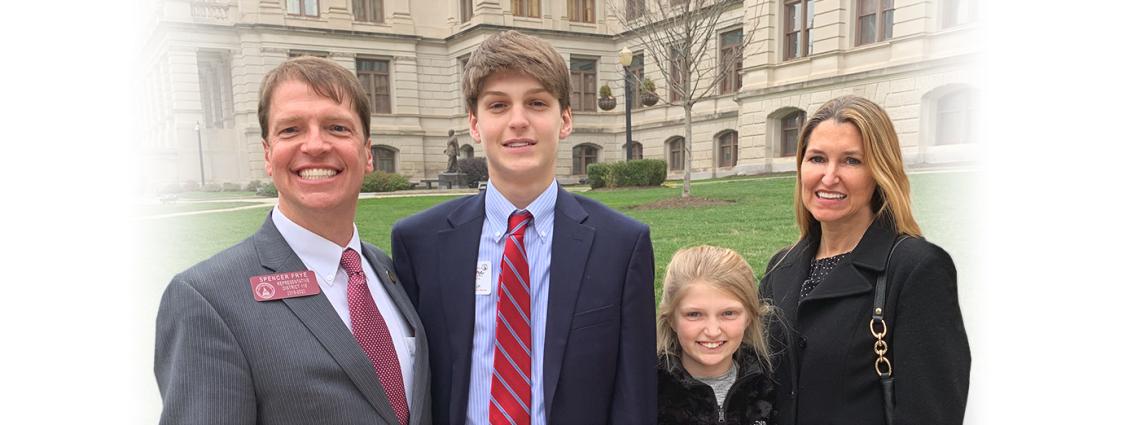 Frye and family outside Georgia’s capitol building in Atlanta. Via spencerfrye.com
The slate of policies under discussion focuses on common barriers to creating shelter for everybody, such as: increasing density, optimizing buildings for solar, replacing outdated zoning patterns, interbuilding apartments with business space, streamlining and shortening permit decision times, requiring standard energy efficiency ratings to be labeled on new homes, reducing impact fees for low-impact construction, better providing for seniors, and encouraging community-driven development, among others. The incentives are a natural outcome of the work a jurisdiction undertakes.
For example, if your county has a building code that optimizes new construction for solar, you’re in position to get more bang for the buck when it comes to state solar investments, so of course that gets points on a grant application. It’s the same with walkability or zoning plans or anything else—these improvements become a foundation to build on.
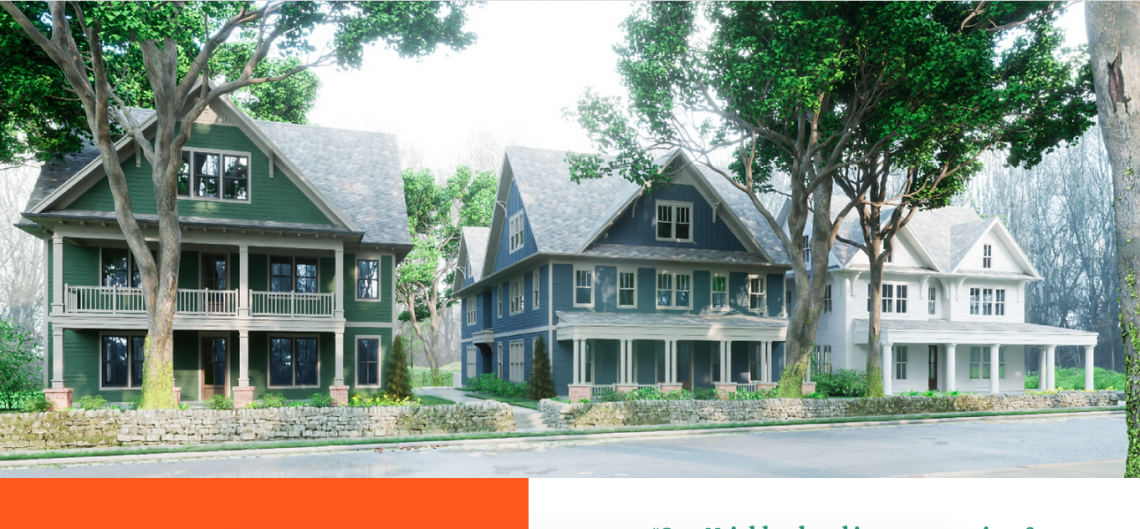 A rendering depicting three missing-middle building facades in Edgewood along Whitefoord Avenue that faced neighborhood opposition and were ultimately scrapped. SLR Investments
Our job in Atlanta is to identify what’s working, prioritize those reforms, and figure out how to share with communities the additional savings and productivity they help generate. It’s local government’s job to decide what’s going to work best for them and how far they want to go. And we can do this by engaging local control and enhancing property rights for everyone living in the state.
Building consensus among all our elected officials to solve problems is what the citizens of Georgia want. The government has no function except to work for the voters, and when people need cost-manageable housing, the state has to take action.
Working with counties and cities to get CHOICE solutions up and running is how we get people into homes they can afford, while freeing up more disposable income for local families at the same time, which is good for local economies. It’s a win for everybody.
...
Follow us on social media:
Twitter / Facebook/and now: Instagram
• Affordable housing news, discussion (Urbanize Atlanta)