

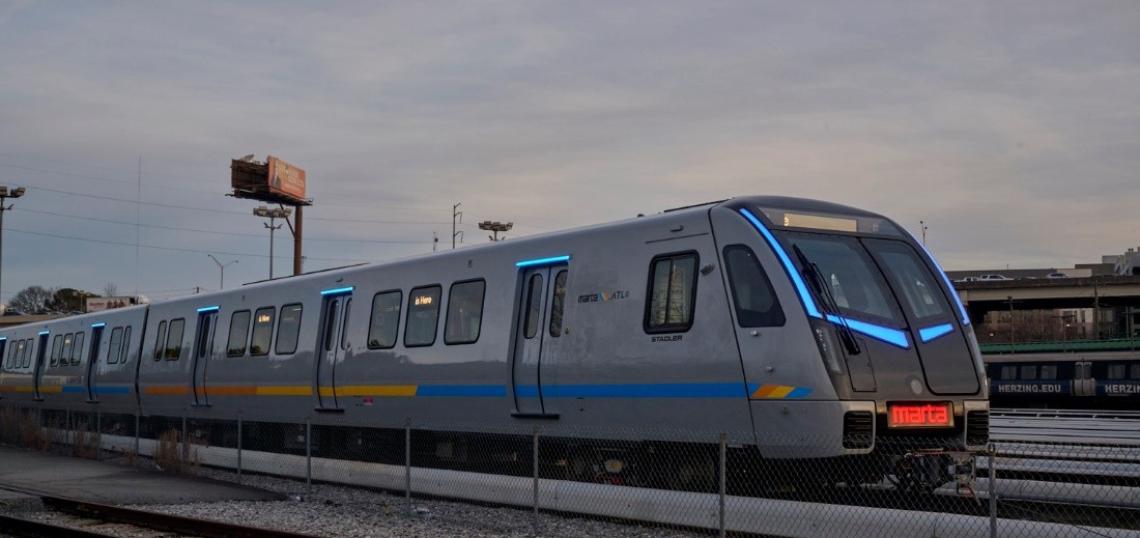
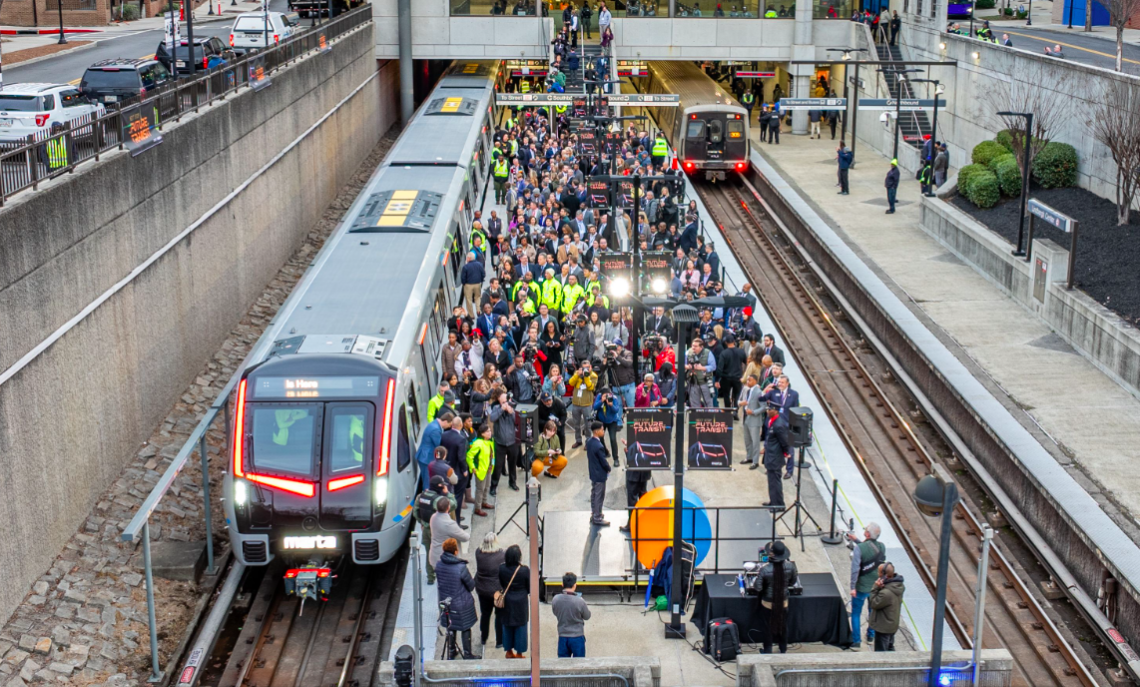
At a widely publicized PR event in January 2025, MARTA unveiled its first new state-of-the-art Stadler US Inc. CQ400 train to media and city officials, with promises the sleek railcars would be zipping through Atlanta by that July. Then-MARTA CEO and general manager Collie Greenwood described the trains as “like stepping into the future.”
A year and a half later, with the trains still not deployed for public use, MARTA scheduled a ribbon-cutting and rollout June 4 this year for the first Swiss-manufactured railcars. That was later cancelled, and no 2026 FIFA World Cup visitors experienced the futuristic vehicles.
Now, four months later, with sightings of CQ400 trains in test mode at MARTA stations and baseless internet rumors whipping up public interest again, the outlook still remains unclear for when Stadler’s creations might actually carry Atlanta passengers.
Payson Schwin, MARTA’s senior director of communications, tells Urbanize Atlanta the safety-certification process between MARTA and its partners at Stadler is ongoing. No timeline for when the first CQ400 train or fleet of trains might begin revenue service was available. And MARTA officials aren’t specifying exactly what’s undergoing testing now, or what may be triggering delays for the introduction of new trains.
“The testing is ongoing, and people will see the new trains out on the system as that continues,” said Schwin. “The next step is [Georgia Department of Transportation] certification… Pretty soon after certification, they’ll go into revenue service. We’re just trying to do the process thoroughly so we can ensure everyone’s safety.”
MARTA officials have previously said that, once testing is completed and finalized paperwork submitted to GDOT, the state-regulation process can take up to 30 days.
In June, following the most recent missed deadline, MARTA officials said their previously rocky relationship Stadler was on better terms, adding that the now-$707 million new railcar project will meet the highest safety standards once CQ400 trains do start rolling.
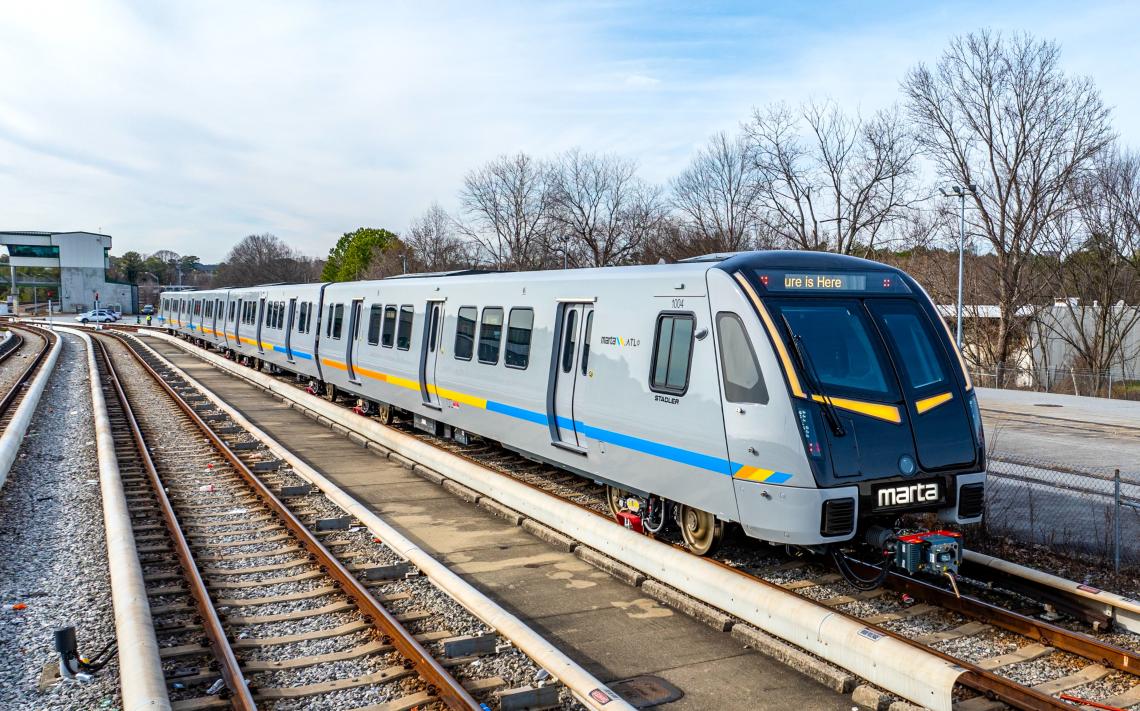
 A juxtaposition of MARTA's first CQ400 train to be operational on tracks (left) and a current railcar. Courtesy of MARTA
Some of MARTA’s current 300 railcars date back to the system’s debut in the 1970s. The new trains, whenever they’re released into the wild, will be a dramatic upgrade.
Beyond cutting-edge aesthetics, the new CQ400 trains will have a number of functionality upgrades. Each will be a four-car set with open gangways in between, allowing MARTA riders to pass between more than one car at once. That will make inter-car movement for passengers and security staff easier, per the agency.
Also inside the trains, charging stations, digital maps, computerized service information, and forward and inward-facing seats will be included. One goal is to provide more room for bikes, strollers, luggage, and people in wheelchairs, MARTA officials have said.
The front exterior of each railcar will have a lighted “smile” in either red, gold, blue, or green that denotes the color of each approaching rail line, according to MARTA.
MARTA entered a contract in 2019 to purchase $646 million worth of modernized new railcars from Stadler—funded via MARTA’s capital improvement program—marking the largest procurement deal ever for both the veteran train builder and transit agency.
 Courtesy of MARTA
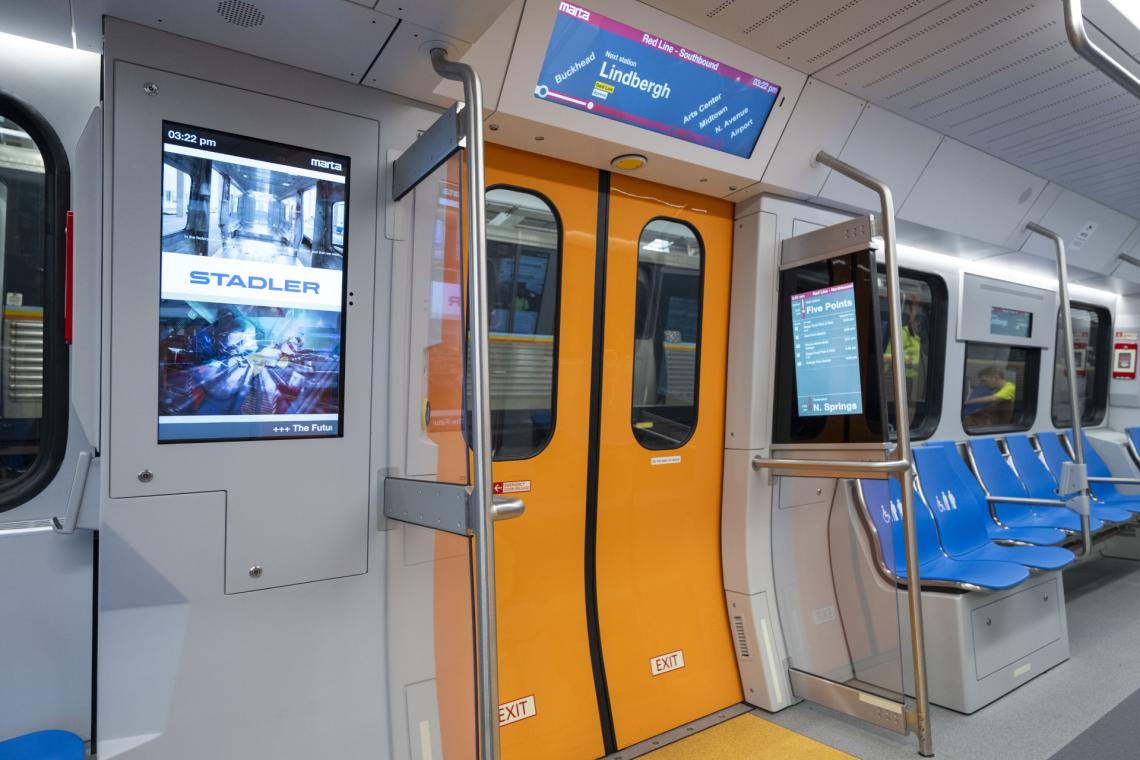 Inside the more open and digitized new CQ400 trains bound for MARTA's system. Courtesy of MARTA
Stadler announced in summer 2025 it was planting a permanent flag in Atlanta. The first major international expansion of the company’s Stadler Signalling Division has leased more than 7,000 square feet of office space in Uptown Atlanta, the retooled mixed-use hub formerly called Lindbergh. That includes laboratory space and a hub for Stadler’s growing US team with space for future expansion, all steps from MARTA’s Lindbergh Center station.
MARTA had awarded Stadler another $500 million contract in 2024 to replace its former signaling system with a more tech-driven one that’s communications-based. Stadler officials called the second MARTA deal a driving factor in the company’s decision to plant roots in Atlanta near MARTA’s headquarters.
...
Follow us on social media:
Twitter / Facebook/and now: Instagram
• Images: How upgrades for MARTA’s easternmost station turned out (Urbanize Atlanta)