


When he was in college at Georgia Southern University, a close friend of Thad Oviatt’s lost two bikes to thieves. In a single week.
The proverbial lightbulb sparked.
Oviatt, now founder and CEO of Parkent Cycles, started a college project that aimed to keep bikes safe and securely locked—a real solution with potentially widespread demand, especially in Atlanta, where each month seems to bring a new, useful example of bike infrastructure and proof “Atlamsterdam” isn’t so far-fetched.
Pretty soon Oviatt and associates “leveraged engineering resources around Atlanta” and came up with what he calls the first secure e-bike parking and charging kiosk in the world. His goal now is to push the kiosks across the metro Atlanta market, and recent indications are that Parkent could be onto something.
“From an urban planning perspective, we aren’t just pitching a bike rack,” Oviatt tells Urbanize Atlanta. “We’re addressing the biggest barriers to micromobility adoption in high-density developments—structural theft, property [return on investments], and battery-fire risks.”
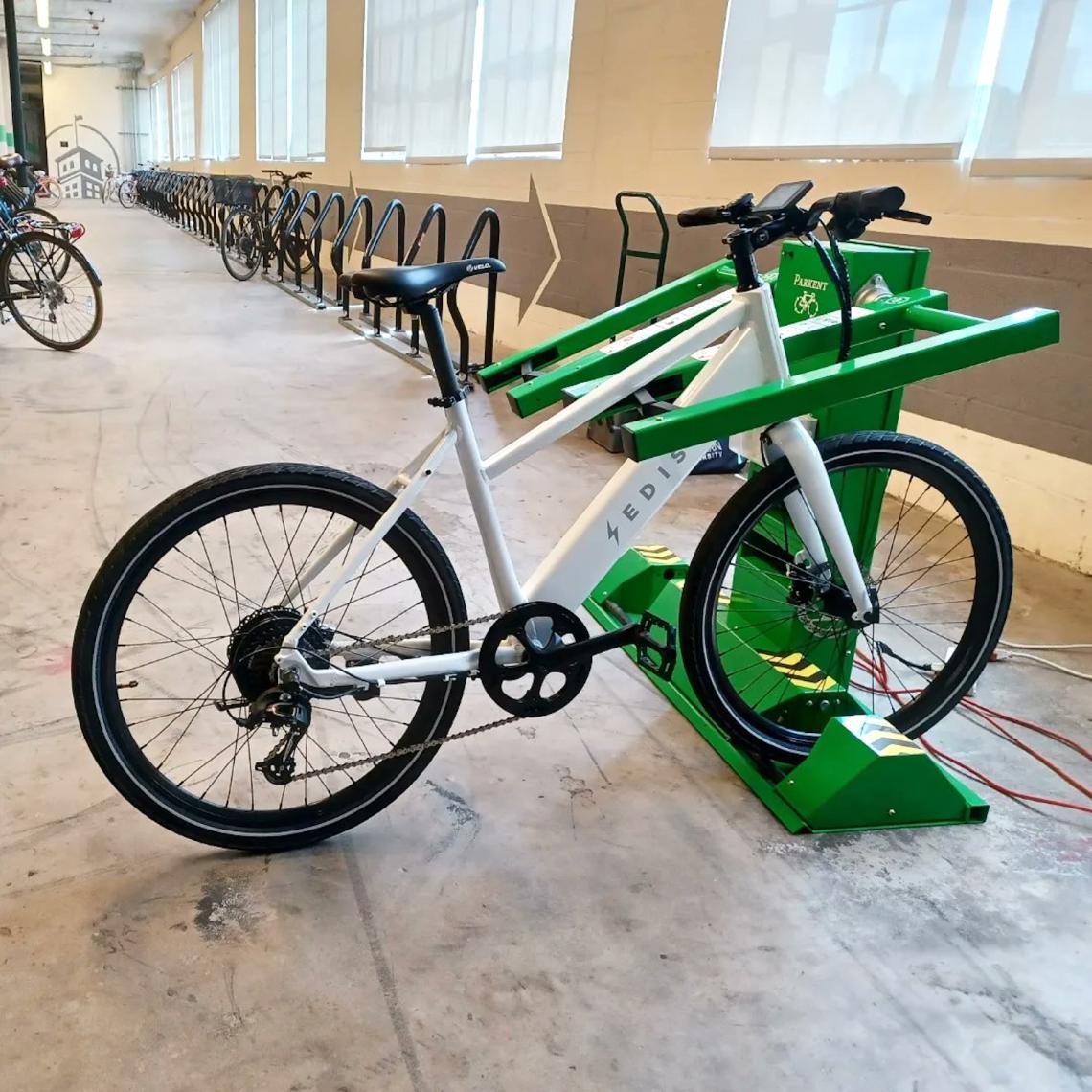 A Parkent demo at Ponce City Market. Courtesy of Parkent Cycles
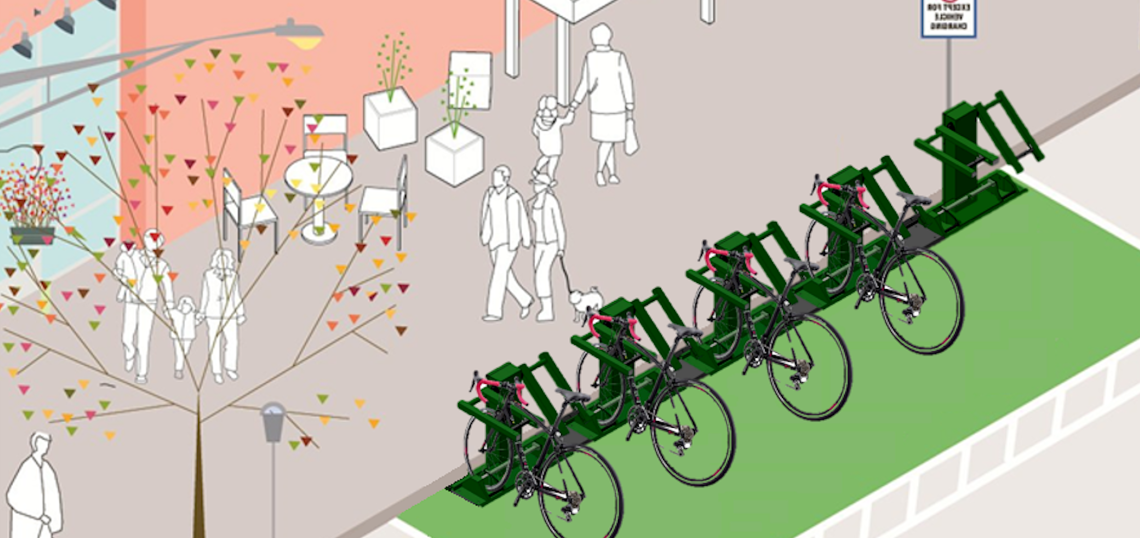
 Example of several tandem Parkent units in an urban setting. Courtesy of Parkent Cycles
For charging purposes, Parkent smart kiosks strive for universality, in that they’ll work for any e-bike, e-scooter, or even golf carts and cellphones. They’re solar-powered, says Oviatt, with no impact on local electrical grids.
Each kiosk is engineered to service two e-bikes with “vault-grade security” at the same time, and they’re all manufactured of “heavy-duty, powder-coated steel infrastructure” in Cobb County, which helps Oviatt support a local workforce and “maintain tight quality control,” he says.
When patrons use the Parkent Cycles App, the kiosks deploy thick steel bars that lock the bike’s frame and a wheel into a concrete-anchored structure “built to defeat angle grinders” and eliminate the need for traditional U-locks. Oviatt says the system is so intuitive, kids have figured it out with no instructions at every public technology demo. Each kiosk takes up as much space as a traditional three-loop rack, he says, and cargo e-bikes and e-trikes will also fit.
So what’s it all cost?
Parkent is offering two kiosks for $14,000 (with options for integrated solar power) as part of what’s considered a foundational package. The thinking is that property developers and broader Community Improvement Districts can test the concept “with minimal initial capital” to gauge metrics and see if riders adopt them, per Oviatt.
To build up from there, kiosks are $10,000 per unit.
For riders in the general public and building tenants, the cost could be free, or “just pennies a day… if the property owner chooses to subsidize it as a premium tenant amenity,” says Oviatt.
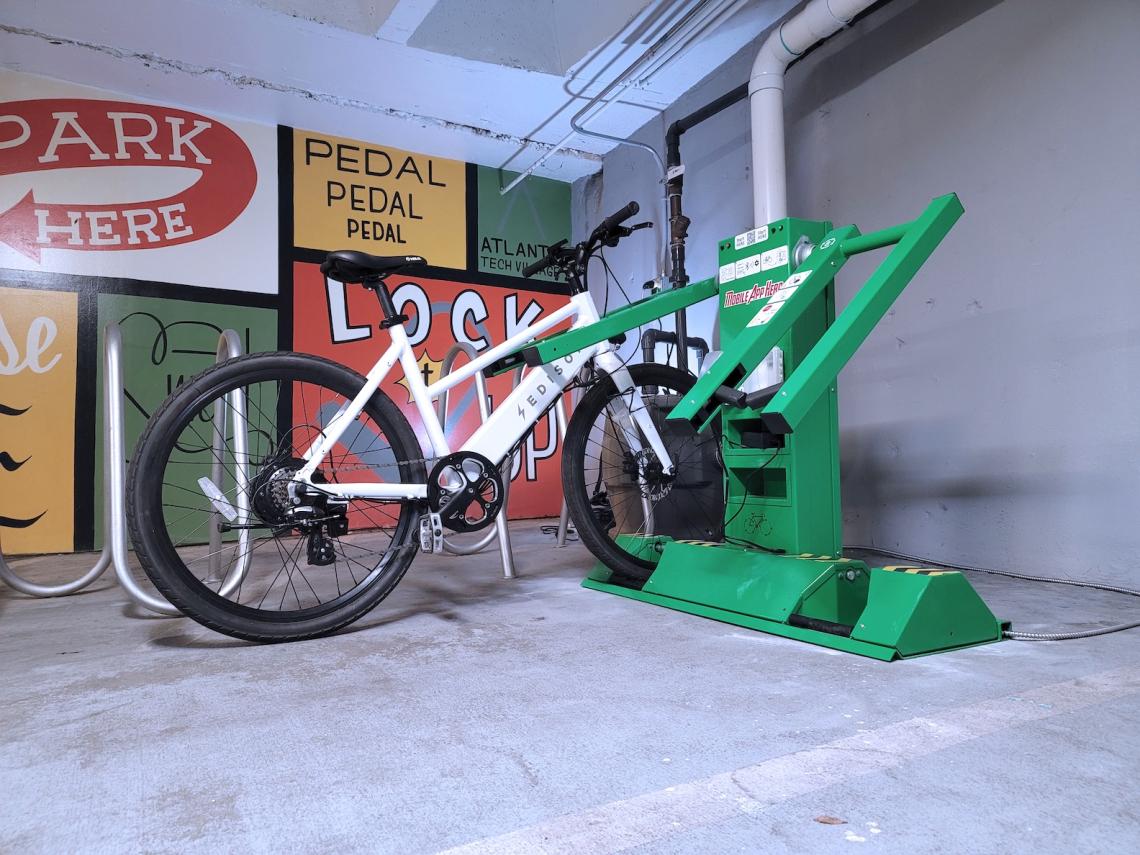 A charger pilot at Atlanta Tech Village.Courtesy of Parkent Cycles
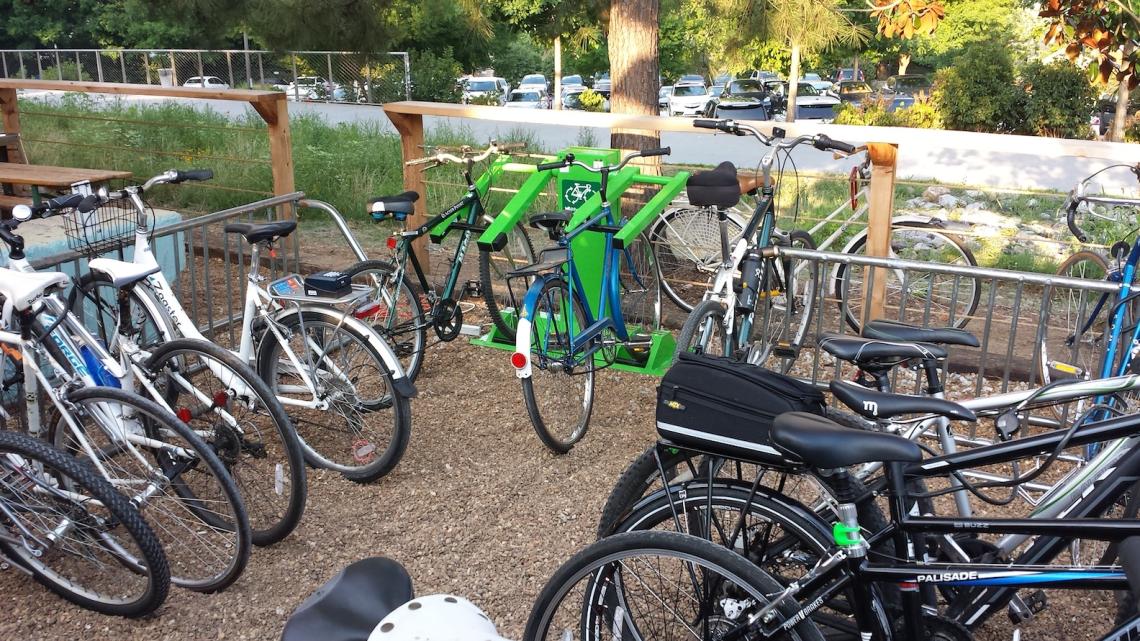 The Parkent system in action at Ladybird Grove & Mess Hall. Courtesy of Parkent Cycles
So what’s in it for buyers, exactly?
Oviatt says kiosk hosts might lower property insurance rates by up to 15 percent, given that stations are designed to mitigate both theft and catastrophic fire risks associated with lithium-ion batteries.
For commercial property owners, such as restaurants and breweries, EV infrastructure tax credits could come into play, per Oviatt. He says customer “dwell time” is projected to swell by about 40 percent as riders hang around longer to let their e-bikes or scooters charge up.
Each kiosk comes with a 1.0 kWh lithium-ion backup battery plucked from retired, shared e-scooters. The charging process works like this, per Oviatt’s description:
“Riders plug their own manufacturer-issued charging blocks into Parkent’s secure, weather-protected 110V AC outlets and store them in lockers inside the kiosk. A standard 500Wh city e-bike charges fully in three to five hours, aligning perfectly with office or retail dwell times.”
The locking/charging and unlocking process takes about five seconds each, according to a Parkent tutorial.
The number one question Oviatt fields (including from us) involves how long it might take to deploy the kiosks across a place like Atlanta. That all hinges, he says, on “real estate adoption,” but the wheels are turning, so to speak.
“We’re actively finalizing agreements with local developers and CIDs now,” he says, “meaning Atlantans can hopefully expect to see the first commercial kiosks hitting the ground within the coming quarters.”
Have a look at the locking and charging kiosks in a range of scenarios, including very Atlanta ones, in the gallery above.
...
Follow us on social media:
Twitter / Facebook/and now: Instagram
• New York Times: Atlanta among ‘5 Great North American Biking Cities’ (Urbanize Atlanta)