

[Editor's note: With its inimitable downtown architecture, scenic riverwalk, and lively arts and food scene, Columbus is a mid-sized urban jewel on the banks of western Georgia’s Chattahoochee River. In the following op-ed, Chattahoochee Valley Infrastructure Coalition president Frank Lumpkin makes the case for how Georgia’s transportation authority has a “once-in-a-generation opportunity” to make Columbus notably better—and more pedestrian-friendly—by way of bridge design.]
...
GONE are the days when American infrastructure was routinely designed to inspire.
In Georgia, outside of the Sidney Lanier and Talmadge Bridges along the coast, it’s difficult to think of a truly beautiful highway bridge crossing. But it doesn’t have to be that way. Across the country—and even in smaller cities—communities have demonstrated that infrastructure can serve both practical and civic purposes.
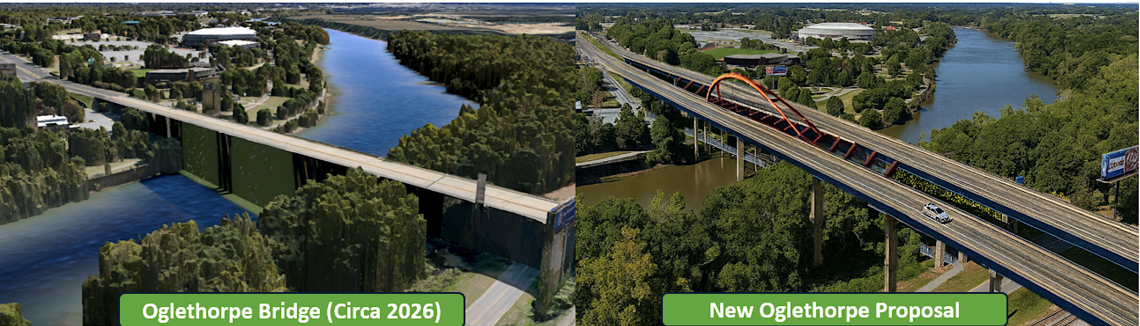
As Georgia, and specifically the Georgia Department of Transportation, moves forward with plans to demolish and replace the current Oglethorpe Bridge with two new parallel spans, Georgia and the City of Columbus have a rare opportunity to create not just a piece of infrastructure, but a gateway worthy of the community and state it serves.
According to GDOT, more than 30,000 vehicles enter Georgia each day via U.S. 280/Ga. Highway 520, which the bridge carries across the Chattahoochee River into Columbus. This is not just another crossing—it’s the western gateway to Georgia and the front door to downtown Columbus. The bridge sits adjacent to Synovus Park, home of the Columbus Clingstones (a Double-A baseball team affiliated with the Atlanta Braves), and at the center of a rapidly redeveloping riverfront district. It also carries Victory Drive, the primary corridor connecting downtown Columbus to Fort Benning, one of the largest military installations in the world.
Yet today, the crossing feels purely utilitarian—even lacking the iconic “Welcome to Georgia” signage, complete with the state peach and the governor’s name, found at many major entrances into the state.
This project presents a rare opportunity to transform the crossing into a multimodal and architecturally distinctive gateway worthy of both Columbus and Georgia.
 Courtesy of Chattahoochee Valley Infrastructure Coalition
Better vision for pedestrian connectivity
Current plans include pedestrian access alongside the roadway at grade. While technically accommodating pedestrians and bikers, sidewalks directly adjacent to high-speed traffic are rarely inviting or heavily used—especially given the elevation differences between the bridge, the 22-mile Chattahoochee Riverwalk, and surrounding streets.
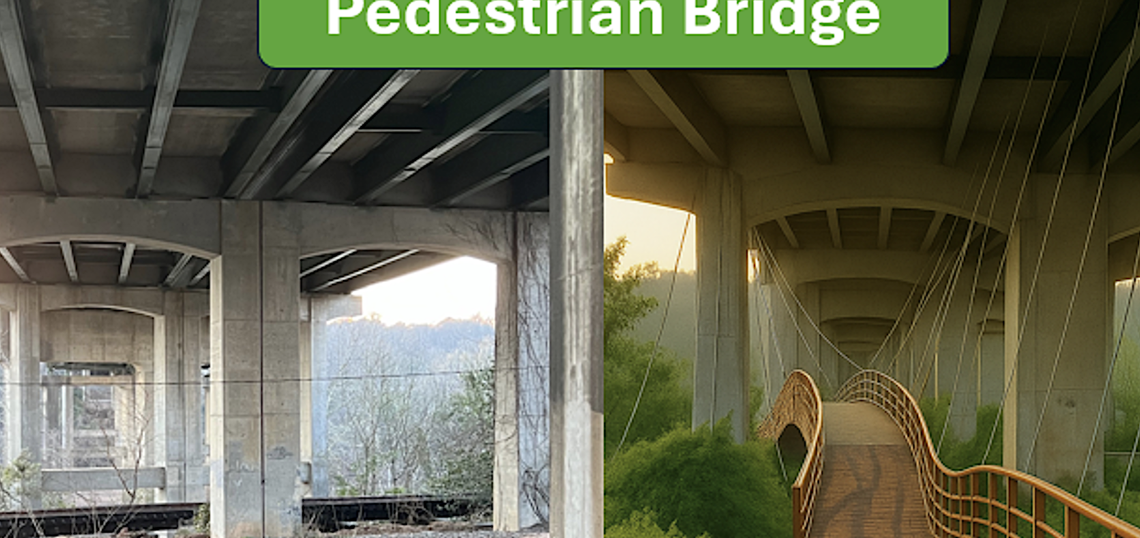
Instead, GDOT and Columbus should pursue a grade-separated pedestrian and bicycle crossing integrated into or beneath the bridge structure itself. One possibility would be a suspension-style crossing suspended beneath the bridge, similar to an innovative design used in Richmond, Va., where a pedestrian connection hangs beneath the interstate crossing linking its downtown to Belle Isle.
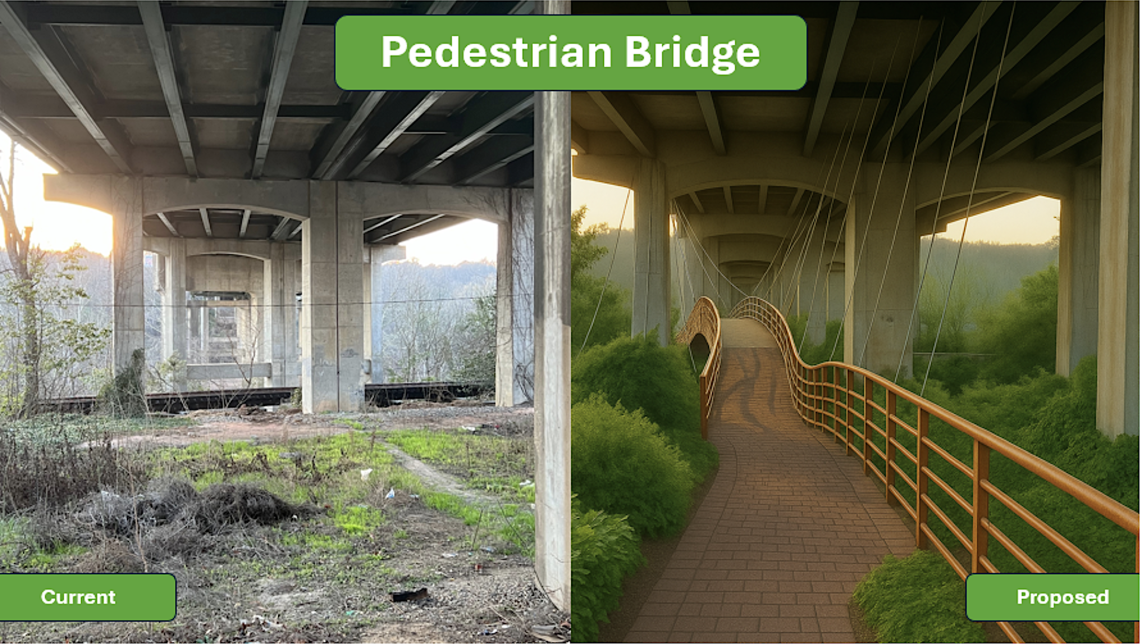 Courtesy of Chattahoochee Valley Infrastructure Coalition
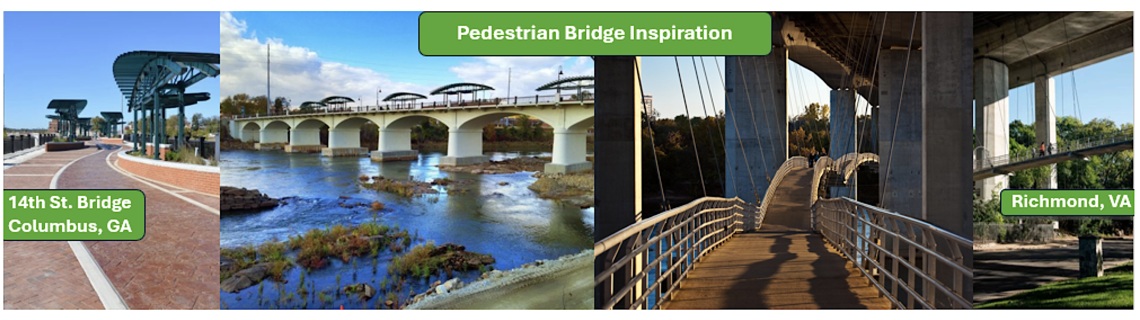 Courtesy of Chattahoochee Valley Infrastructure Coalition
Another option would be to preserve portions of the existing bridge infrastructure (particularly the pylons) much like was done 1.4 miles upriver, where the 14th Street Bridge was converted into a dedicated pedestrian crossing rather than being demolished.
The geography of the site makes this feasible.
On the Georgia side, there are effectively three levels: the Chattahoochee Riverwalk, street level along Broadway, and the elevated highway itself. On the Alabama side, the terrain rises. This topography creates an ideal opportunity for a grade-separated pedestrian crossing connecting Broadway in Columbus directly to Brickyard Road in Phenix City without interfering with highway traffic overhead.
Such a connection, when paired with the existing 14th Street Pedestrian Bridge crossing, would create an approximately five-kilometer, bi-state riverfront loop ideal for runners, walkers, and cyclists who already heavily utilize the area. It would also strengthen connectivity between Columbus and Phenix City while providing additional parking and event access for activities at Synovus Park and the greater South Commons district.
Although Phenix City’s current trail network falls roughly .8 miles short of a direct connection, completing that link would be relatively inexpensive, likely supported by local stakeholders, and could even be established by GDOT as a condition for incorporating the pedestrian components into the overall bridge project.
Creating an architectural gateway
The Oglethorpe Bridge Replacement is also an opportunity to create a visual landmark worthy of Columbus.
Infrastructure shapes first impressions, and gateway bridges, in particular, can become defining symbols of a city. A thoughtfully designed truss, arch, or signature structural element could provide identity and civic pride while creating a recognizable visual anchor near the ballpark and downtown riverfront.
Columbus does not need a bridge on the scale of the Brooklyn Bridge to achieve this effect. Even modest architectural enhancements can dramatically elevate public infrastructure.
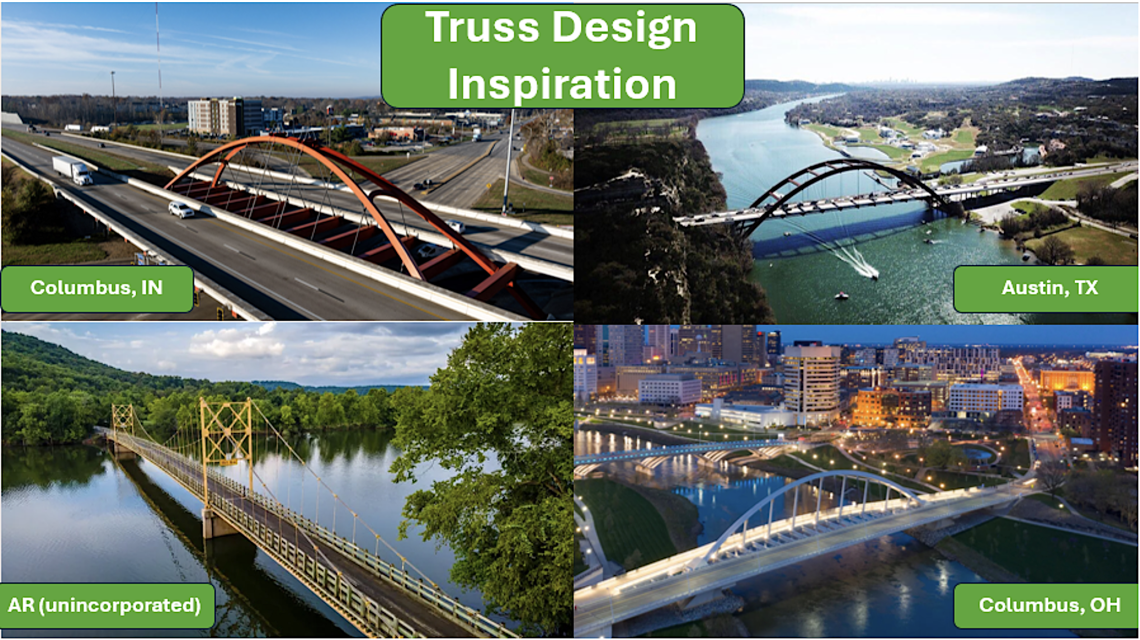 Courtesy of Chattahoochee Valley Infrastructure Coalition
For inspiration, one can look to a smaller city bearing the same name: Columbus, Ind., recognized for its commitment to architecture and public design. Closer to home, projects such as the “Peachtree Crossing” bridge over the downtown Connector in Atlanta and the pedestrian bridge across Interstate 85 in Newnan demonstrate that aesthetically ambitious infrastructure is achievable in Georgia.
As the western entrance to both Columbus and the state itself, this crossing should do more than move traffic efficiently—it should announce arrival.
A realistic path forward
Funding concerns naturally accompany projects like these. But Columbus has an exceptional history of leveraging public-private partnerships to deliver transformative infrastructure.
The request is not for GDOT to fully fund enhanced architectural elements or a pedestrian crossing itself. Rather, it’s to ensure the bridge is designed in a way that allows those features to be incorporated with private money—either during initial construction or in future phases.
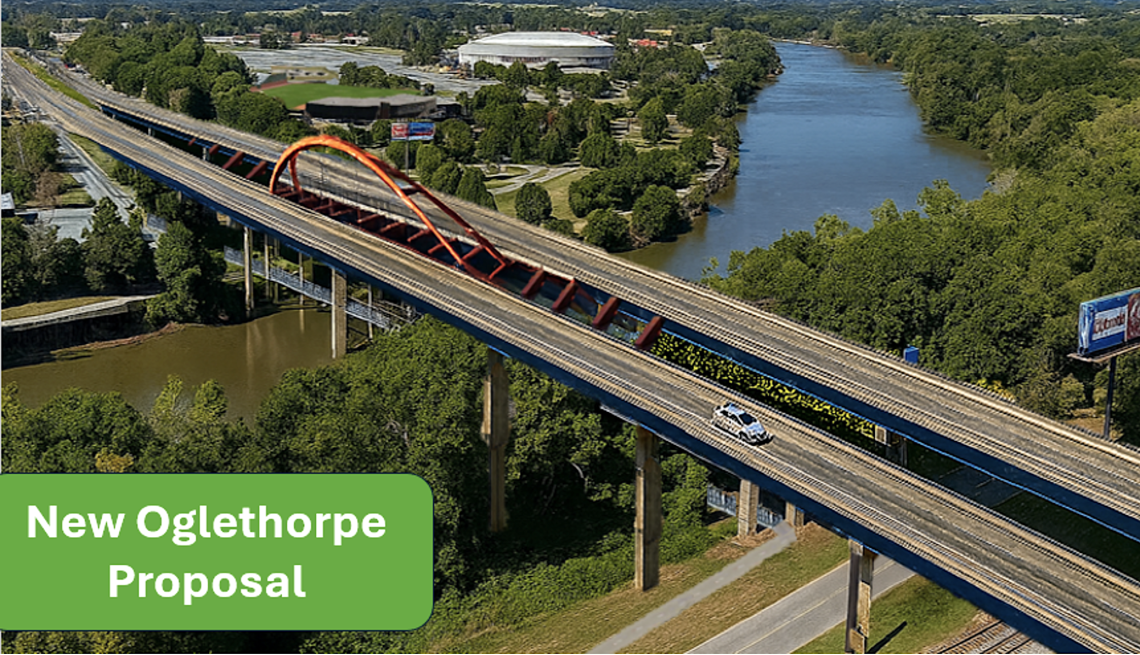 Courtesy of Chattahoochee Valley Infrastructure Coalition
Columbus has repeatedly demonstrated the ability to attract private investment for civic projects, including the aforementioned 14th Street Pedestrian Bridge, the Fort Benning-Columbus Gateway interchange, and the internationally recognized whitewater course through downtown. Organizations such as the Dragonfly Trails and the Gateways Foundation have experience raising private funds, securing grants, and managing projects of this scale.
Most importantly, enhancements like these are significantly easier—and far less expensive—to incorporate during initial construction than to retrofit years later.
The replacement of the Oglethorpe Bridge is a once-in-a-generation opportunity. Columbus can settle for another purely functional crossing, or it can create a gateway that reflects the ambition, beauty, and civic pride of the city it serves.
— Frank Lumpkin, president, Chattahoochee Valley Infrastructure Coalition
...
Follow us on social media:
Twitter / Facebook/and now: Instagram
• Letters to the Editor (Urbanize Atlanta)