

…
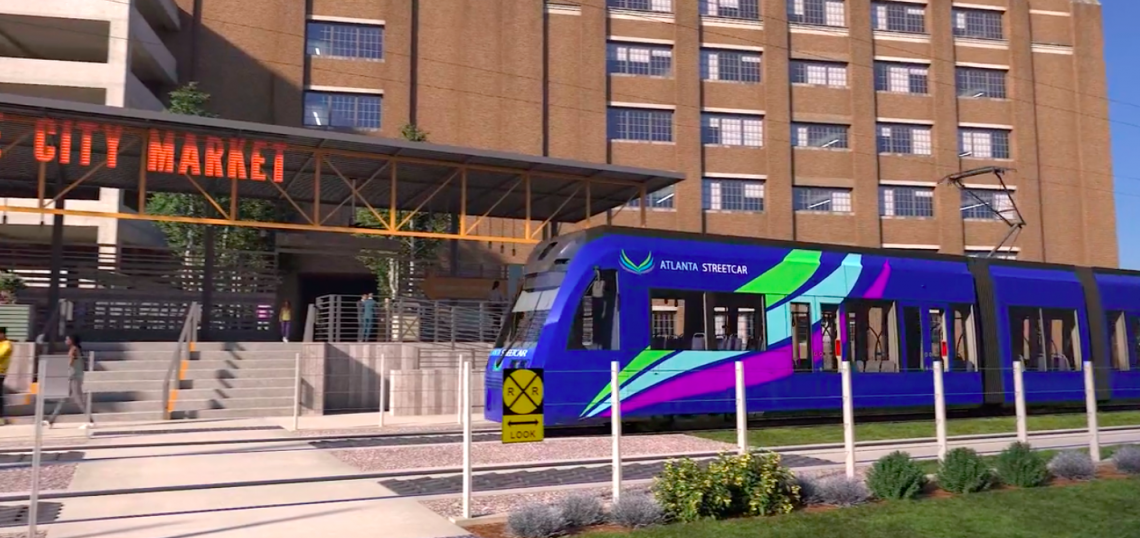
CITYWIDE—An in-depth AJC investigation has found a small group of MARTA, Atlanta Beltline, and city officials voted behind closed doors in May to halt all work on plans to bring light rail to the Beltline’s Eastside Trail—findings that have rankled some of the Beltline’s longest standing advocates, city officials unaware of the decision, and other observers. Even ardent rail naysayers are calling the news a surprise.
Atlanta Mayor Andre Dickens made a bombshell announcement in March that the city was shifting its focus toward a southside Beltline transit system in conjunction with MARTA that, according to Dickens, would better serve the city and transit-dependent residents than downtown’s current streetcar branching to Ponce City Market. But until this week’s media report, even top-ranking city officials at the time were unaware of the secret vote two months later to slam the brakes on Streetcar Extension East plans, for which more than $9 million had already been spent, per the AJC’s findings. No design work or studies have moved forward since May, though even close observers assumed the ball was still slowly rolling.
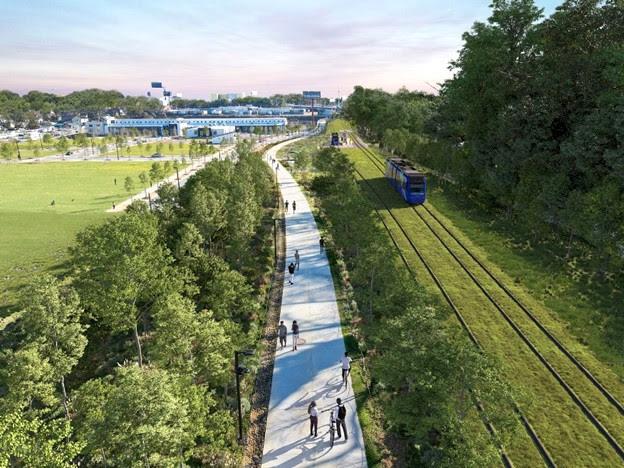 Transit-rich future for the Beltline's Southside Trail? Atlanta BeltLine Inc.
Critics, including current and former Atlanta City Council members, told the news outlet the “bait and switch” tactic could erode public trust and give further evidence as to why the More MARTA program’s rollout is deeply flawed. (This year will mark a decade since Atlantans voted overwhelmingly in favor of a half-penny sales tax, and not a single capital project has been delivered.) Beltline visionary Ryan Gravel told the AJC he was “heartbroken” but not surprised by the backroom decision, which he predicted will “go down in Atlanta history as a significant failure,” adding: “It’s the decision not to do transit, but it’s also the decision to go against the will of the people without a process commensurate with the process that delivered that direction.”
There have been hints since the mayor’s March announcement that urbanists’ light-rail dreams for the Beltline’s most popular (and populated) section were D.O.A. For instance, Clyde Higgs, Beltline CEO and president, opined to WABE in August: “I don’t think Eastside [Trail] rail makes sense at this point,” later adding: “We’re not saying no transit [on the Eastside Trail]—we’re just having a debate on the type of transit.”
…
METROWIDE—On a related note, perhaps, metro Atlanta’s traffic woes did the region no favors in RentCafe’s new rundown of the Most Livable Metro Areas in 2026. Of 149 metro areas studied across 17 key metrics, Atlanta ranked an unimpressive 116th overall, based on three categories: quality of life, community, and economics.
Analysts found that more metro Atlanta residents are routinely stuck in traffic (almost 59 percent reported a commute of longer than 30 minutes) than any other of the 20 large metro areas studied. (In Philadelphia, for context, less than 1/3 of commuters, or 32.4 percent, grapple with similar delays.) Detroit and Atlanta were the only metros in the large category where a majority of the population faces such long commutes, per RentCafe’s findings.
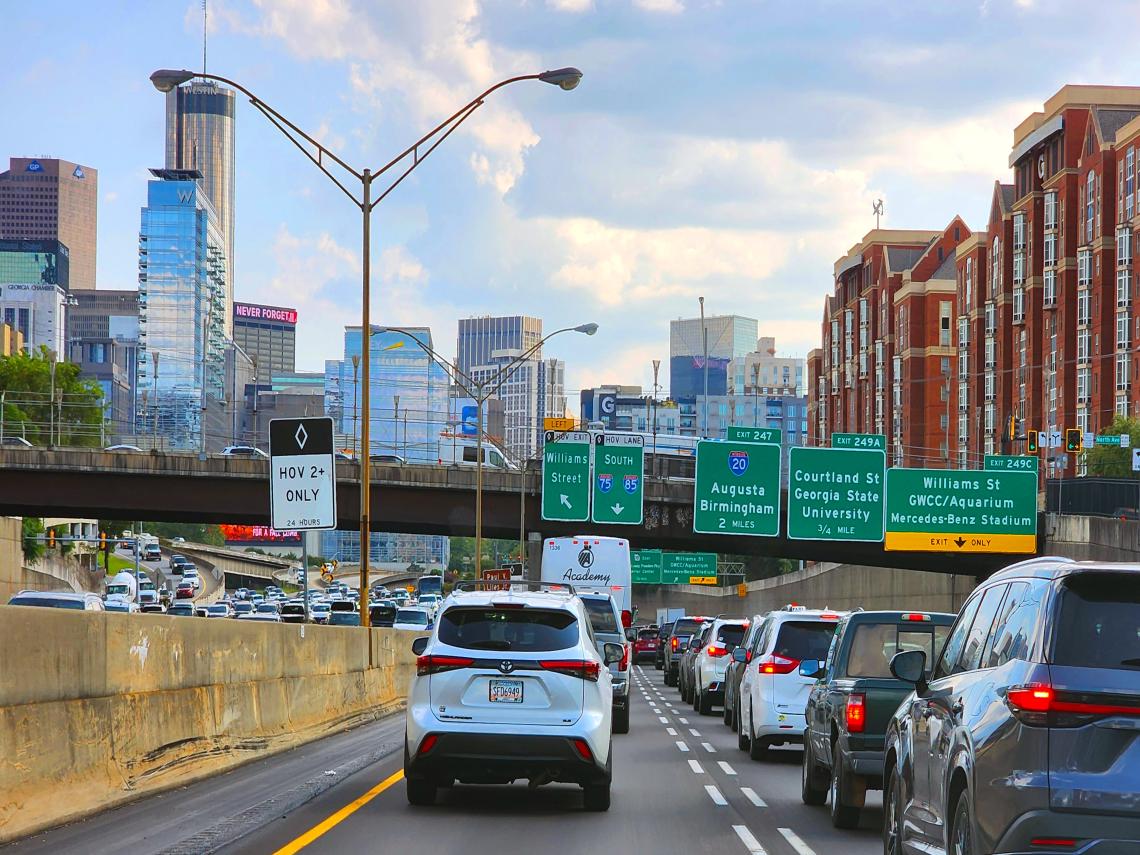 A familiar scene on Atlanta's downtown Connector, which counts up to 15 lanes in this area. Shutterstock
Restricted healthcare access across metro Atlanta (where there’s one medical facility for every 3,300 people) and a high rate of a “sedentary population” were also detrimental to the overall score.
On a brighter note, metro Atlanta’s economy ranking was high (18, up from 31 last year), as the unemployment rate dropped from 5 to 4.5 percent, the income gap narrowed slightly, and overall cost of living dipped to 5.8 percent lower than the national benchmark, according to the analysis.
Here’s a rundown of RentCafe’s top 20 Most Livable Metro Areas for this year, alongside sample metrics:
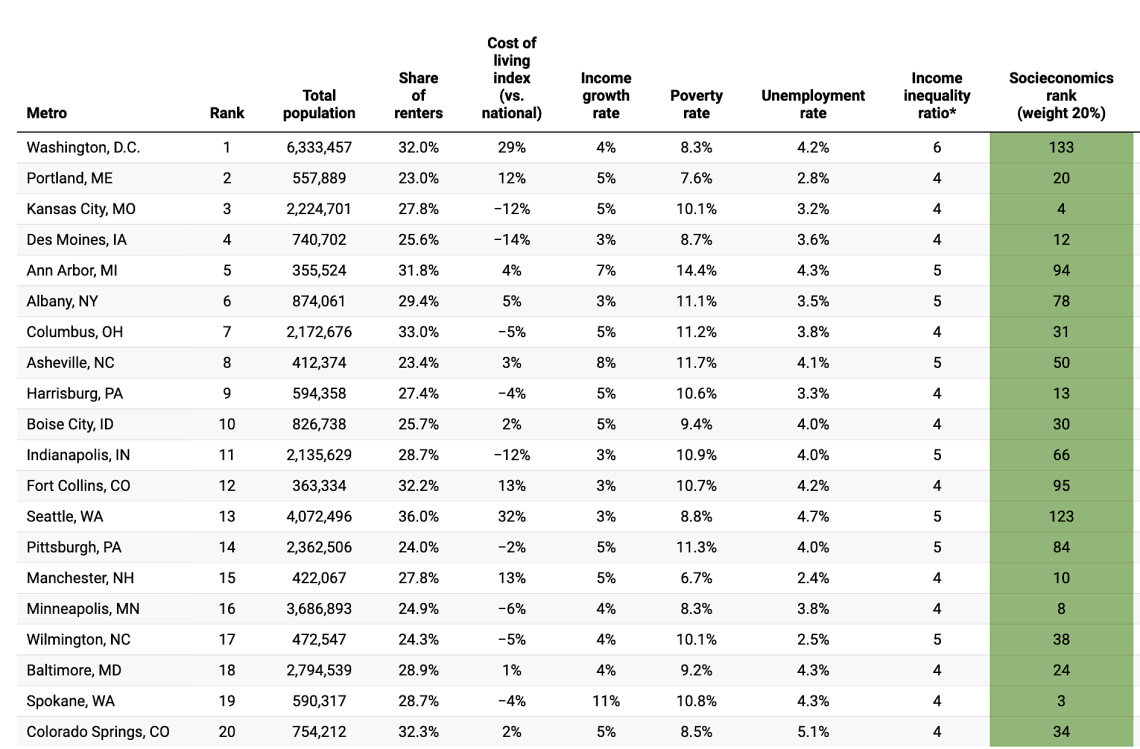 RentCafe
…
JOHNS CREEK—Up in Johns Creek, Toro Development Company revealed this week it’s bringing in “world-class partner” Mainsail Lodging & Development to develop and operate the 150-key hotel that will serves as the rising, mixed-use Medley project’s hospitality cornerstone. Mainsail’s portfolio in Georgia includes Midtown’s Epicurean Atlanta, Trilith Guesthouse, and Macon’s historic, adaptive-reuse Hotel Forty Five.
The to-be-named hotel is expected to be flagged “under a nationally recognized, upper-upscale lifestyle soft brand” with features that include 5,000 square feet of flexible meeting and events space and a signature restaurant linked to an adjacent greenspace, according to TDC officials. Schedules call for it to open in 2028.
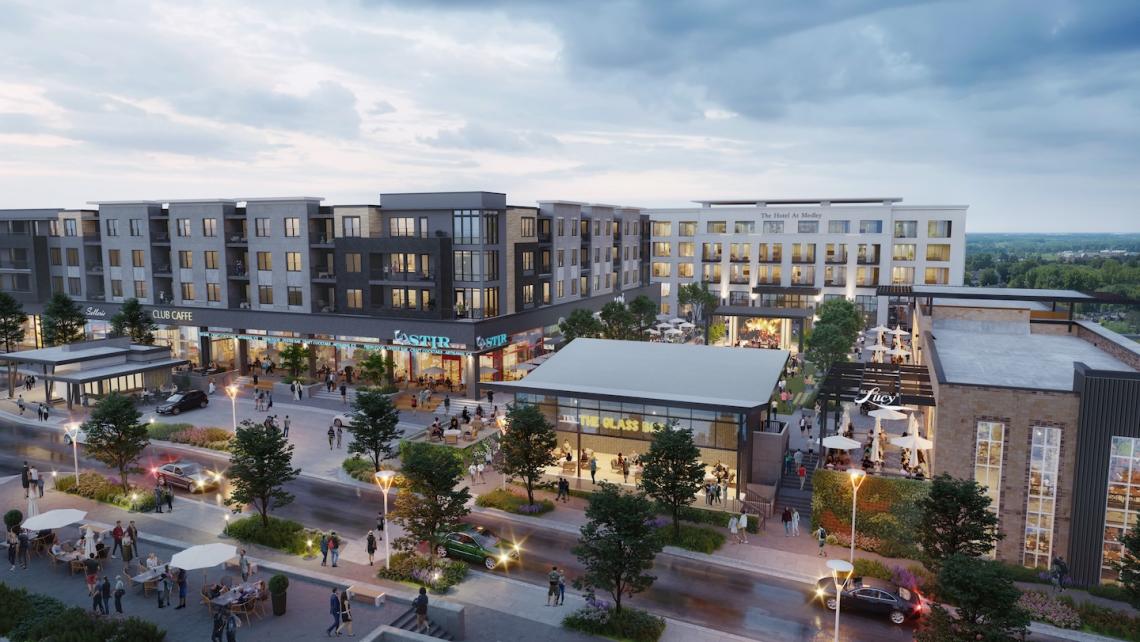 A rendering illustrating the scale of Medley's forthcoming mid-rise hotel (at top right) and other mixed-use components. Courtesy of Toro Development Company
The initial mixed-use phase at Medley, meanwhile, is on pace to deliver in late October, per TDC.
On the food front, Medley’s phase one has signed the first suburban locations of Fadó Irish Pub and Little Rey, a Mexican concept by chef and restaurateur Ford Fry. Other announced tenants include CRÚ Food & Wine Bar, 26 Thai Kitchen and Bar, Five Daughters Bakery, Summit Coffee, Lily Sushi Bar, Knuckies Hoagies, Cookie Fix, Sugarcoat Beauty, BODY20, Sephora, Rena’s Italian Fishery & Grill, High Country Outfitters, and BODYROK, among other concepts.
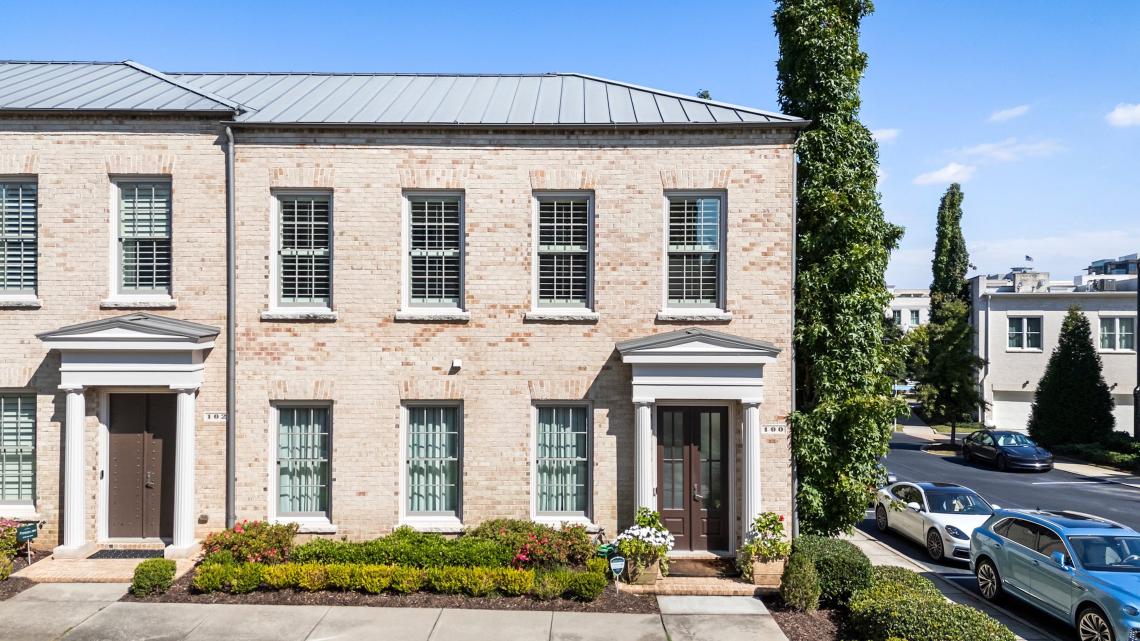 Avalon’s 101 for-sale homes are a template for Medley's townhouses, which will start at 2,000 square feet, according to TDC reps. Courtesy of Toro Development Company
Medley’s revised scope calls for 164,000 square feet of retail, restaurant, and entertainment space; 110,000 square feet of offices; and a mix of 883 luxury apartments and townhomes.
The project broke ground a year ago.
...
Follow us on social media:
Twitter / Facebook/and now: Instagram
• Our 2026 wishlist for a better Atlanta. What's yours? (Urbanize Atlanta)