

Atlanta sports magnate Arthur Blank and leading U.S. Soccer dignitaries cut the proverbial ribbon today on a sprawling, cutting-edge training complex like the sport has never seen in America.
Situated about 12 miles from Atlanta’s airport, just north of Town at Trilith and Trilith Studios, the Arthur M. Blank U.S. Soccer National Training Center creates, for the first time, a centralized home for all of U.S. Soccer’s 27 national teams, coaches, and operations.
The 910 Veterans Parkway facility in Fayetteville tallied a price tag of roughly $250 million—or $50 million more than originally expected when the project broke ground about two years ago. Blank, owner of Atlanta United and the Falcons, contributed $50 million toward the cause, and the complex marks the latest major project around Atlanta to bear his name.
Another significant contribution came from Chick-fil-A chair and Trilith founder Dan Cathy, who donated the 200 acres claimed by U.S. Soccer.
Today, 35 acres are designated as playing surfaces around the complex, while another 77 acres remains undeveloped. Uses such as onsite athlete housing could sprout on remaining land in the future, per officials.
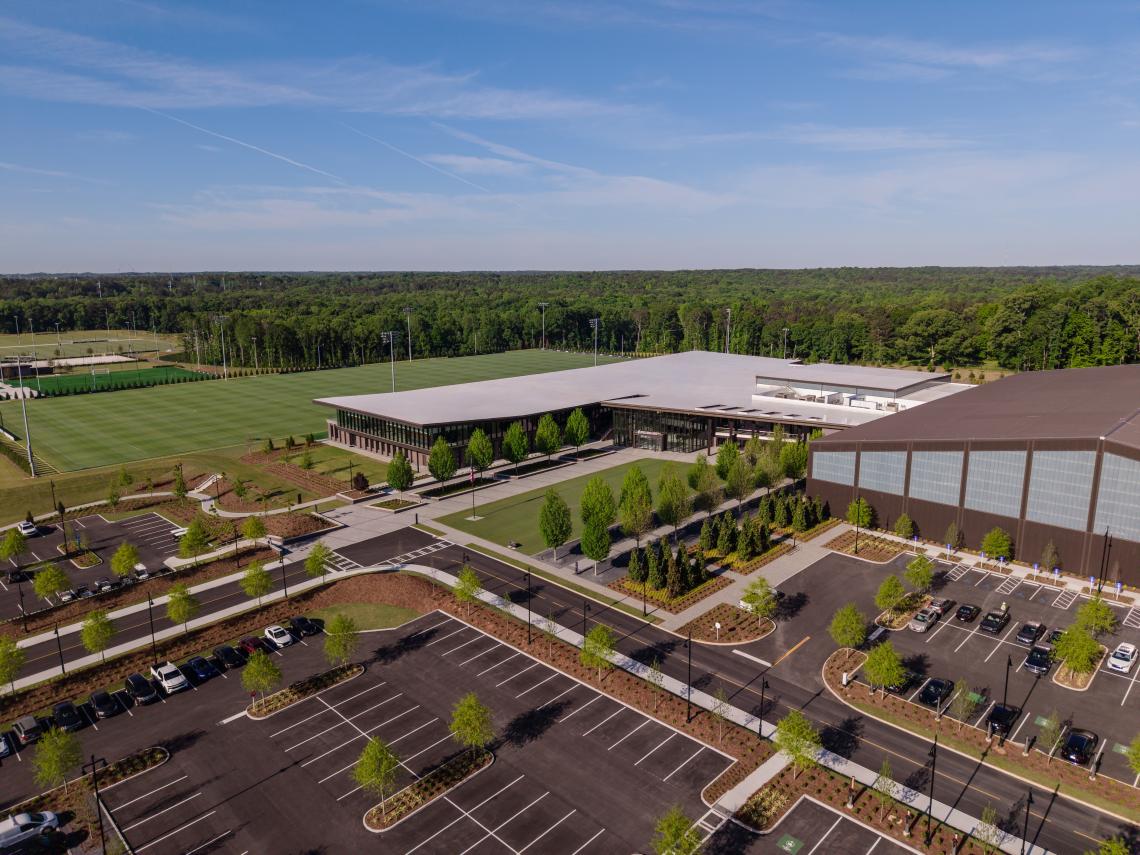 Photo by Garrett Rowland; courtesy of Gensler, Arthur M. Blank U.S. Soccer National Training Center
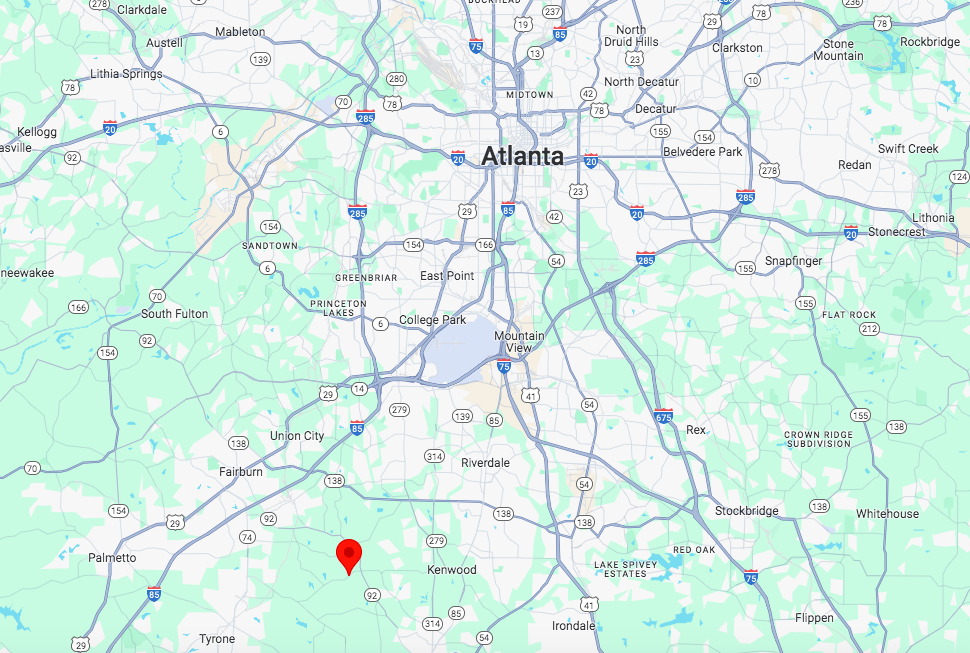 Location of the Arthur M. Blank U.S. Soccer National Training Center, north of Trilith in Fayette County. Google Maps
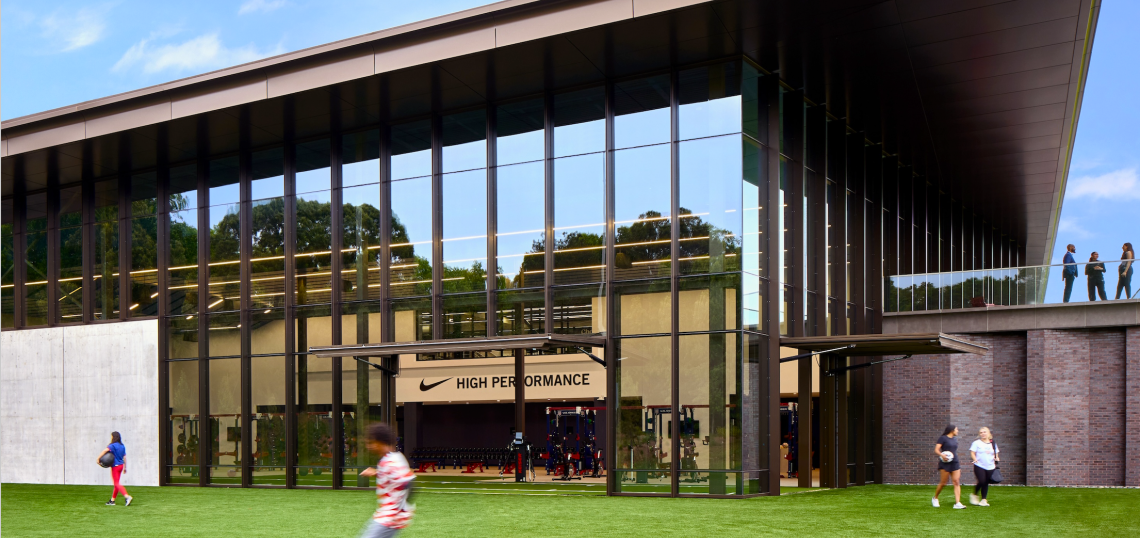
Beyond its indoor and outdoor playing fields, the Gensler-designed campus counts more than 200,000 square feet of headquarters space for all U.S. Soccer staff, 20 locker rooms, 19 meeting rooms, and a 10,000-square-foot, state-of-the-art gym. (Fun fact: What’s described as “high-performance flooring” in some areas is Nike HERO material created from recycled shoes.)
Outside, the campus counts 17 playing surfaces.
Those include 13 regulation-size natural grass fields, two artificial turf fields, and two sand pitches for beach soccer. According to Gensler, more than 21,000 new trees, plants, and shrubs now dot the site, too.
Big picture, the National Training Center aims to strengthen the entire U.S. soccer community.
According to Gensler reps, it was inspired by iconic campuses such as Wimbledon and Augusta National Golf Club, where the architecture of warm woods and natural stone leans more toward restraint, as “conveyed through proportion, materiality, and light rather than overt symbolism.”
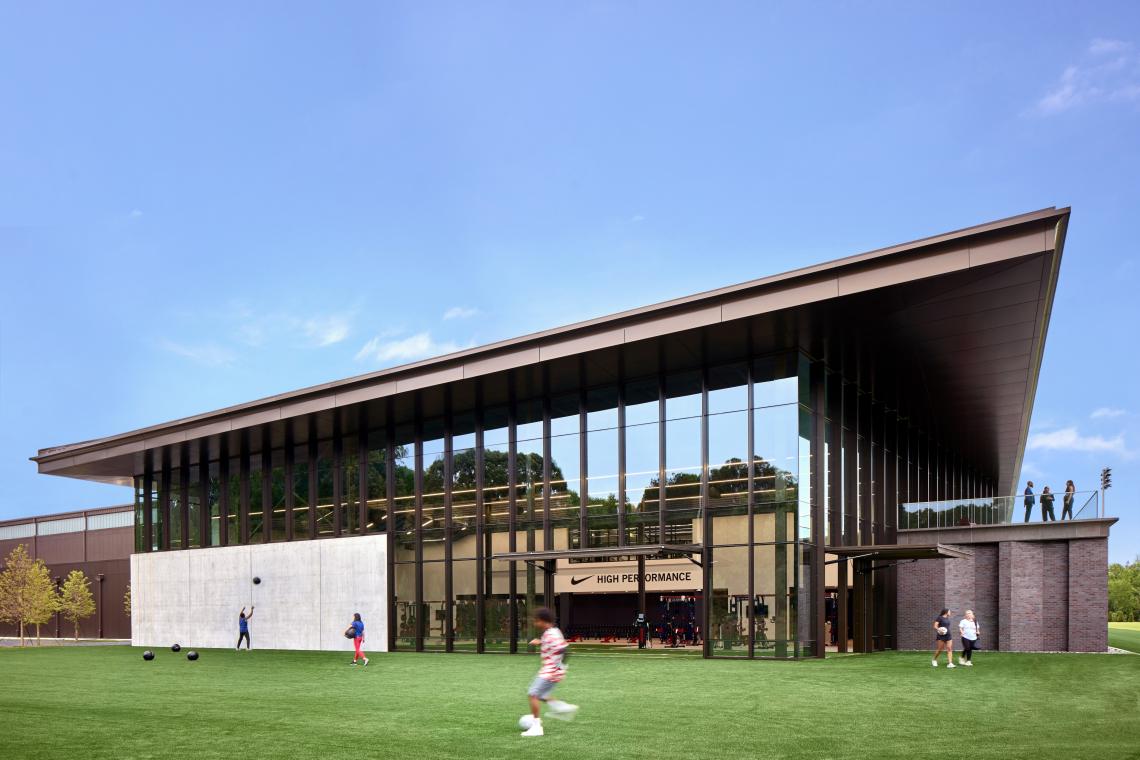 Photo by Garrett Rowland; courtesy of Gensler, Arthur M. Blank U.S. Soccer National Training Center
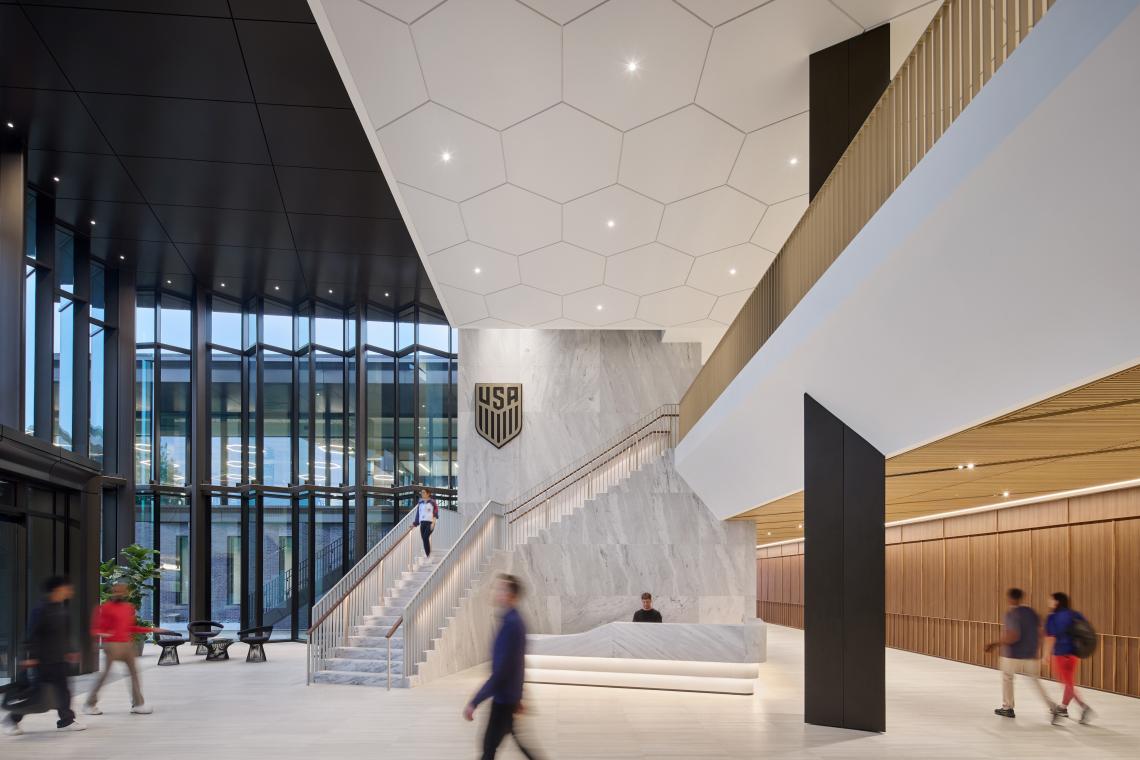 Soaring ceilings in the HQ lobby. Photo by Garrett Rowland; courtesy of Gensler, Arthur M. Blank U.S. Soccer National Training Center
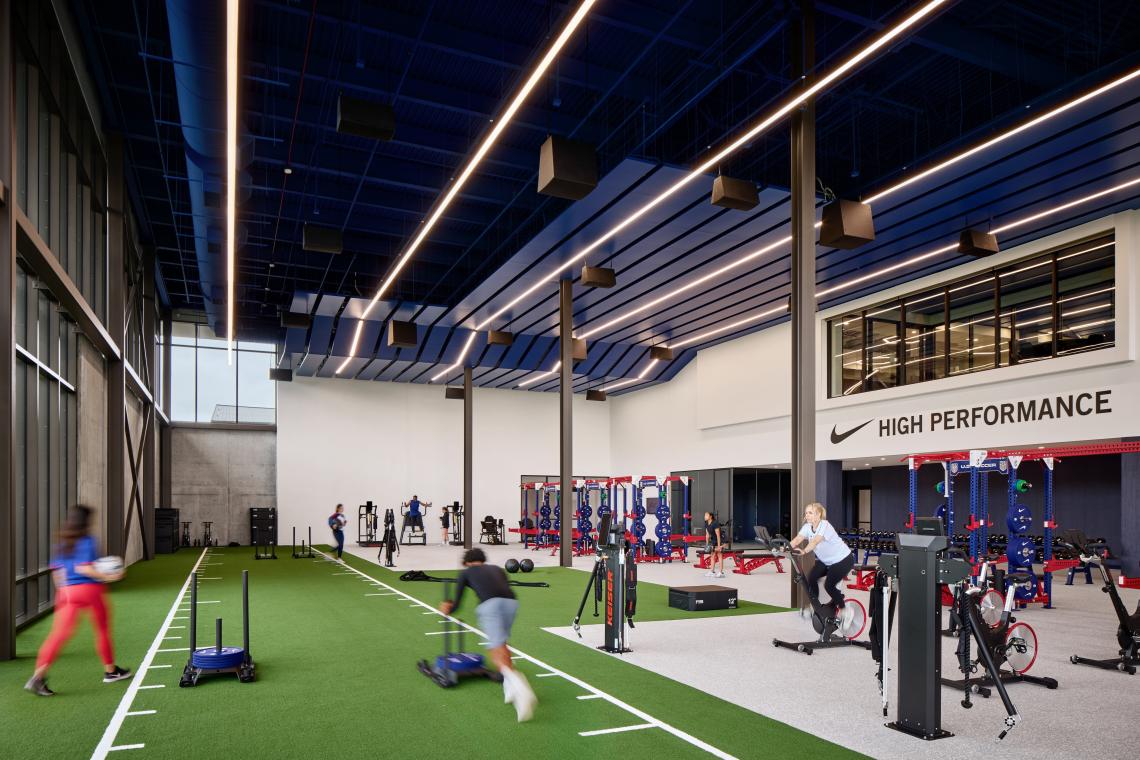 The 10,000-square-foot "high-performance gym."Photo by Garrett Rowland; courtesy of Gensler, Arthur M. Blank U.S. Soccer National Training Center
In terms of inclusivity, the campus was designed to accommodate U.S. Soccer’s nine Extended National Teams, including athletes competing on the Cerebral Palsy, Deaf, and Power Soccer National Teams, according to Gensler officials. The training grounds are navigable for all players, staff, and visitors, while locker rooms, training spaces, and other areas were designed to accommodate athletes of varying abilities.
“From the earliest concepts, inclusivity was foundational, shaping everything from locker rooms to training environments so that no athlete has a secondary experience,” Andrew Jacobs, Gensler principal and design director, said in a statement provided to Urbanize Atlanta. “The campus is organized to create visible pathways of progression, where young players can see and aspire to the highest levels of the game.
“At the same time,” Jacobs noted, “we carefully balanced openness and privacy, allowing moments of connection while protecting the focus and performance of elite athletes.”
In the gallery above, find thorough look at this new athletic feather in metro Atlanta’s cap.
...
Follow us on social media:
Twitter / Facebook/and now: Instagram
• Trilith news, discussion (Urbanize Atlanta)