

Still buzzing from the economic and cultural cocktail of Atlanta’s successful World Cup, Underground Atlanta owner Shaneel Lalani announced ambitious plans this week to expand public programming and lease up more than 90 percent of his district as soon as possible.
Lalani plans to target sports bars, local and international restaurants, tattoo studios, and other concepts people won’t find anywhere else, in hopes of bringing Underground up from 65 percent leased today. (When Lalani, head of Lalani Ventures, bought the hobbling multi-level property in 2020, just 5 percent of it was leased.)
To help get there, a new food hall and Lalani's first apartments in the area are actively under construction.
The excitement is understandable for someone who just watched 25,000 ebullient Argentines flood his district on a single day, during the Semifinal match—boosting the best business days and weeks Underground tenants including Utopia, Underground Diner, and China Breeze have ever seen. Downtown and the city at large, in Lalani's view, have a unique chance to capture that momentum—and to build on the excitement, planning, and goodwill of the World Cup in numerous ways.
In this candid Q&A, Lalani expounds on how that might happen, how non-traditional developers like himself and South Downtown's team have done their part, but how the clock is ticking in several ways. The interview has been edited for clarity and length.
…
Urbanize Atlanta: What do you hope the city does better, following such a memorable, well-attended event like that World Cup?
Lalani: Everybody did phenomenal. It was just refreshing to see how everybody was working together. The city, APD, other law enforcement, fire and rescue, the neighbors, stakeholders, MARTA obviously—everybody. I think it lived up to the expectation we were building for many years. Something to tell our kids about. Atlanta United has been doing good, but I think we’re a soccer town now.
What we’ve achieved as a city over the last few years is remarkable, and we have to build on this momentum. We put on a great [World Cup] show—so what happens next, right? I think we should keep pressing the gas. In downtown, I think this is a once-in-a-generation opportunity. We have three or four major developers almost connected to each other—so this is the chance.
Is there anything specifically that really worked, that you hope sticks?
The paving of the streets, the cleaning of downtown—it was very nice to see that commitment from the government. We hope that continues. Because of the World Cup, we have direct relationships with local communities and stakeholders, law enforcement, and we hope to continue. Let’s use the same group chats and email contacts that we built—you know, if you see something, call this number. I hope that sticks around. We have to maintain it.
Do you think the World Cup actually strengthened the bond between the developers down there—you, South Downtown, and everybody else?
I think, to some extent, but there was already a bond there. The World Cup makes it stronger. To see that everyone’s committed, it further validates everyone’s commitment.
But it’s all about timing, too. How long will everyone be committed? At some point—even myself—are you going to get tired and give up hope? How many times are we going to keep trying to figure out a deal until you come to realize it doesn’t work? Six years I’ve spent most of my time in downtown [since purchasing Underground]. We’re not there yet, but at some point you’re going to have to start focusing on your next path. How much time are you going to spend trying to figure out what’s impossible?
I just hope the city and government agencies get together with us to say, hey, how do we make this development successful because it’s going to be good for all of downtown. The Five Points MARTA station [renovation] is going to be a big help. Hopefully in two, three years they’ll be completely finished.
But it’s a good time to be downtown. Five or six years ago, there was no South Downtown. There was no Centennial Yards breaking ground. There was no Five Points breaking ground. There was no two office buildings that the legislature just built next to the capitol. Not to mention the $100-million grant Georgia State [University] received from the Woodruff Foundation [for campus expansion and renovations]. I think I’m perfectly situated in the heart of Atlanta, where there’s development happening all around me. This wasn’t the case six years ago.
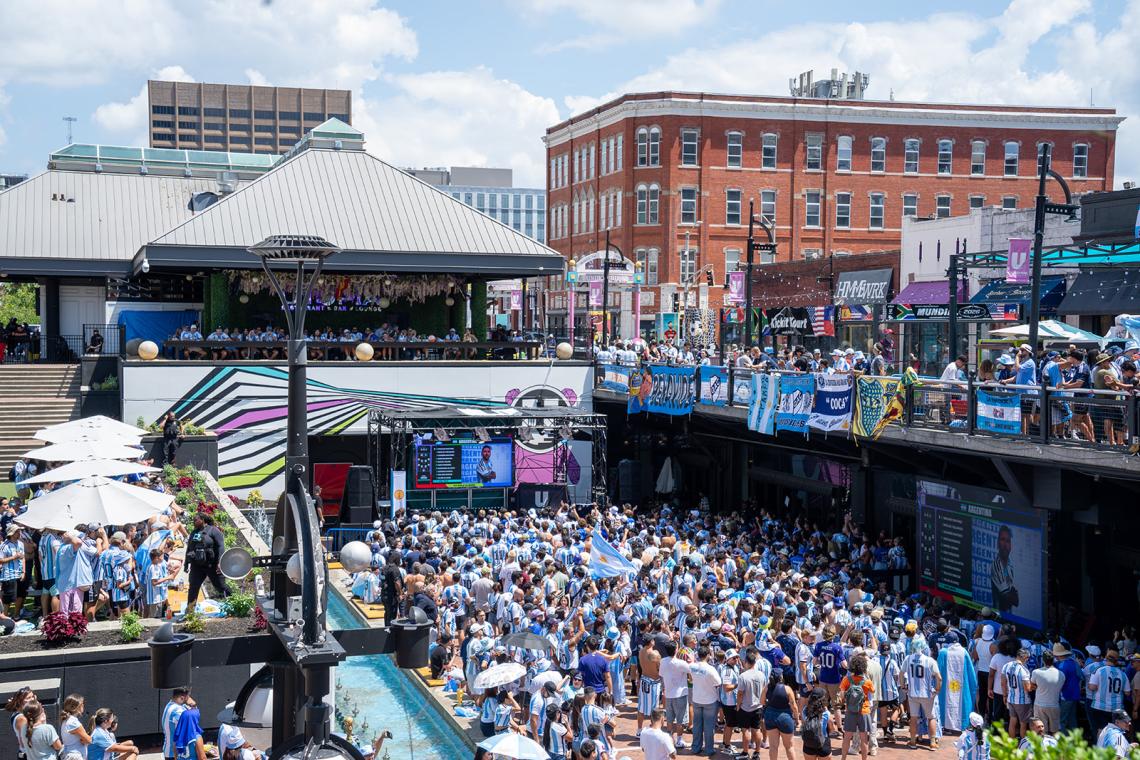 Argentina's 2026 FIFA World Cup takeover at Underground Atlanta's main plaza. Photo by Jordan Young Creative; courtesy of Underground Atlanta
How did Underground become the epicenter of Argentina's World Cup pre- and post-match celebrations this month? Saw that scene firsthand, and it was wild.
We started with the Moroccan fans for two days—and then we turned into fans of Argentina. The scenes were eye-popping and will be remembered for a long time. I’m still dreaming the Argentina and Morocco fan chants. We’ve had this gathering place for a long time, and we showed Underground to almost every team that visited Atlanta. We showed them we have a gathering place for 500 to 10,000 people and how close we are to the stadium, along with our other nightlife components we have.
Did fans generally visit the entire district, including places actually underground, beyond the main plaza?
Yes, absolutely. Lots of fans were hanging inside of Underground while it was sunny; few businesses were open during that time, and they took advantage of that.
Regarding the push toward 90-percent occupancy or more at Underground, is there a specific plan in place yet for attracting new tenants?
We’re going to bring in more restaurants and unique concepts. We're already in talks with a few of these—hope to announce soon.
Are there specific areas or buildings at Underground you’ll be targeting to lease first, as a priority?
Upper Alabama [Street], followed by Lower Alabama. Kenny’s Alley is 100 percent leased now. We have a couple of restaurants that are under construction. We’re doing a six-station food hall that’s under construction.
Is there an ETA on the food hall?
I would say probably first quarter of next year. Eight months is what we’re targeting for the full thing. It’s at the corner of Alabama and Pryor [streets], where the old Foot Locker used to be. A couple of other restaurants are in negotiation, but the food hall is our priority. They would go right next to each other. Our goal is to fill Upper Alabama with restaurants and retail as our first phase after World Cup we want to deliver.
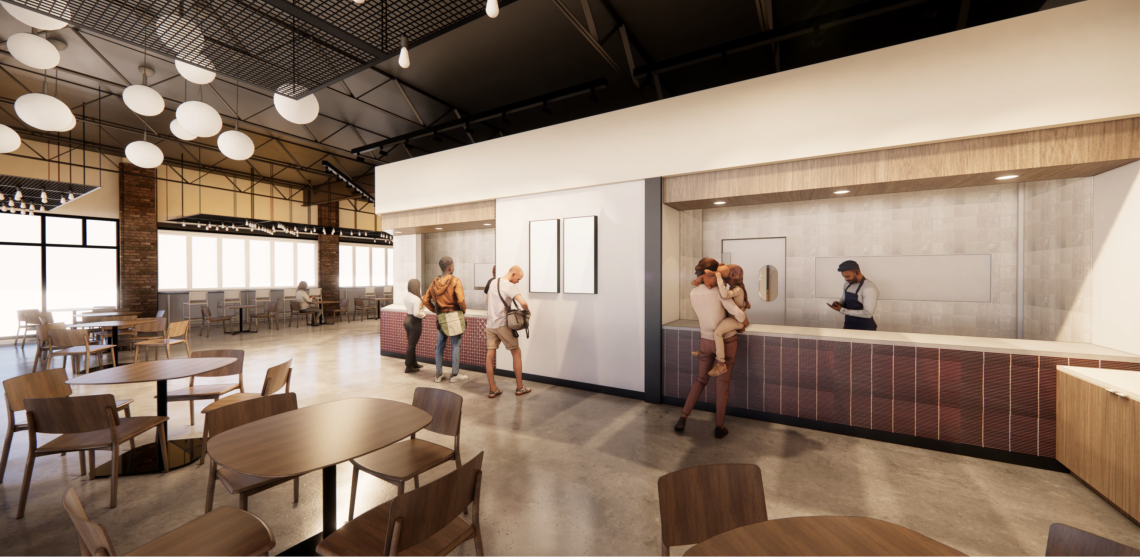 First look at Underground Atlanta's six-station food hall, now under construction. Courtesy of Lalani Ventures/Underground Atlanta
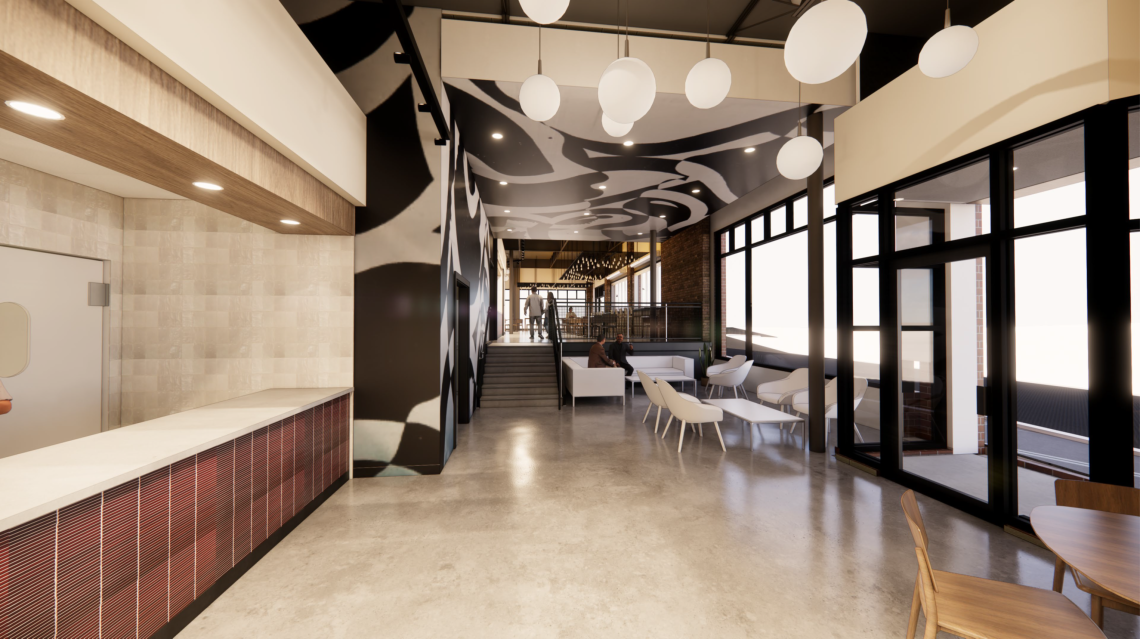 Underground Atlanta's six-station food hall. Courtesy of Lalani Ventures/Underground Atlanta
When you say more large-scale daytime programming is in the works, what do you have in mind exactly?
More family-friendly type of programming. We’ve done these scale of events for adults pretty regularly at Underground.
Can you help paint that picture, or have you not gotten to that stage?
So we’re programming something for Christmas that’s going to be more family-oriented. We’re finalizing those details. We’ve done large-scale events on the plaza, where you saw Argentina fans, and we do it well. Right during the World Cup we had the Peach Festival, with a good turnout.
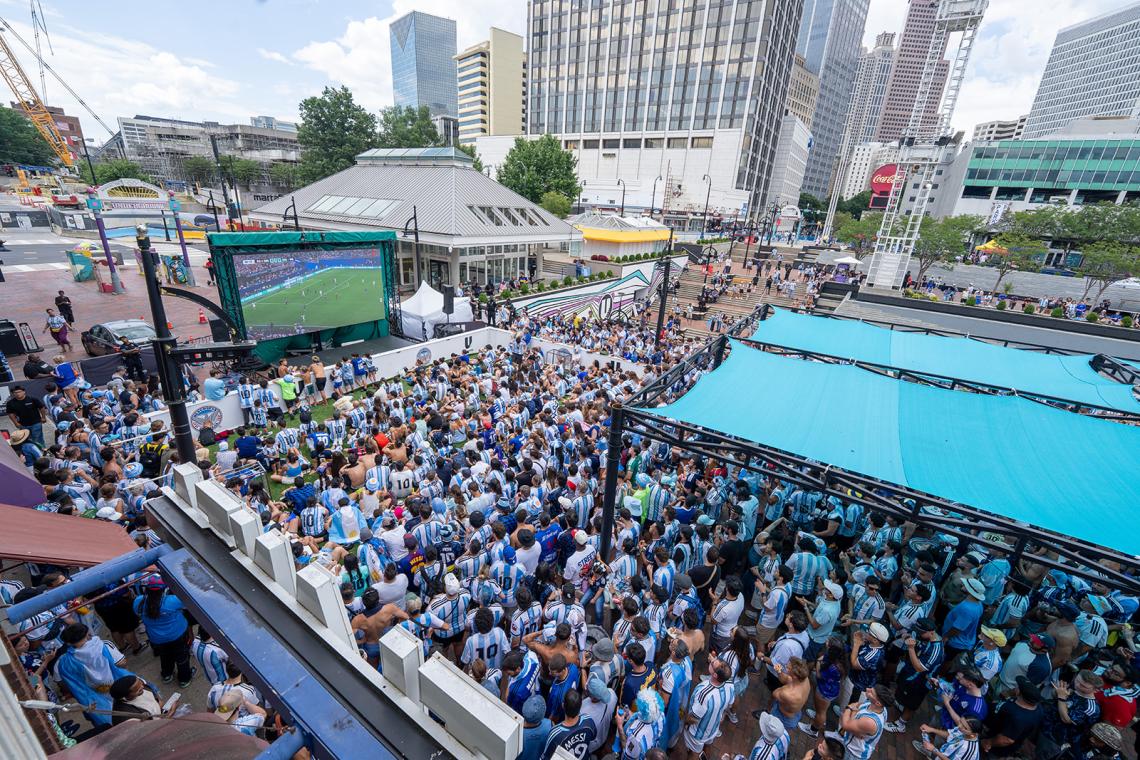 Photo by Jordan Young Creative; courtesy of Underground Atlanta
A common sentiment is that, for the area around Underground and South Downtown to truly succeed, Atlanta is going to need a lot more people actually living there—and soon. Do you agree?
One-thousand percent! That is going to be the ultimate factor. For downtown to thrive day and night, we need people living here. We’ve seen people for games and concerts, or for work, and leaving whenever that ends. You need that ecosystem of people living downtown for jobs and businesses to thrive.
This could be your Ponce City Market, your The Battery with the Braves, your Avalon—your everything in one destination, one district, and with MARTA, right? This is the chance to shine. You’ve got the private investments—they’ve done their part. Now it’s like, how do we get some public, government funding and financing to get us to the finish line. Like with the Underground tower plans we have—I think that’s what it’s going to take for Underground to be successful. People saw that we have the footprint. We have to get creative with the city, county, and the state—how can we make this plan work? Because ultimately we’re all going to benefit from it.
What about the “rent gap”?
There’s such a rent gap between here and other parts of town. A developer would rather go there. Traditional developers… they want something basic, cookie-cutter development, pad-ready sites. But these things take years to come to fruition. We’ve done the hard part, now we need to bring in those developers who feel now it’s much easier [to succeed downtown], but there’s still a funding gap.
Speaking of that, there’s a sentiment that despite however much government backing, there are certain parts of town where large, multifamily projects just aren’t financially viable right now. Is that an exaggeration, or is that what you’re seeing?
I think it can be both. Look at Centennial Yards. They got a big subsidy to make the numbers work. It may not work today [elsewhere downtown], but 10 years from now, I see it being a good investment. Without [incentives], I just don’t see anybody getting anywhere.
So to be clear, in terms of what you can charge for rent, and what it would cost to build those rentals, it’s basically a money-losing proposition at this point in a lot of downtown?
Yeah, it really is. Without the government incentives, you can’t pencil in these deals. Very rarely do you see a tower going vertical in downtown. I’m part of several projects where, without it, it’s impossible. I’m living these projects day in and day out and can see it doesn’t work. For the same land price, in a different part of town, absolutely it would make sense.
When we last spoke in 2025, it sounded like securing funding for large-scale residential projects, including the proposed tower at Underground and adaptive-reuse office remakes nearby, had been difficult and frustrating for your team. Has anything changed?
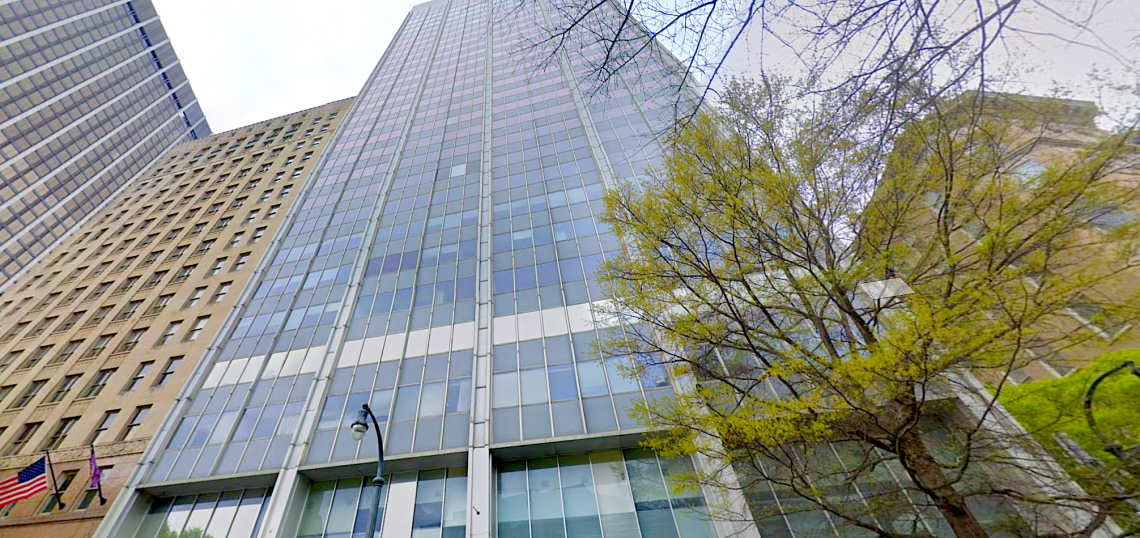
Nothing has really changed other than the fact that I’m self-funding my projects like 34 Peachtree [a former office high-rise] into housing. We’re going to deliver 150 units on 10 floors; that’s currently under construction.
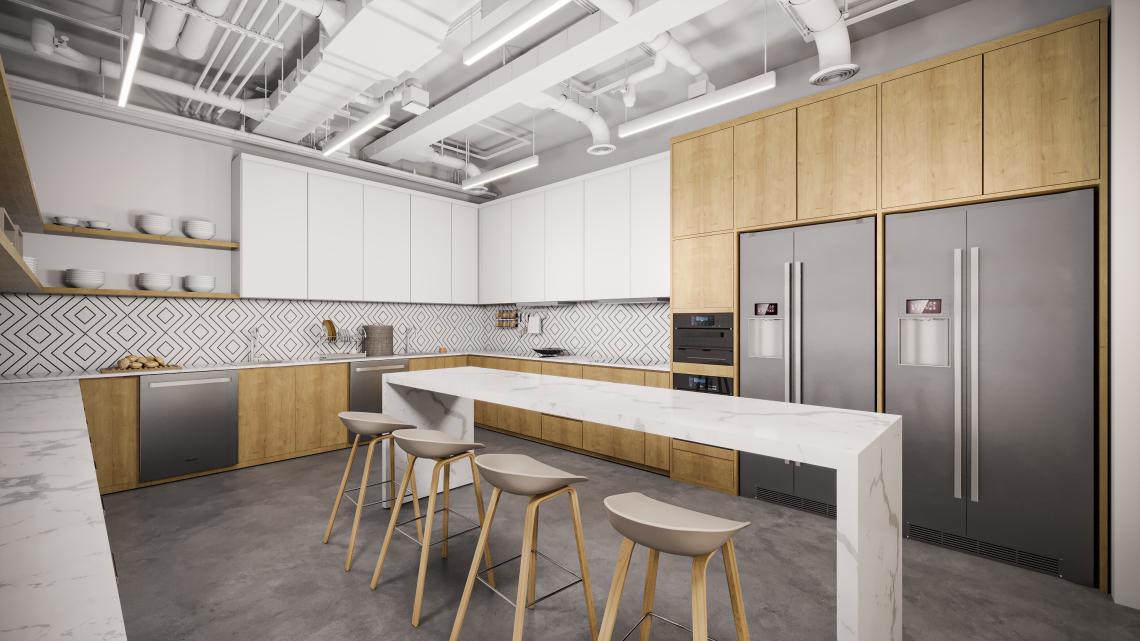 Planned residential kitchen at 34 Peachtree, an office conversion under construction now. Courtesy of Lalani Ventures
With 34 Peachtree, any ETA—and any idea what you might ultimately spend on it?
We’ve completed the demo and have already started the framing. We’re under construction. Delivery is going to be sometime next year. Cost is up in the air, a moving target. It’s going to take [tens of millions] for this to get converted. It’s going to be a mix of studios, one-bedrooms, and two-bedrooms, and a couple of three-bedrooms also.
So that right there, possibly next year, if lease-up goes well, could be 200 more people living at your doorstep?
Exactly—100 percent.
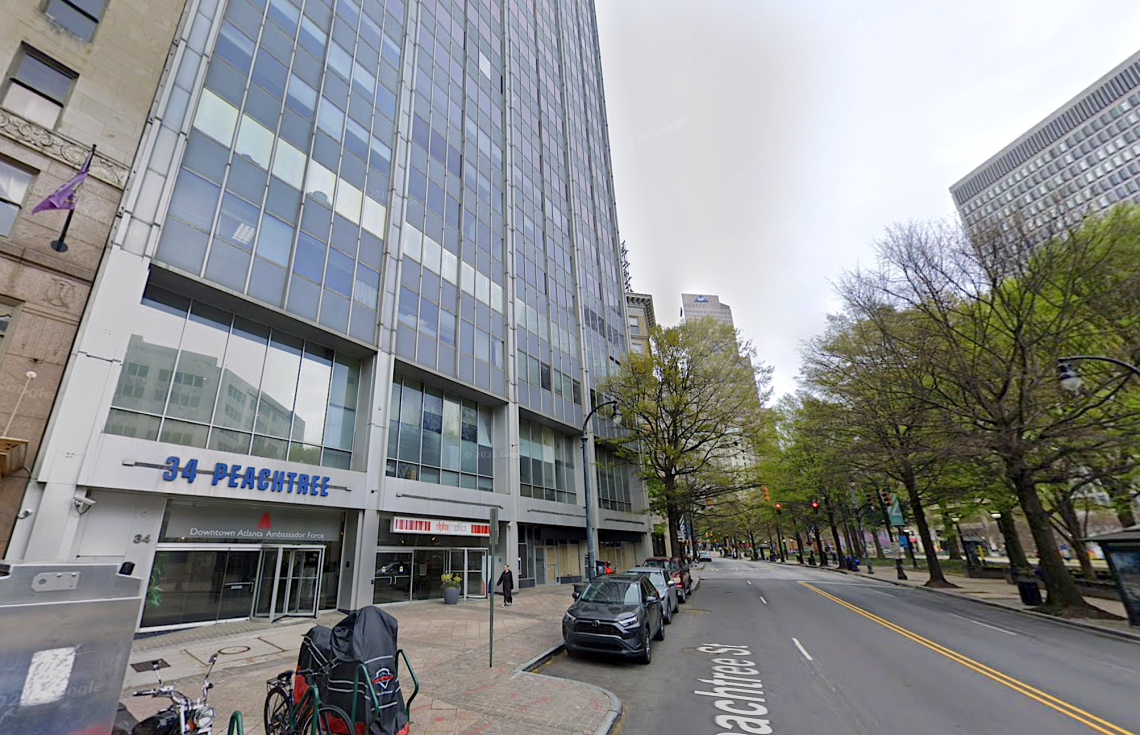 As seen in early 2025, the 34 Peachtree building's base floors, with Woodruff Park across the street. Google Maps
The Super Bowl will be back in Atlanta in a little more than a year and 1/2. How do you hope to see your part of the city change between now and then, beyond more retail and daytime events?
Hope to see more residential buildings come to fruition between now and then. Underground will be ready to welcome the world again in a bigger way, but ultimately, we need to keep our foot on the gas, and we can’t slow down.
Anything else you’d like Atlantans to know?
We’re here for the long run. The projects we’re working on in downtown are: Underground, 34 Peachtree, 2 Peachtree, and 5 Peachtree.
I took ownership of Underground in 2020 and 34 Peachtree in 2021. It’s been a massive undertaking, and I hope Atlantans realize what it takes to achieve what we’ve achieved over the last few years. Underground had over two million visitors last year, and bringing the oldest entertainment district back to life is a great accomplishment, but the job’s not done. We’re working tirelessly to make our properties, our downtown, and our city shine. The momentum downtown is very refreshing, and promising.
We’re bullish, and we continue to put a commitment to this part of town. We're all in. There’s no going back—and we don’t want to go back.
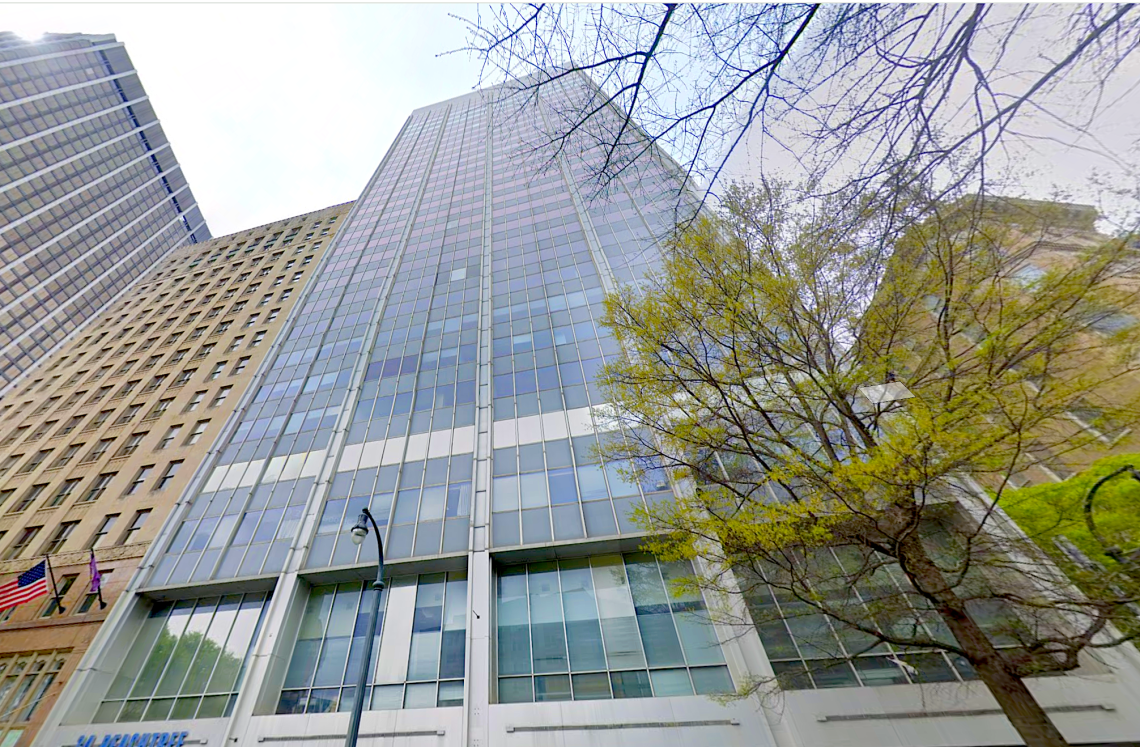 Upper floors of the 34 Peachtree tower, less than a block north of Underground Atlanta. Google Maps; March 2025
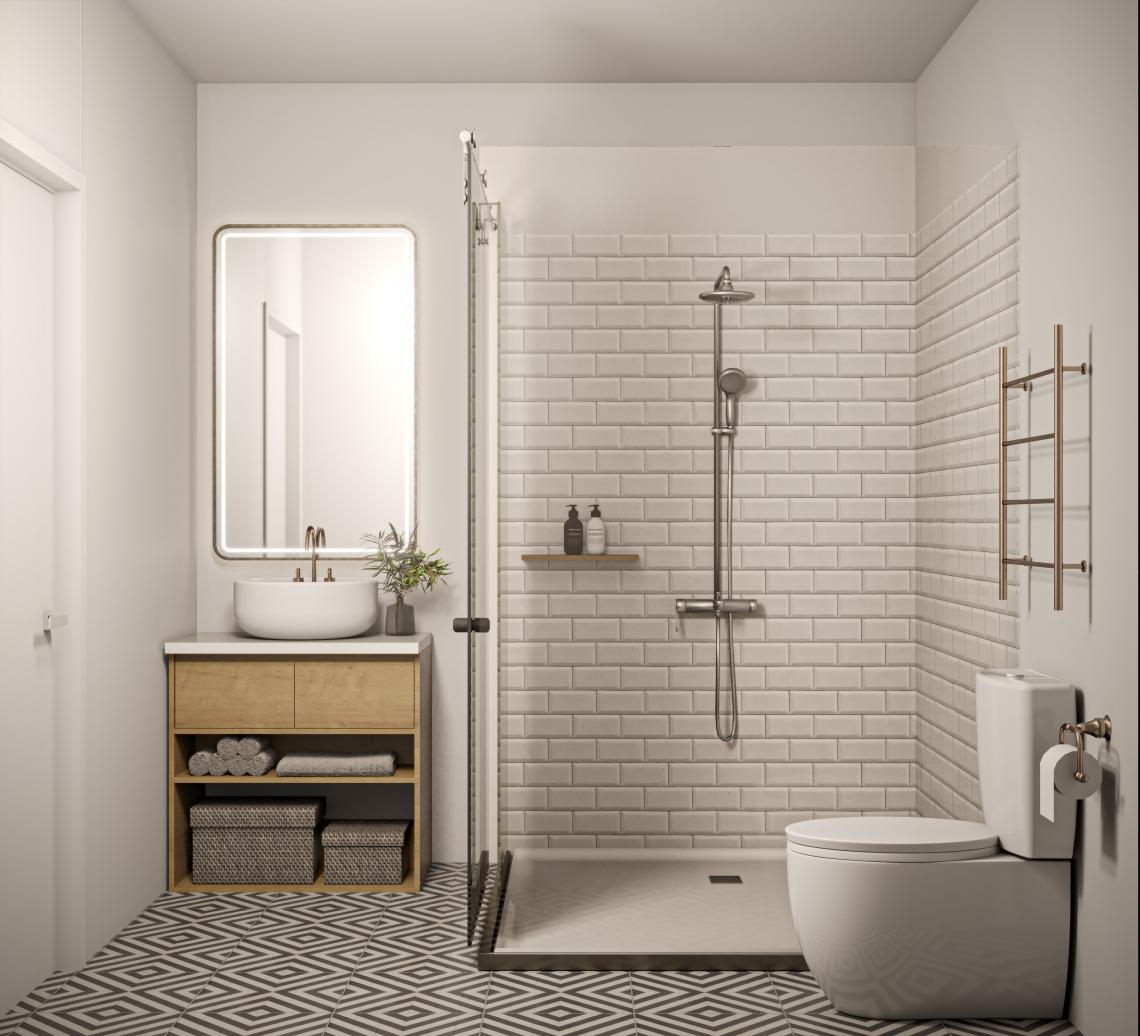 Planned bathroom at 34 Peachtree. Courtesy of Lalani Ventures
...
Follow us on social media:
Twitter / Facebook/and now: Instagram
• Downtown news, discussion (Urbanize Atlanta)