



Six years after COVID-19 started its life-altering creep across American society, Atlantans’ commute patterns still haven’t fully returned to the way they were in 2019, for better or worse, according to a new metro-wide survey.
For the first time since 2019, Atlanta Regional Commission has completed a Regional Commuter Survey to determine what the “new normal” looks like across the growing, 20-county region in terms of telework, flexible work hours, and hybrid schedules.
The ARC’s findings—based on nearly 6,000 responses from employed residents of metro Atlanta—indicate that telework has generally driven lasting changes. That’s despite widespread return-to-office mandates for major employers, governments, and universities, both driven by new federal policies and not.
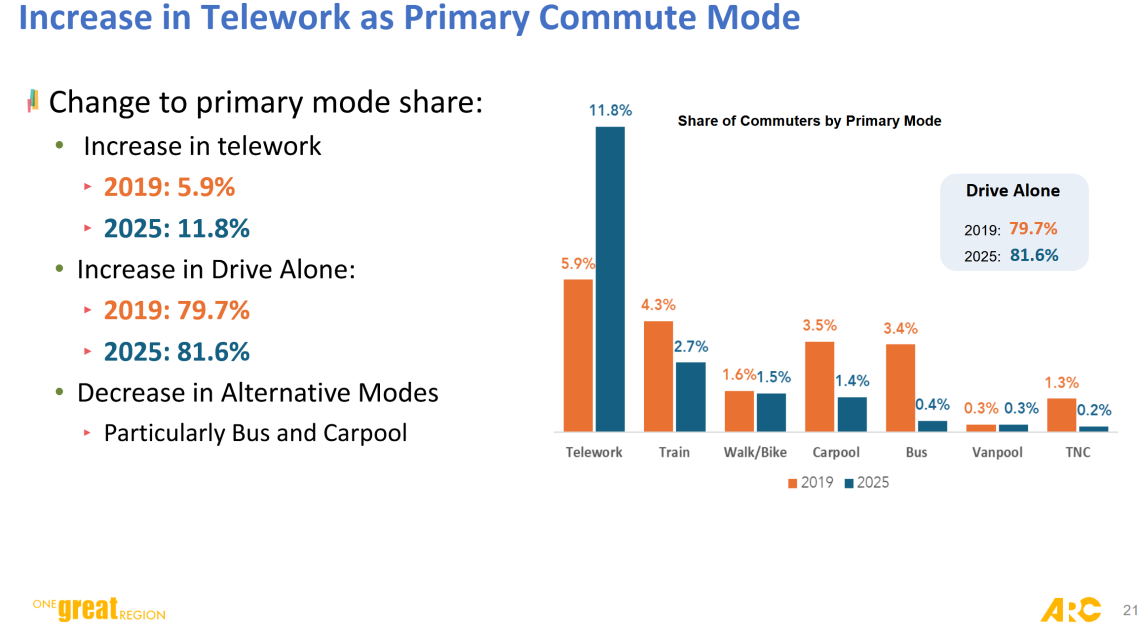
Teleworking rates have doubled as a primary means of commuting since 2019 (up to 12 percent now), but alternative modes of transportation in metro Atlanta are still down across the board, with the exception of vanpooling, which remained flat at a relatively miniscule .3 percent. (Why? Logic says less people physically going to work will need fewer means of getting there, among other factors.)
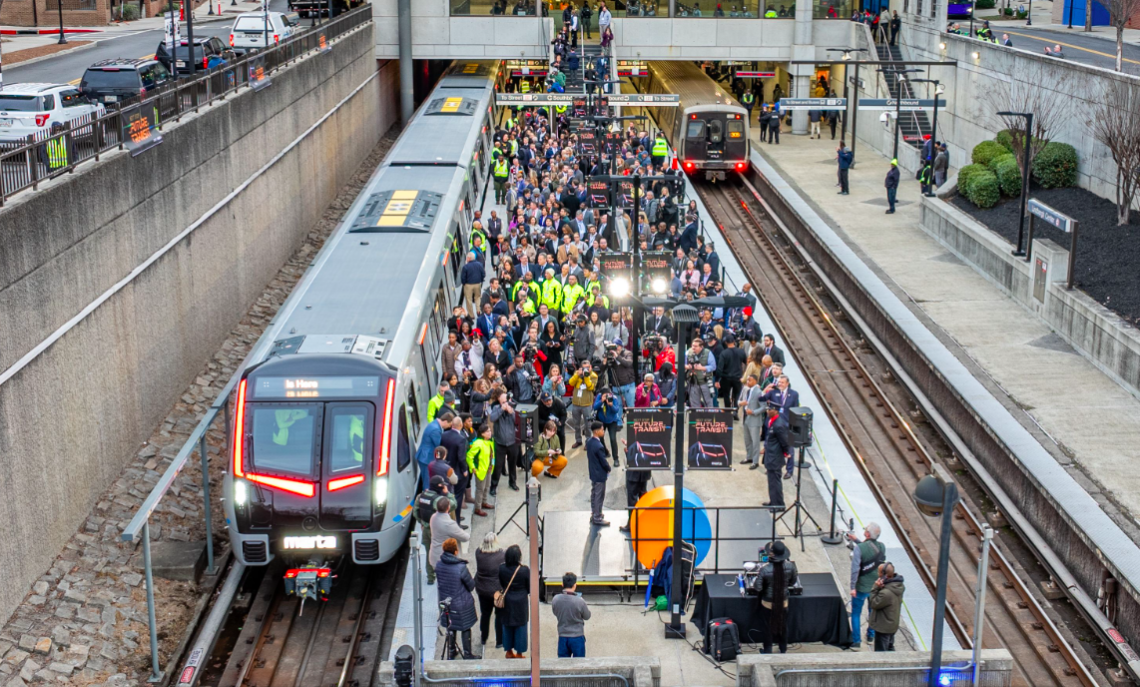 A juxtaposition of MARTA's first CQ400 train to be operational on tracks (left) and a current railcar. Courtesy of MARTA
ARC’s analysis found that bus and carpool commutes have been hit particularly hard, with commuters reporting numerous barriers—chief among them were “long trip duration” (47 percent) and “no transit service nearby” (44 percent)—to using alternate transportation modes.
Train transit as a primary commute mode has fallen from 4.3 percent to 2.7 percent since 2019, according to survey respondents. Bus commutes, meanwhile, have plunged from 3.4 percent to just .4 percent of trips to work, per ARC’s findings.
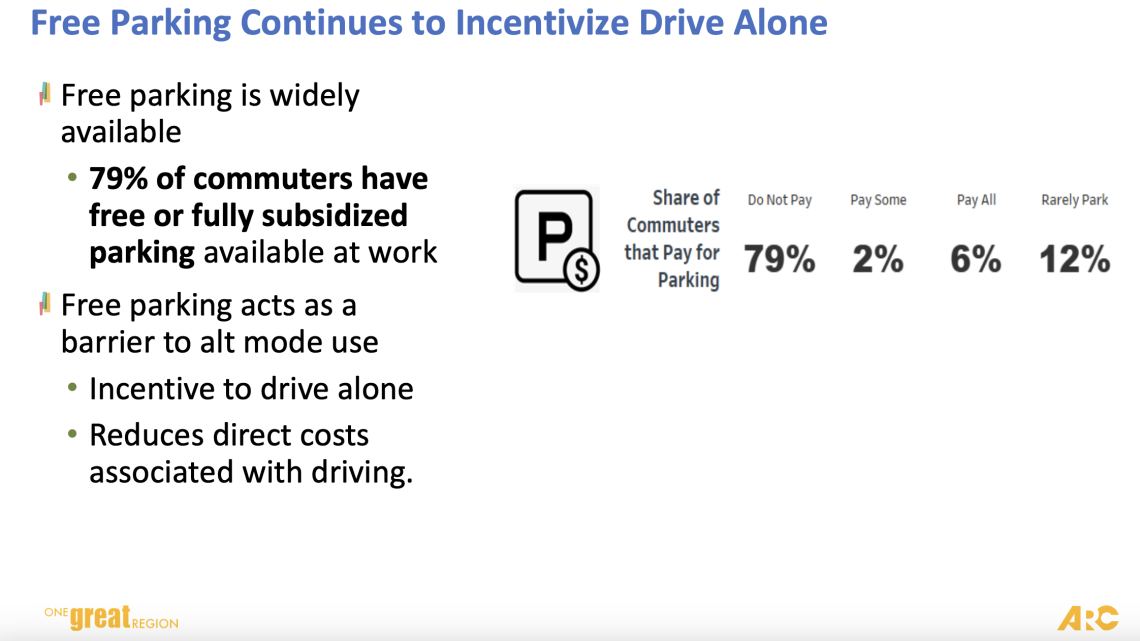
Another “barrier” to alternate transportation is widely available free parking in metro Atlanta, with 79 percent of commuters reporting access to free or fully subsidized parking at work, according to ARC stats.
 Courtesy of Atlanta Regional Commission
Meanwhile, the share of commuters primarily driving to work alone has bumped up from 80 percent in 2019 to 82 percent in 2025, when the survey was conducted.
Access to telework, flex hours, and hybrid schedules varies widely by income and occupation. Nearly three of every four households earning more than $200,000 annually can telework occasionally; for those earning less, about half are allowed to telework, per ARC officials.
Roughly 80 percent of office employees can telework at least occasionally, whereas the percentage is less for health-related workers (42 percent) and those in education (32 percent).
 Courtesy of Atlanta Regional Commission
On the bright side, the survey indicates that average commute times across metro Atlanta are actually five minutes shorter than in 2019, with teleworking on Mondays and Fridays accounting for more than half of teleworking activity.
One in five ARC survey respondents said they telework full time now. Six years ago, that tally was just 6 percent.
“Despite the post-pandemic return-to-office trend, teleworking, both occasional and full-time, remains significantly higher than pre-pandemic levels,” Anna Roach, ARC executive director and CEO, said in a survey announcement. “Along with an increase in part-time workers and non-traditional work schedules, these shifts are altering travel patterns and spreading congestion throughout the day.”
Find a deeper dive into survey findings and other data on ARC’s website. A cherry-picked gallery of interesting slides from a recent ARC presentation is above.
...
Follow us on social media:
Twitter / Facebook/and now: Instagram
• Reader poll: Is today's Atlanta unreasonably expensive? (Urbanize Atlanta)