

A European biopharma company has taken the first steps toward building a multi-billion-dollar campus expected to produce hundreds of jobs as a cornerstone of Gwinnett County megaproject Rowen.
Belgian biologics manufacturer UCB on Friday formally dedicated the future site of its planned $2-billion campus at the budding mixed-use district between Atlanta and Athens, which is expected to eventually cover some 2,000 acres off Ga. Highway 316.
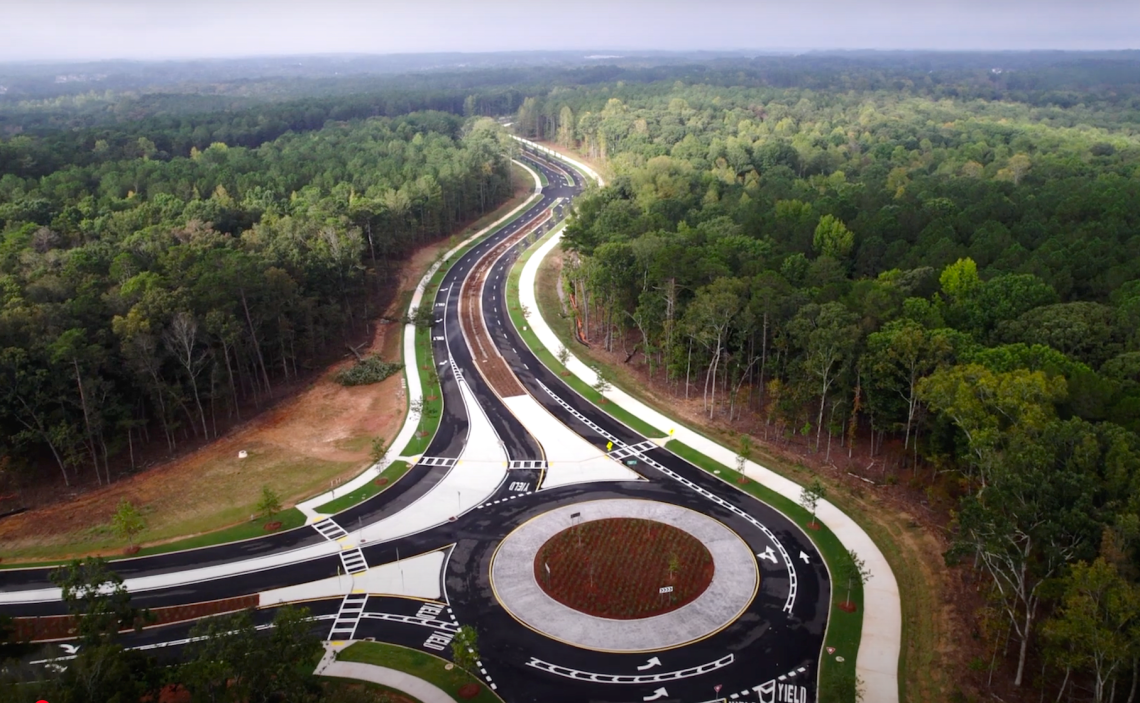
The ceremony also included a ribbon-cutting for Emmanuel Janssen Circle, a stonework installation recently completed in the roundabout to UCB’s future campus entrance, named in honor the company’s founder and his family. Collectively it marked the beginning of the next phase of development for UCB’s Gwinnett campus, per project heads.
The project is described as one of the largest life sciences manufacturing investments in Georgia history.
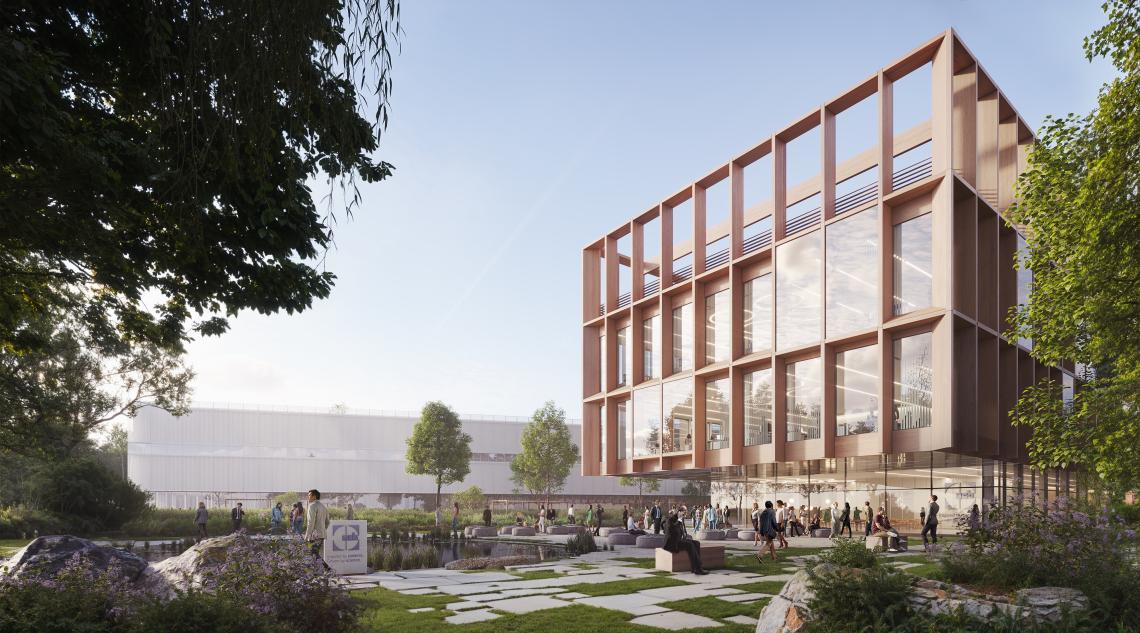
UCB’s 460,000-square-foot hub, described as a “defining milestone” at Rowen when announced earlier this year, will cover 79 acres and use “a digital-first approach with AI, robotics, and automation,” said project leaders in a recent announcement.
The campus is slated to require 1,000 construction jobs and create 330 permanent ones, generating roughly $5 billion in total economic impact, per officials.
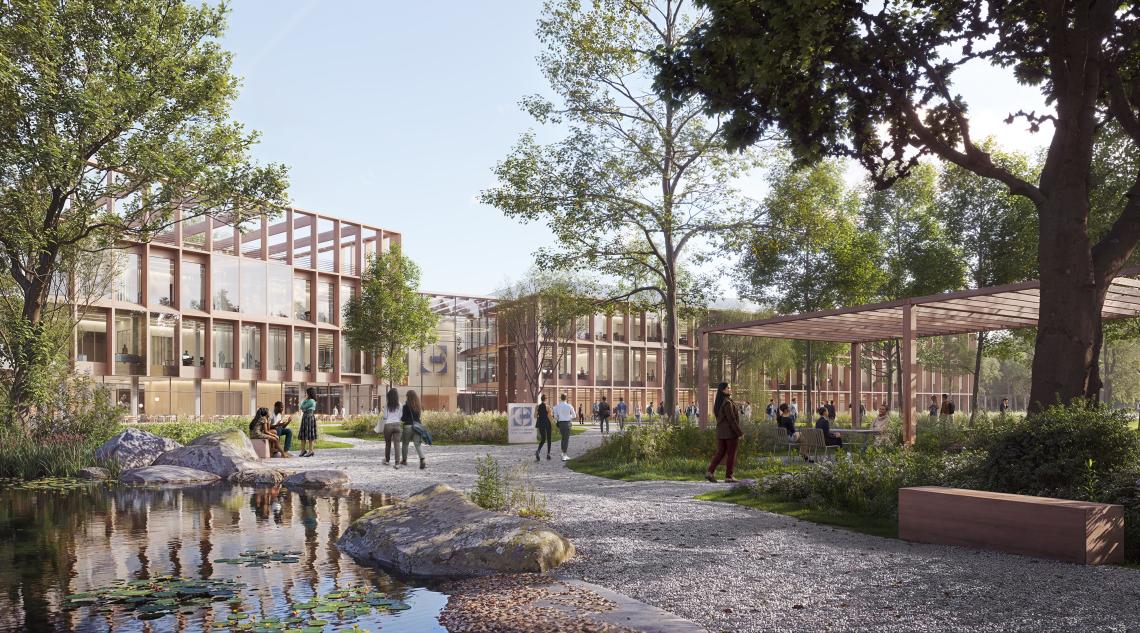 According to project officials, UCB’s 460,000-square-foot facility in Gwinnett County is being designed to have “a campus feel” on a wooded site at Rowen Parkway’s end. Courtesy of Rowen Foundation/UCB
For UCB, which has been headquartered in Georgia for more than three decades, the Rowen site will mark its first biologics manufacturing hub in the U.S. The company’s focus is to develop innovative medicines for people grappling with severe autoimmune and neurological conditions, and the Rowen campus will help support growing demand, project leaders have said.
Friday’s ceremony brought together Georgia and Gwinnett County government officials, along with U.S. Department of Commerce, the Belgium Consulate, and UCB leaders, among others.
“From visiting UCB’s headquarters in Belgium to welcoming their first U.S. manufacturing site, this partnership is already delivering great results for this community and supporting the health of people across our state and nation,” Georgia Gov. Brian Kemp said at the ceremony, per a media release.
Added UCB’s CEO, Jean-Christophe Tellier: “Our manufacturing investment in the United States reflects our long-term commitment to patients, strengthening our ability to serve them while contributing to scientific innovation, highly skilled jobs, and economic growth in Georgia.”
 Courtesy of Rowen Foundation/UCB
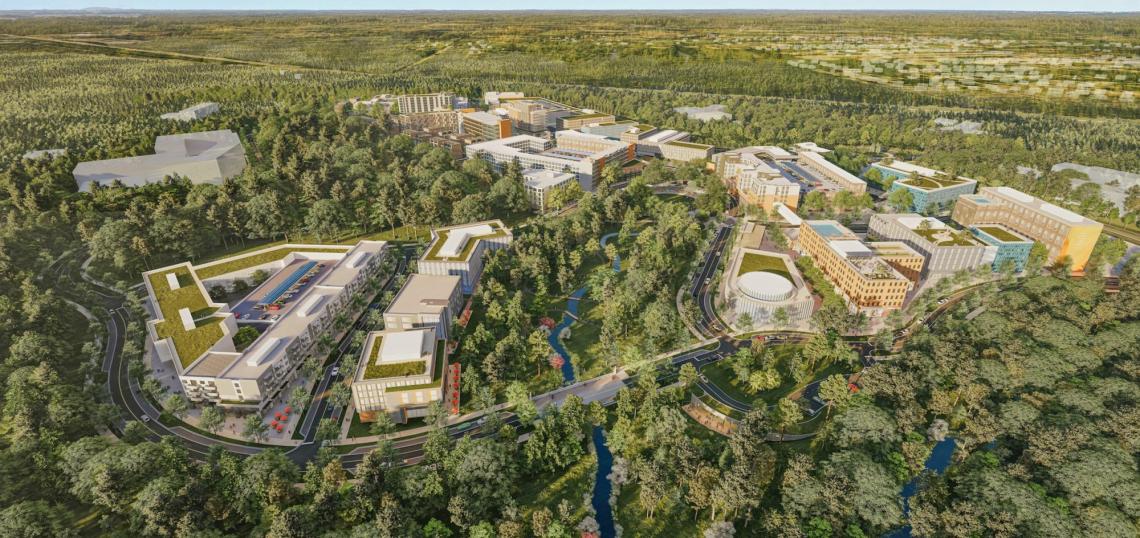
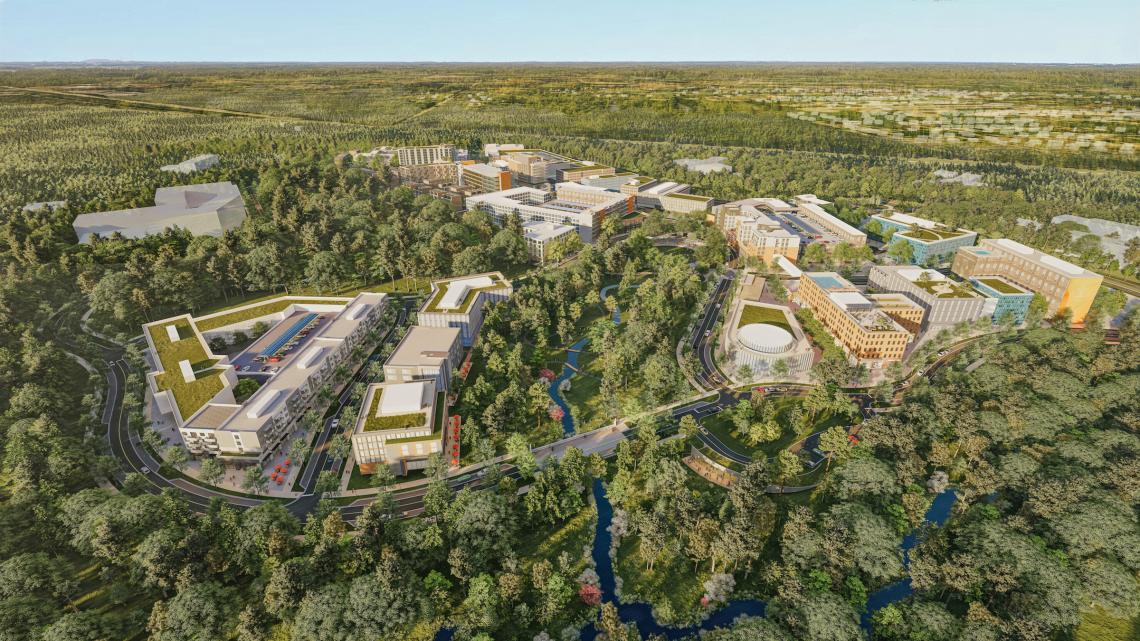 Rowen Village’s phase one is planned as an urban hub within Rowen, offering office, lab, research, and start-up space “intermingled with amenities such as public gathering space, parks, retail storefronts, multifamily residential, hospitality, and restaurants,” project leaders have said. Courtesy of The Rowen Foundation
But don’t expect a hiring blitz anytime soon in this part of Gwinnett.
Design and construction of UCB’s campus is expected to take six to seven years alone, as Rowen officials relayed in March.
To date, Gwinnett County has committed roughly $174 million in incentives and infrastructure investments to support UCB’s project, including property tax abatements, fee waivers, and utility improvements, per officials.
Situated 35 miles from Atlanta, Rowen’s site is capable of supporting 22 million square feet of development overall, equivalent to almost 17 Bank of America Plaza towers, Atlanta’s tallest building, per project leaders.
More than 1,900 acres at Rowen remain available. The project initially broke ground with much fanfare in December 2022.
Last year, Rowen completed a $32-million infrastructure project described by officials as “complete streets” across its former woodlands between Atlanta and Athens.
Considered phase one of Rowen’s buildout, the two miles of finished roadway, greenspaces, and seven miles of multi-use pathways have made 800 acres of the property accessible to the public, while putting infrastructure in place for development. All utilities including power, water, sewer, fiber, and natural gas are in place for the section in question as well.
Ultimately, Rowen is envisioned as a mix of lab, office, clean manufacturing facilities, and civic spaces, alongside a mix of multifamily buildings, cafes, start-up hubs, parks, and public trails. Project heads have said the “gamechanger” concept will likely be a multi-decade buildout—up to 40 or 50 years, given the scope—but could come quicker, depending on market demand.
 Rowen Foundation/YouTube
The Rowen Foundation says the project could ultimately produce 100,000 jobs across Georgia and contribute between $8 and $10 billion annually to the state’s economy.
Rowen’s board of directors, which governs the Rowen Foundation, is made up of leaders from the University of Georgia, Georgia Tech, Emory University, Georgia Gwinnett College, and others who are advancing the project for its economic and jobs-creation potential.
Find more Rowen context and visuals in the gallery above.
...
Follow us on social media:
Twitter / Facebook/and now: Instagram
• Gwinnett County news, discussion (Urbanize Atlanta)