

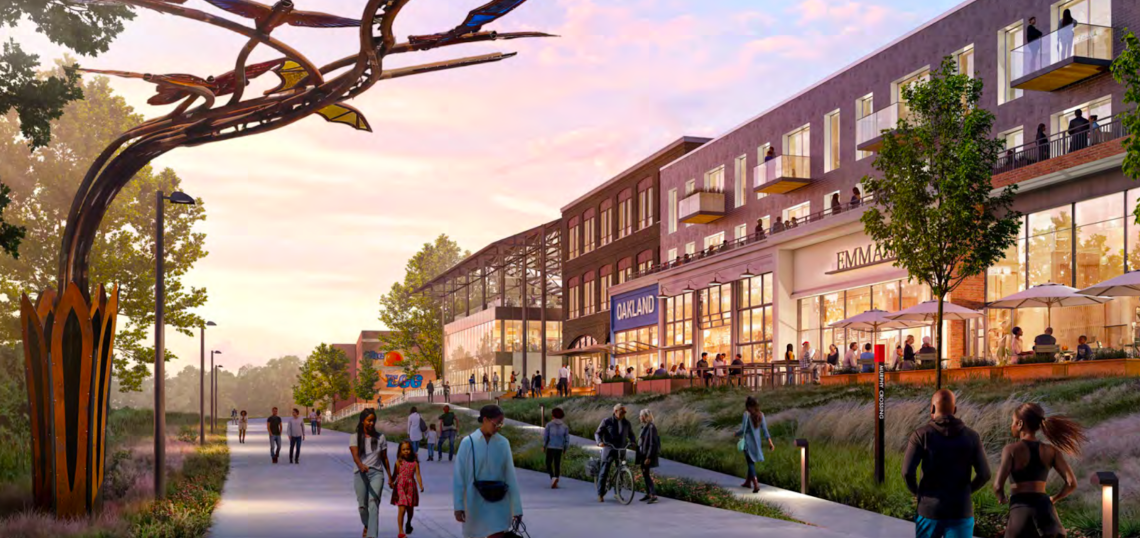
Fourteen months after Murphy Crossing redevelopment plans fell apart (again) in public fashion, Atlanta Beltline Inc. and a fresh team of designers have clearly gone back to the drawing board, with expectations of beginning the multi-phase job in coming months.
The latest vision for Murphy Crossing—a 20-acre historic, former industrial site the Beltline owns in Oakland City adjacent to the Westside Trail—calls for more than 600 housing units, a retail and office village, and a mix of uses that will be required by city code to include light industrial, according to a recent Beltline update meeting.
The Beltline’s development team, alongside frequent collaborators Perkins&Will architects, unveiled renderings Thursday that depict Murphy Crossing sprung to life with a relatively dense mix of buildings in a section of Oakland City where hundreds of unrelated homes are under construction now.
Andrea Foard, Beltline senior development manager, said her team has reached “big milestones” behind the scenes with Murphy Crossing’s planning. That includes working with the city to finalize rezoning of the property from an industrial designation to I-Mix—one that allows industrial, commercial, and residential uses to coexist—and completing a Development of Regional Impact application with the state, a requirement for projects of such scale.
“With 20 acres,” Foard noted during the meeting, “we’re not going to develop this all at one time.”
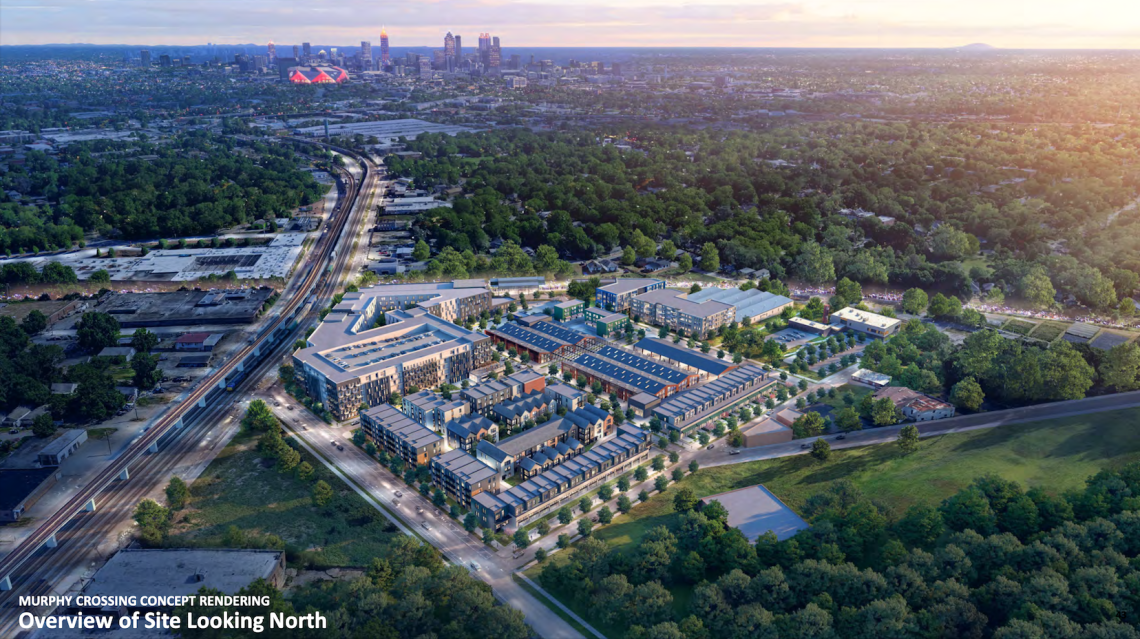 Overview of revised Murphy Crossing plans, with active MARTA rail at left and downtown in the distance. Atlanta Beltline Inc.; Perkins + Will
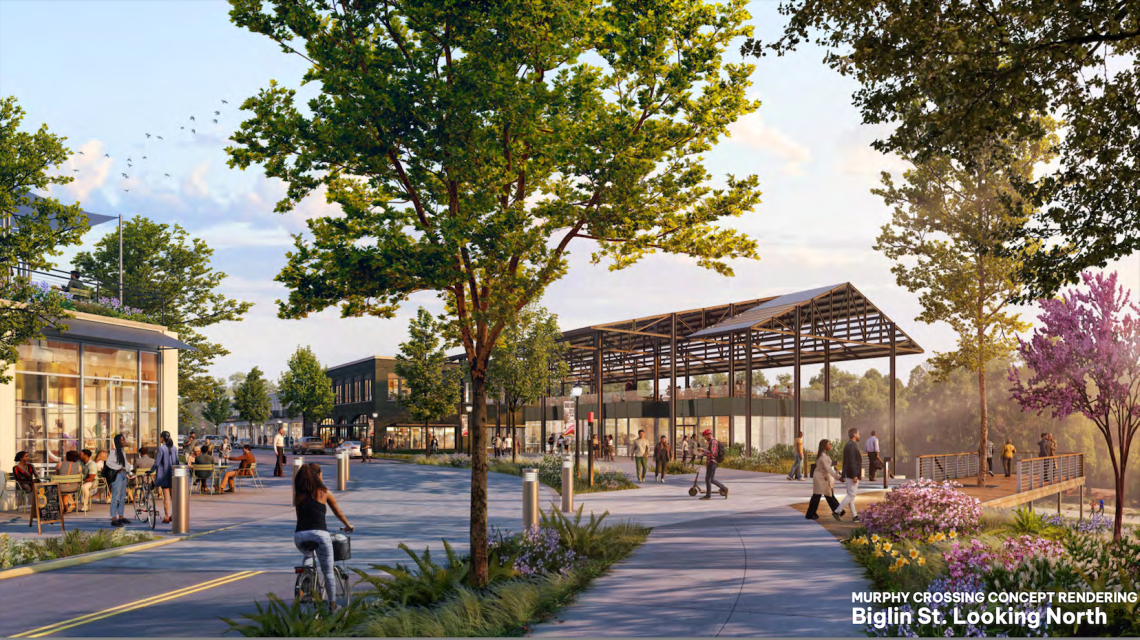 Inspired by Breaker Breaker restaurant on Reynoldstown's Beltline section, these plans call for part of the original farmers market becoming shaded retail on an internal street. Atlanta Beltline Inc.; Perkins + Will
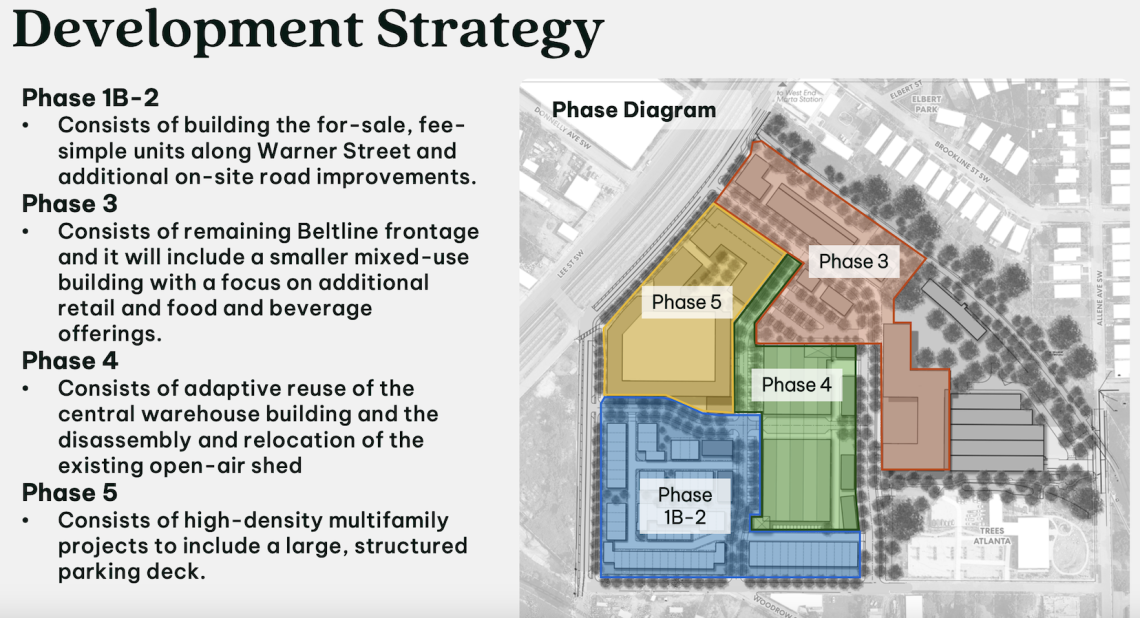
Spread across five phases, the full buildout of Murphy Crossing now calls for: 625 residential units, including apartments and townhomes; roughly 82,000 square feet of commercial space such as offices; 70,000 square feet of retail; and a substantial section, 103,000 square feet, devoted to light industrial uses, per Foard.
Ryan Snodgrass, a Perkins&Will senior urban designer and planning consultant, said the light industrial uses can include “anything from a veterinarian clinic to a barbershop, all the way to some sort of makers space,” noting that nearby Lee + White district is also zoned I-Mix.
“So there’s a range of opportunity there,” Snodgrass said. “I wouldn’t be scared by [light industrial uses].”
Tentative plans call for adding offices and Beltline-fronting retail uses plus community spaces during the initial phase, alongside sidewalk and stormwater improvements, per Foard.
Later phases would see for-sale housing take shape and repurposing of a large central warehouse building. Development of Murphy Crossing’s high-density multifamily building and structured parking would come last, per Foard.
Site plans call for 1,711 parking spaces total, with 786 of those devoted to non-residential uses.
 Atlanta Beltline Inc.
A structural analysis of all Murphy Crossing buildings has also been completed. Plans call for four existing structures to remain standing, though adaptive-reuse work could render some mostly unrecognizable, per renderings.
Snodgrass said designs call for density to gradually transition down from taller buildings near adjacent MARTA tracks to shorter housing types such as townhomes near existing houses. Developers to build those components will be hired as part of the next phase, he said.
“We see this as a gathering place really bringing in the energy off of the Beltline,” Snodgrass said.
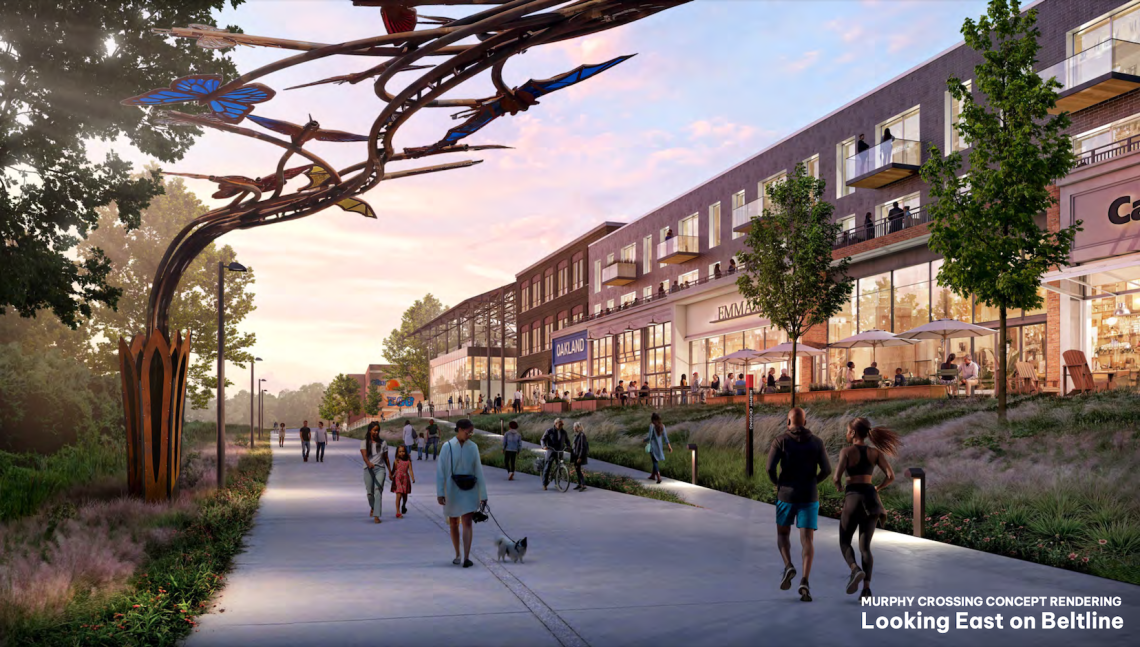 An existing sculpture could serve as a gateway to three-story mixed-use with retail patios on a main Murphy Crossing street, all fronting the mainline Beltline. Atlanta Beltline Inc.; Perkins + Will
In January 2025, Beltline officials surprised many Atlanta development observers by terminating Murphy Crossing negotiations and a contract with Culdesac Inc.—an Arizona-based firm known for innovative approaches to infill development—and its Atlanta-based partner Urban Oasis Development.
Work between the firms and Beltline officials had been ongoing since 2022, but Beltline leaders pointed to slashed residential unit counts, unexplained costs, “ballooned” timelines, and other factors as reasons why the relationship with Culdesac soured. Culdesac reps contented that all negotiations were within the scope of a contract signed between the two parties in 2024.
The Beltline had also canceled plans for Murphy Crossing’s remake with another development team in the summer of 2020, following public concern over that team's qualifications.
The current timeline for initial stages of Murphy Crossing redevelopment calls for demolition permits to be applied for and development plans finalized this spring and summer.
Community engagement and study groups are expected to continue through the summer and fall, with onsite demolition kicking off sometime this fall or winter, according to Beltline leadership.
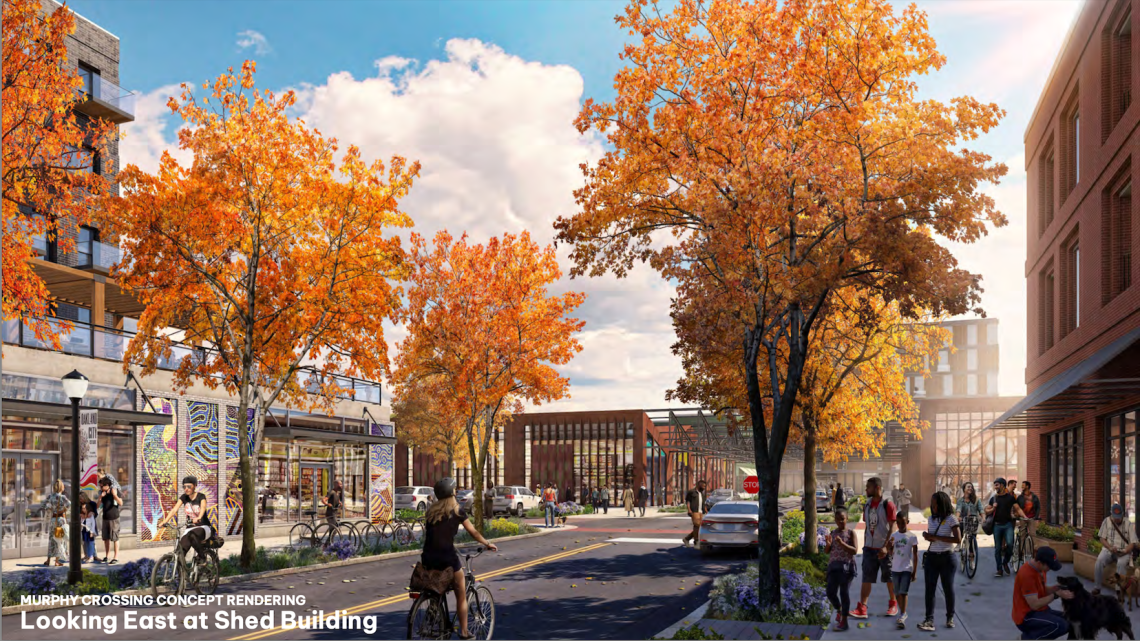 An internal street with multifamily development at left and the site’s enclosed shed building reinterpreted at center. At right is smaller, three-story walkup housing. Atlanta Beltline Inc.; Perkins + Will
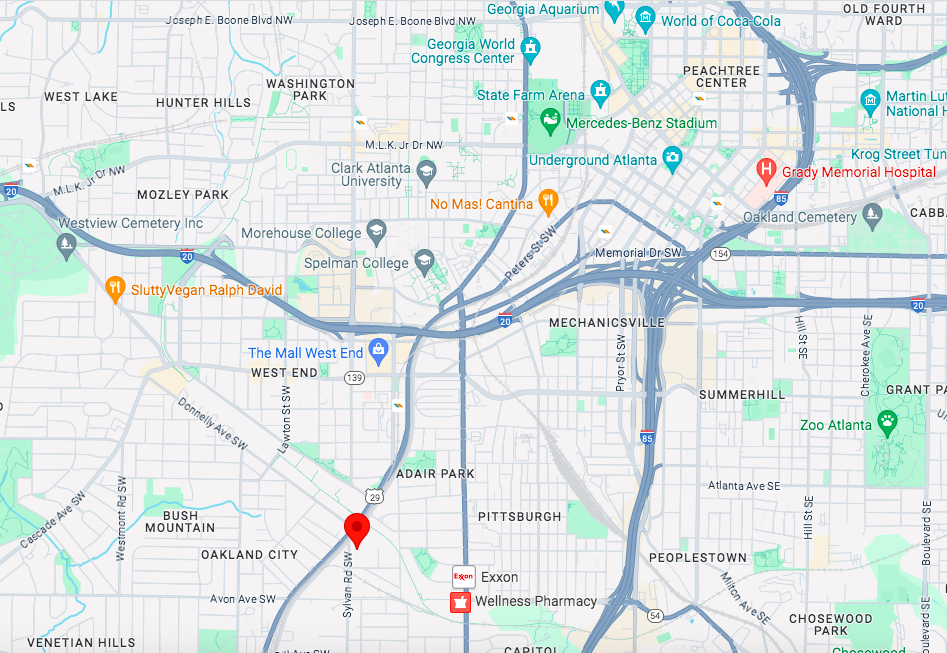 Murphy Crossing's 1050 Murphy Avenue site (bottom, left) in relation to downtown Atlanta. Google Maps
No ETA for construction, vertical or otherwise, was specified at Thursday’s meeting.
Beltline mapping and marketing, it should be noted, calls for the Westside Trail to be permanently renamed the Southwest Trail in the area.
Find more context, images, and phased Murphy Crossing redevelopment plans in the gallery above. Could the third stab at reviving this key Beltline site finally be a charm?
...
Follow us on social media:
Twitter / Facebook/and now: Instagram
• Oakland City news, discussion (Urbanize Atlanta)