

Metro Atlanta led the nation in self-storage construction in 2025, but repeating that dubious achievement could be in jeopardy now.
Atlanta Mayor Andre Dickens has signed an Executive Order that puts in place a temporary moratorium on the construction of new self-storage facilities across the city, officials announced today.
The goal, according to Dickens’ office, is to protect “critical development opportunities” in a growing city where parcels of sizable, available land are increasingly scarce.
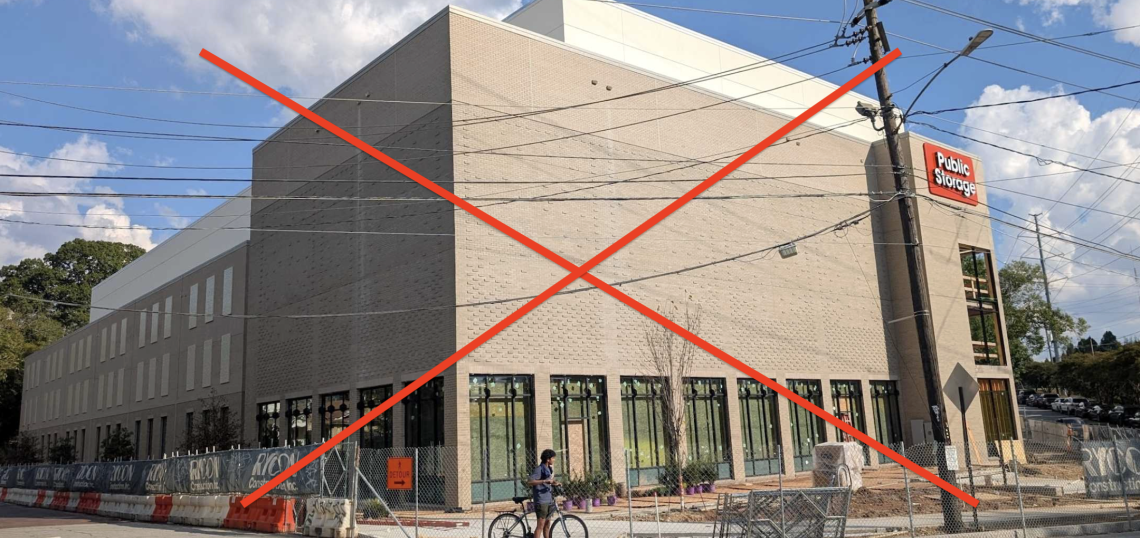
Recent examples of controversial self-storage development that have claimed intown property include two near the Beltline corridor: a Public Storage facility in Virginia-Highland at the cusp of Piedmont Park and another in Reynoldstown where 176 housing units had been proposed.
The mayor’s moratorium will put the kibosh on new self-storage builds while the Atlanta City Council considers a more permanent solution.
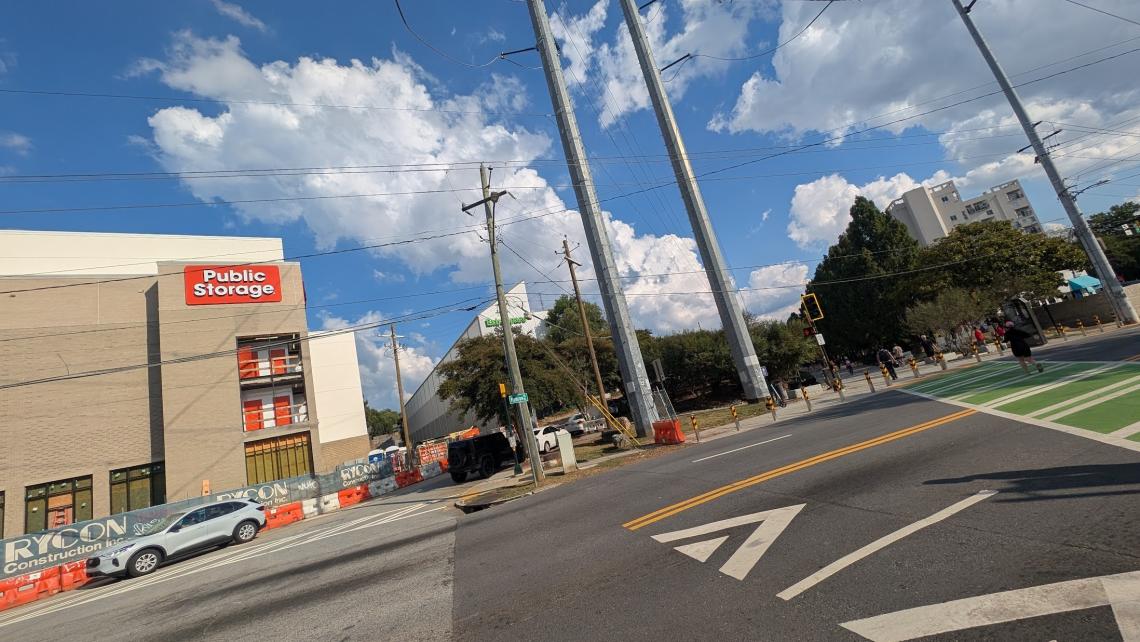 The new Public Storage building's proximity to the Beltline's most patronized section (at right), as seen in late September over Monroe Drive. Josh Green/Urbanize Atlanta
Proposed legislation sponsored by Councilmember Dustin Hillis, who represents Northwest Atlanta’s District 9, could create the framework for a long-term policy that evaluates proposed self-storage uses, per the mayor’s office.
Effective now, the Executive Order directs the Department of City Planning’s Office of Buildings and Office of Zoning and Development to reject new applications for any project with a self-storage component seeking permitting. That includes mixed-use storage facilities, secure-storage facilities, and more typical self-storage projects.
City officials acknowledged in the moratorium announcement that self-storage facilities can be useful for businesses and residents but generate little in the way of jobs, pedestrian life, or amenities that boost neighborhoods.
The mandate “is not about eliminating self-storage facilities—it is about ensuring we are thoughtful about where they belong,” said Dickens in a statement. “In communities where families need housing, grocery stores, jobs, and gathering spaces, we cannot afford to lose critical land without asking whether that development advances our vision for a stronger, healthier Atlanta.”
Dickens’ Executive Order will remain in effect until the city council’s next meeting on July 6. The council is expected to approve a 180-day self-storage moratorium at that meeting, according to the Executive Order.
During that time, the city council would consider zoning updates that could require additional review—and a Special Use Permit process—for self-storage ventures.
“As Atlanta continues to grow, we have to be intentional about how we use the limited land we have left,” said Hillis in the announcement. “This legislation gives us time to make sure our zoning policies reflect our priorities.”
...
Follow us on social media:
Twitter / Facebook/and now: Instagram
• Reader Poll: How bad is this new self-storage facility overlooking Beltline? (Urbanize Atlanta)