

Back in March, with Atlanta’s summer of soccer on the horizon after four years of buzz and lofty promises, we asked a seasoned local developer for his predictions on what it would ultimately mean for the city. Three decades ago, he’d help build apartments downtown in advance of the 1996 Centennial Olympic Games, when thousands of visitors made a few days or weeks of their ATL stays, with a multitude of event options each day.
The 2026 FIFA World Cup, the developer predicted, would be “a different gig.”
“Virtually nobody will come to see three, four, or five games in one city—they’ll maybe visit to see their home team for a single game,” said the development executive, who requested anonymity. “I think it will be fairly non-impactful from the tourism and investment perspective. Basically, some tourists and some locals will fill the stadium for a single night, on eight different spread-out nights.”
Based on reports of business vendor dead zones and lackluster hotel and short-term rental occupancies around the city, we’ll grade that tourism prediction as pretty accurate. But Atlanta’s investment—in both real infrastructure dollars and the time and energy of locals with newfound or reinvigorated love for their city—just might have exceeded expectations.
For the historic downtown of America’s sixth largest market, where post-COVID vibrancy has been spotty at best, the World Cup wasn’t just a scored goal. It was a 5-0 drubbing in the Finals.
Now it’s up to us—and not those jubilant, drunken hordes of our new friends from around the world—to keep the momentum and good times rolling.
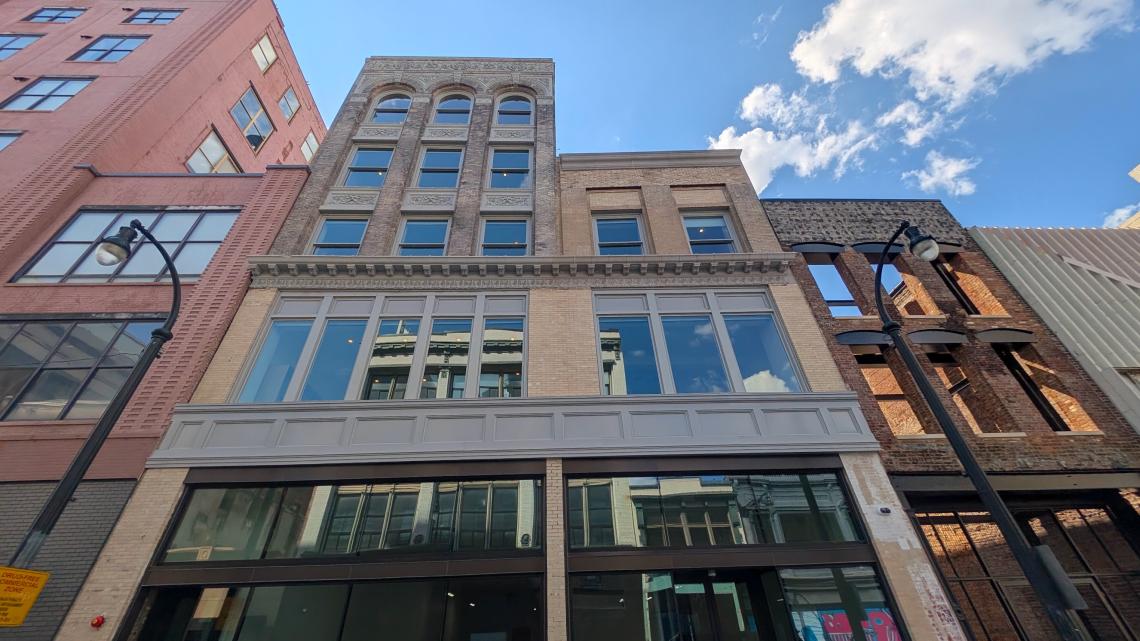 New apartment facades at 85 Peachtree St., Atlanta's original department store, with future retail space below. Josh Green/Urbanize Atlanta
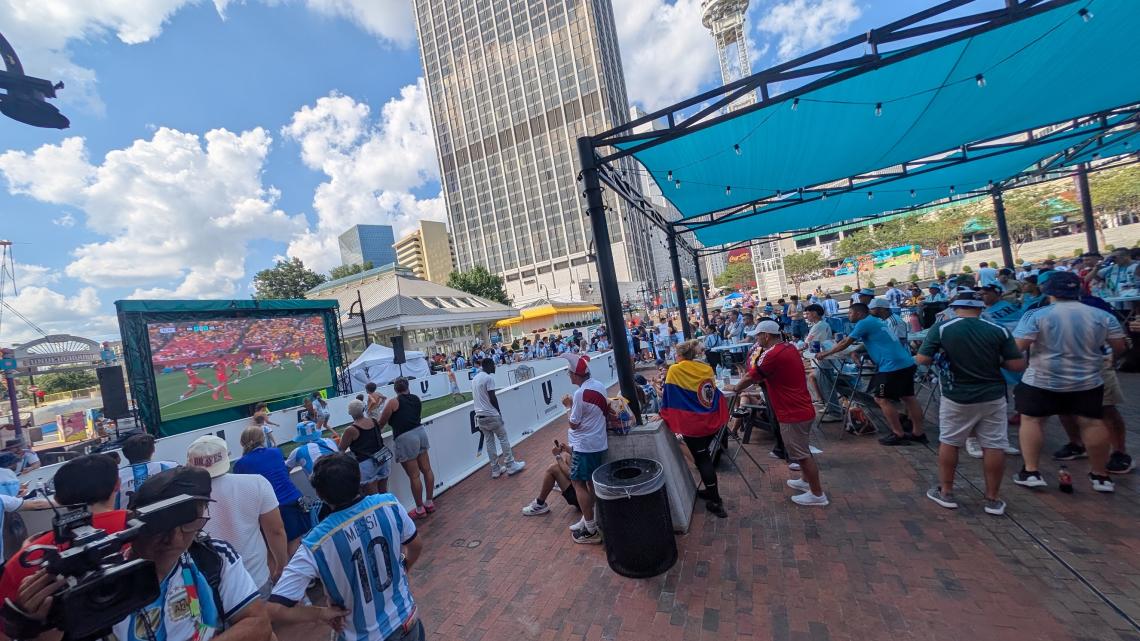 Argentina fans, after surviving Egypt, at Underground Atlanta, their epicenter of Atlanta fandom. Josh Green/Urbanize Atlanta
With Atlanta’s World Cup fandemonium being uniquely centralized (or organized well in bike and transit-accessible places like downtown Decatur), it put visitors in close proximity to each other for longer. The joy of human companionship had more time to germinate—and blossom again and again. Luckily, the infrastructure to house it all will remain in place for us city dwellers, long after the melancholy of the tournament leaving dissipates.
It’s impossible to know, but without the economic promise and hard deadlines of the World Cup, the east and west sides of the Atlanta Beltline may have remained unconnected for years. (Instead, the full Southside Trail officially opened on the very day of the first United States Men’s National Team match.) It’s possible Centennial Yards would still be little more than high-rise apartments and upscale hotel rooms. Downtown Decatur could be a construction zone. The old CNN Center might still be mothballed. The streets of downtown and the Connector still riddled with potholes. And South Downtown—where multiple blocks basically exploded into a five-week coming-out party with a global guest list—may have been slower to emerge as that rarest of Atlanta things: a new district concerned more with history, tact, community, and legacy than boilerplate functionality and the pigheaded pursuit of profit.
Count these among two statements we never expected to hear in downtown Atlanta:
“We’ve got to move down here!” — one Atlanta Public Schools staffer to another, looking up Broad Street toward Five Points.
“It’s the greatest stadium in the world. Hands down.” — a well-traveled but crestfallen England supporter, following last week’s Argentina match, reflecting on Mercedes-Benz Stadium at a Der Biergarten communal table.
Like much of America, the World Cup provided us with a chance to look inwardly and rediscover what makes Atlanta a city worth believing in and rooting for. The attributes are innumerable, but especially in the case of downtown’s previous dead spaces, maybe a bunch wild fútbol fanatics from places like Egypt, Congo, England, Cape Verde, Argentina, and yes world-champion Spain will provide the jolt that’s been sadly missing for generations.
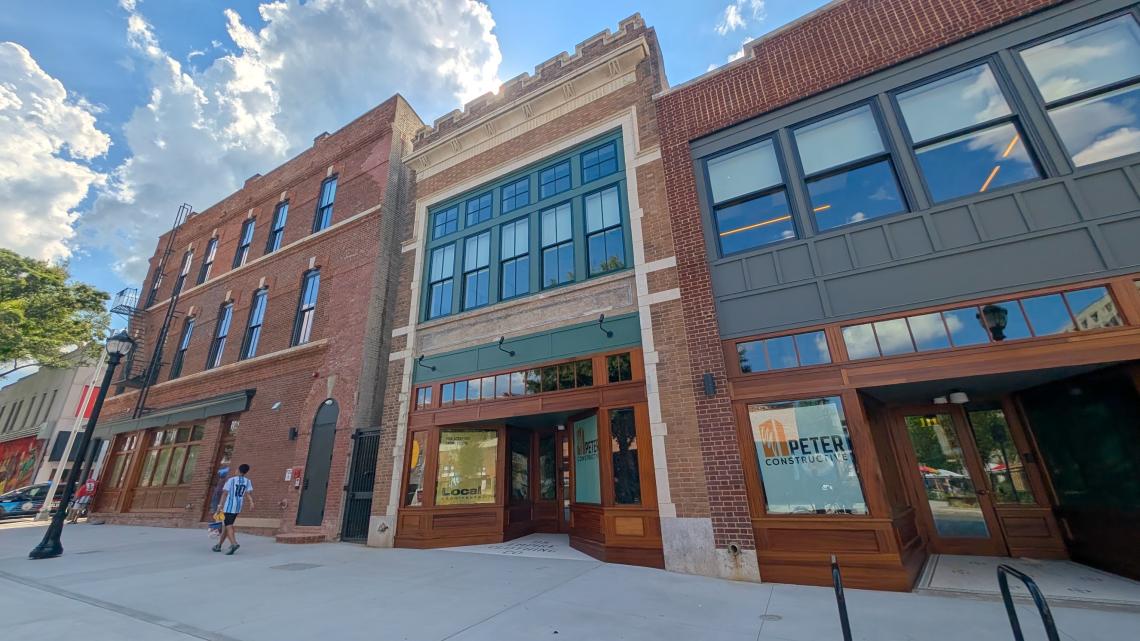 Forthcoming restaurant/retail spaces along Broad Street, with offices above. Josh Green/Urbanize Atlanta
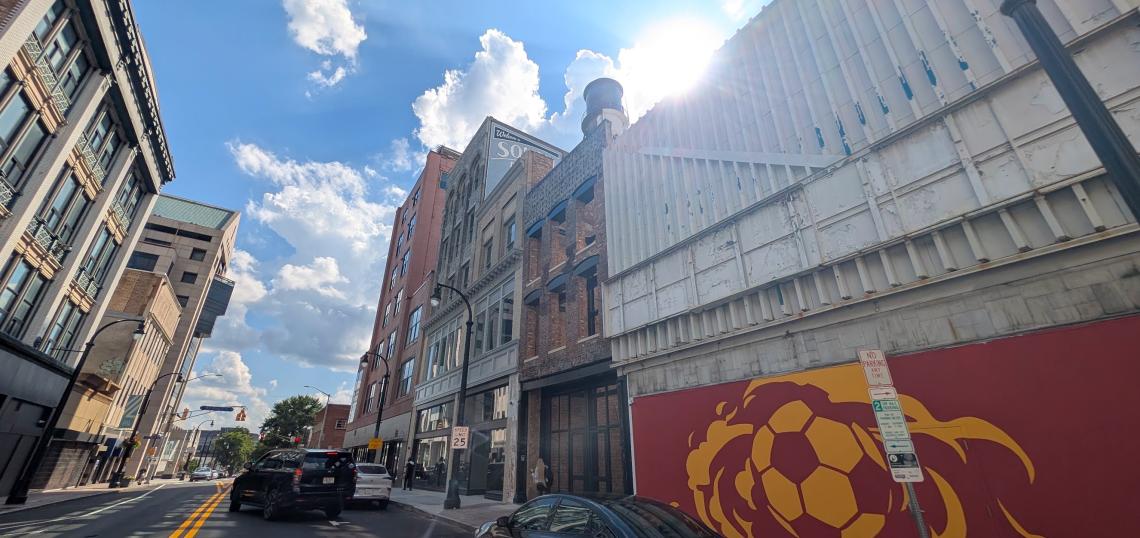
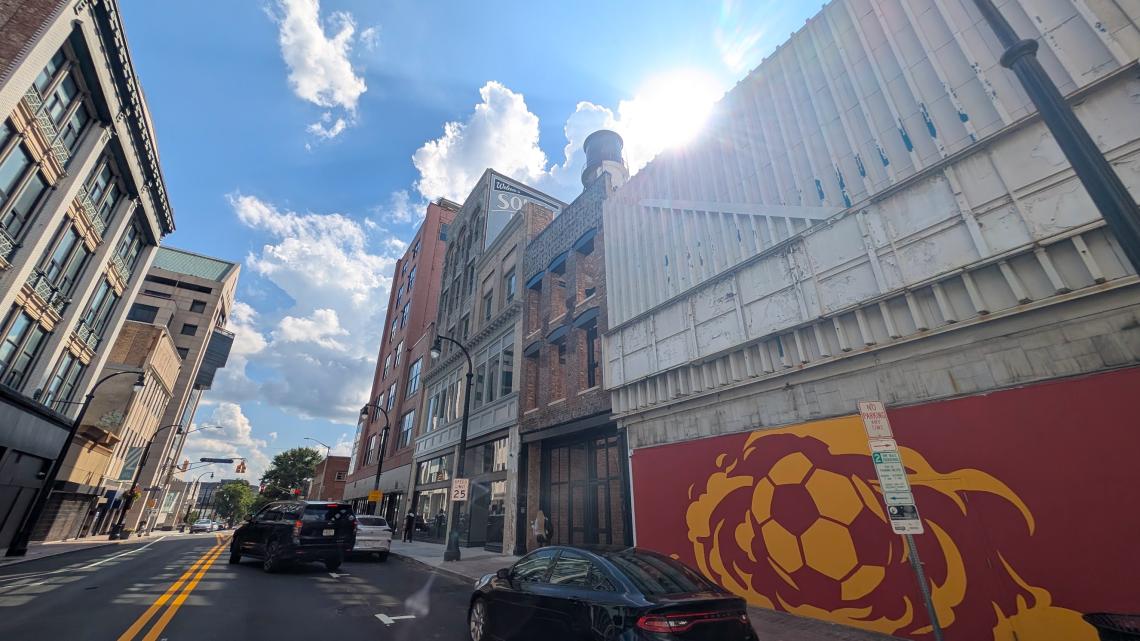 Peachtree Street, south of Five Points, is shedding its moribund vibes. Josh Green/Urbanize Atlanta
Nobody’s advocating for hard-working Atlantans to habitually splurge across downtown as a means of economic sustenance. But maybe consider dinner downtown before your next Falcons, United, or Hawks game. Gather with pals at a new watering hole before walking to a Tabernacle or State Farm Arena concert. Frolic with your kids at Founders Green. Take MARTA to and from all of that—and demand the transit agency keep its act together, its public spaces safe and clean, as it so wonderfully demonstrated it can during our World Cup.
Downtown Atlanta’s next global event, Super Bowl LXII, is only about 560 days away. What else should we be prepared to show the world then?
And what else, in the meantime, can we do for the people already here?
— Urbanize Atlanta staff
...
Follow us on social media:
Twitter / Facebook/and now: Instagram
• Downtown news, discussion (Urbanize Atlanta)