

Two and ½ years after the first meeting to gather community input, City of Atlanta officials are set to unveil plans for a sprawling greenspace and Chattahoochee River connection that relays the story of a dark chapter in city history and memorializes victims.
Officials with the Department of City Planning are set to unveil the preferred design concept at a Saturday, Oct. 3 meeting for the Chattahoochee Brick Company site and Atlanta RiverLands memorial, park, and trail network. A discussion detailing next steps for the project is also planned.
The meeting is set for 10:30 a.m. to 1 p.m. Saturday at Historic Ebenezer Baptist Church (407 Auburn Ave. NE), with Atlanta Mayor Andre Dickens set to speak about the memorial park’s vision as well. The meeting is free to attend, but required reservations can be made here.
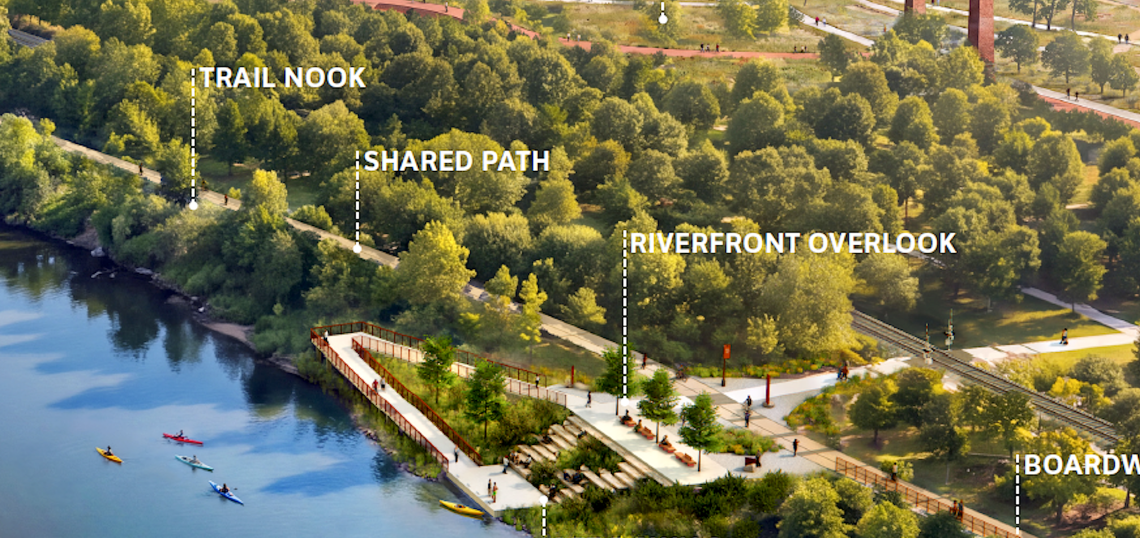
Promotional materials for the Department of City Planning meeting lend glimpses at project designs, showing a system of trails, boardwalks, and a river access point next to a memorial, park, and greenspace honoring the Chattahoochee Brick Company site.
At 75 acres, the site is more than three times the size of Centennial Olympic Park.
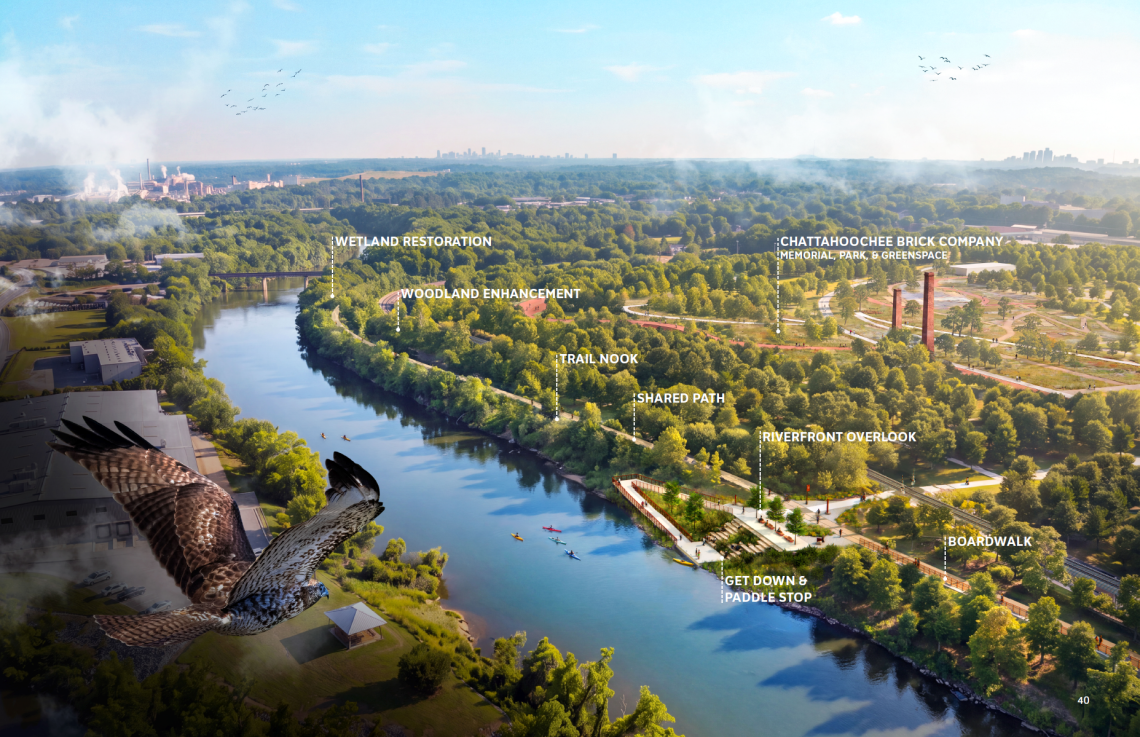 First rendering unveiled by the Department of City Planning for the Chattahoochee Brick Company site and Atlanta RiverLands memorial, park, and trail network. Atlanta Department of City Planning
The upcoming meeting is described by planning officials as “a chance to see where the project stands, ask questions, and share your thoughts about what comes next,” following a number of neighborhood events, community meetings, and other means of gathering citizen input.
Plans for the site will aim to tell the story of how Atlanta was literally built brick-by-brick through forced convict labor that manufactured bricks at the property in years following the Civil War.
Following lengthy negotiations, city officials purchased the former Chattahoochee Brick Company site from Lincoln Terminal Company in summer 2022. That purchase—aided by a $4-million grant from Atlanta nonprofit The Kendeda Fund and national environmental nonprofit The Conservation Fund—spared the culturally significant riverside property from non-public, industrial uses, such as a train terminal or chemical depot.
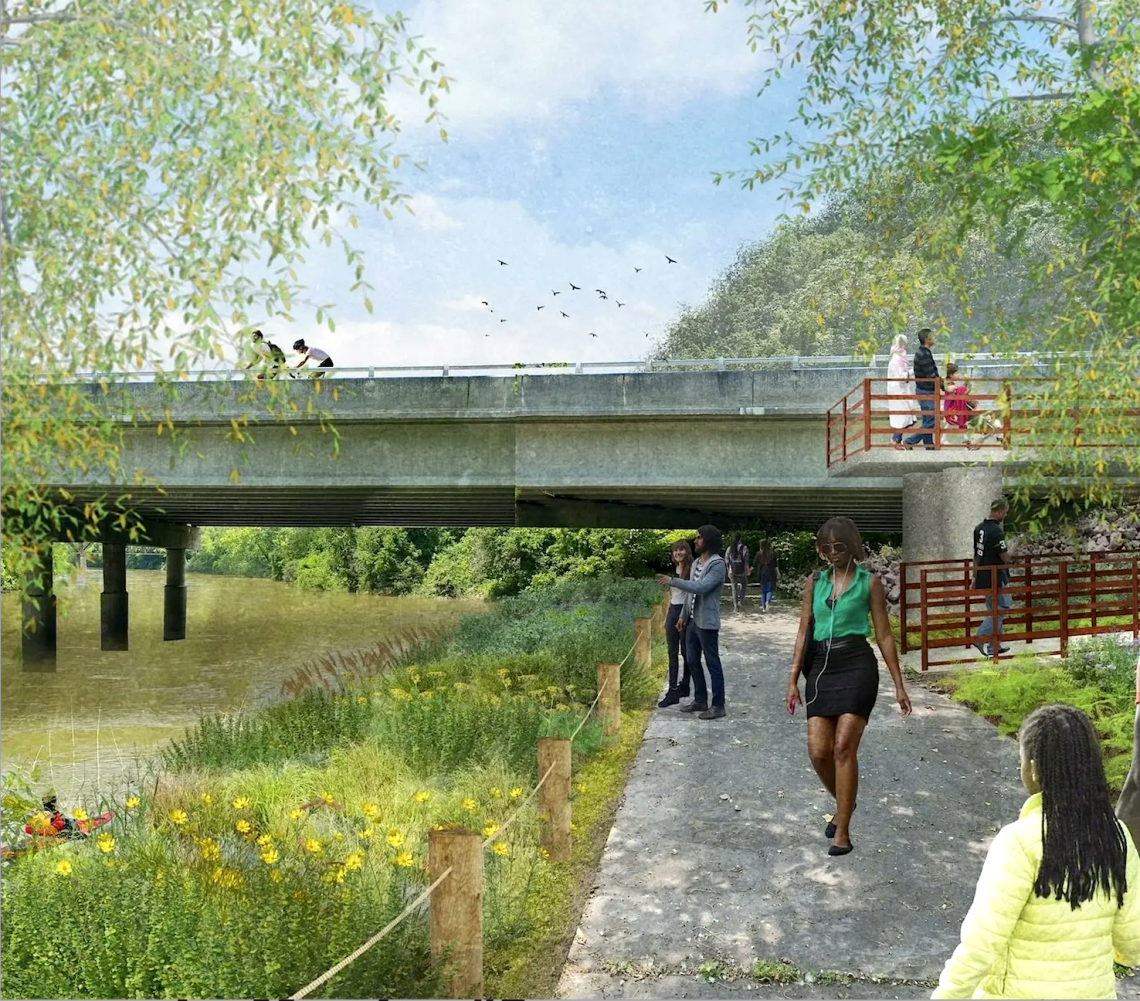 Atlanta Department of City Planning
Situated today on Brick Plant Road, next to the historic Whittier Mill Village neighborhood, the brickworks business owned by former Atlanta mayor James W. English relied on extensive use of convict lease labor from the late 1870s to early 1900s. Hundreds of men, most of them Black, were accused of sometimes petty crimes such as vagrancy and forced to endure working conditions and beatings so severe that many died—until convict labor was outlawed in Georgia in 1909.
Historians and others with interest in the site believe it is dotted with unmarked graves.
Industrial uses continued at the property until about two decades ago, and attempts by environmental nonprofits and the City of Atlanta to buy the site had never come to fruition. Community members and descendants of laborers subjected to atrocities fought for the site’s protection for years.
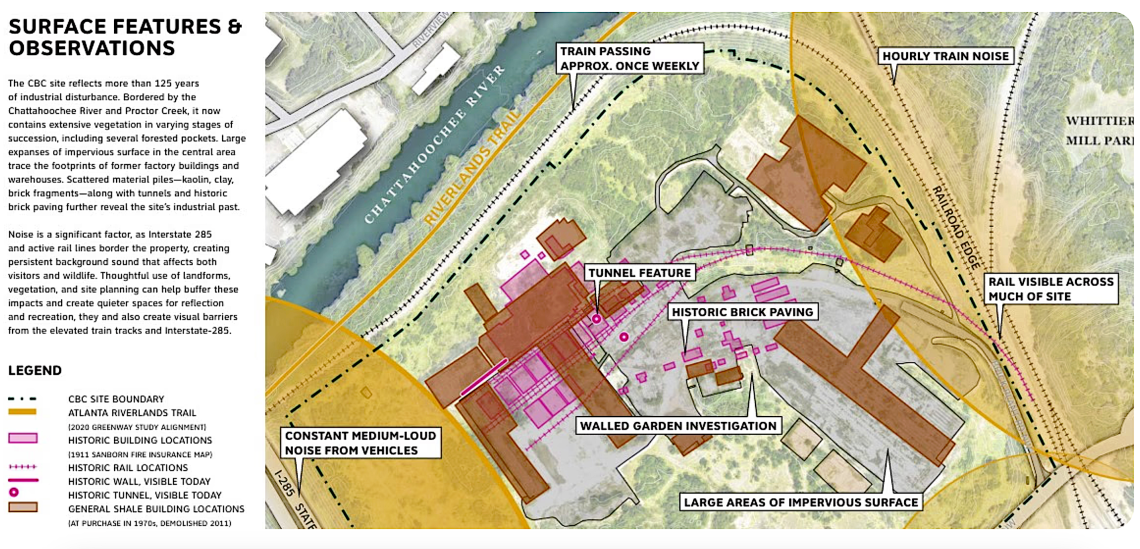 Recent analysis of current site conditions at the 75-acre former industrial site, fronting the river, active rail, and Interstate 285. Atlanta Department of City Planning
Lincoln Terminal Company eventually bought the site and planned to redevelop but was denied a permit in 2017; that company’s subsequent plans to sell to Norfolk Southern, which hoped to build a train terminal, were met with fierce pushback from activists and city leaders. Those redevelopment plans were officially scrapped in 2021.
More recently, the city put together an 11-member group called the Chattahoochee Brick Company Memorial, Greenspace, and Park Board as a means of keeping the visioning, planning, design, and redevelopment phases more transparent and inclusive.
In early 2024, city officials said the process of gathering public input was expected to take “several years.” A memorial honoring victims of lease labor practices will be an integral part of what becomes of the land, officials have said.
The site will also boost rare public access to the Chattahoochee River for city residents. It’s expected to eventually be linked to the Proctor Creek Greenway and the much larger, 100-mile Chattahoochee Riverlands initiative.
“By honoring the people forced to make its bricks, restoring the land, and creating a place for learning and connection,” reads a preview of Saturday’s meeting, “Atlanta can turn a site of exploitation into a place of remembrance and public purpose.”
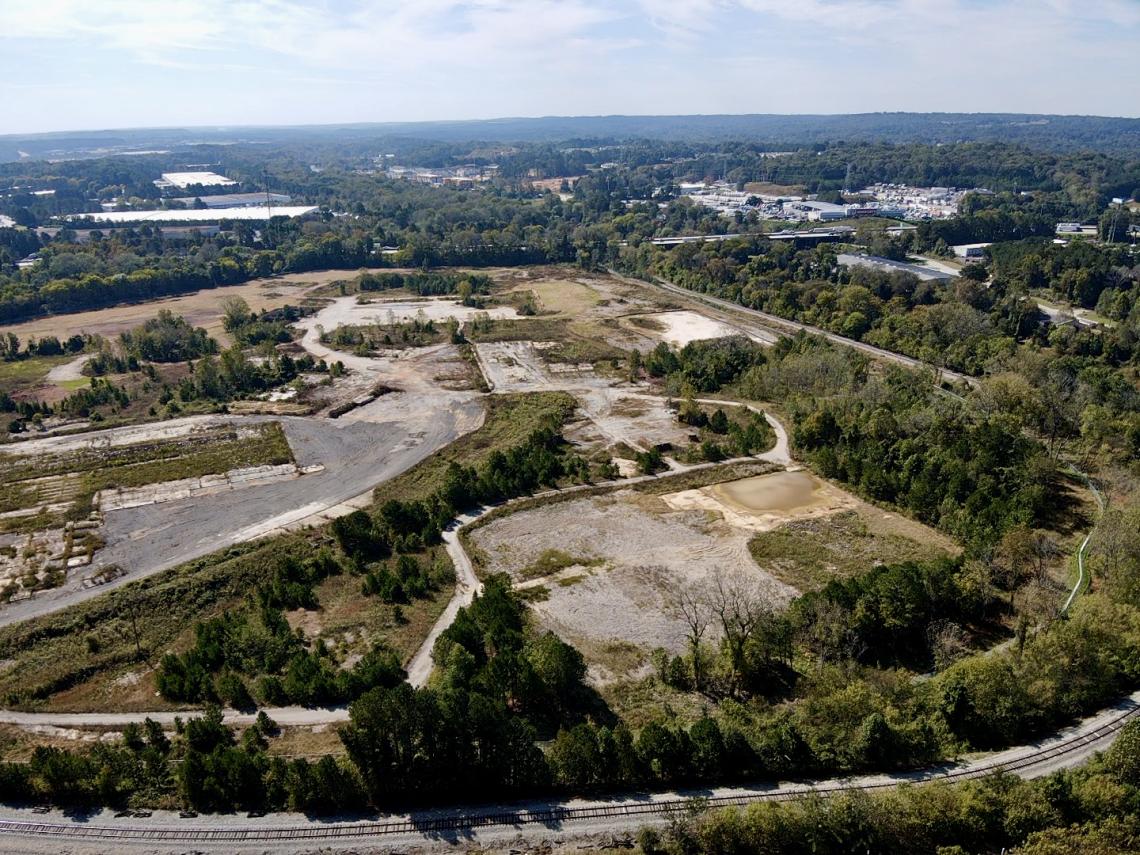 The former Chattahoochee Brick Company site, a 75-acre win for ITP greenspace preservation in 2022. Photo by Stacy Funderburke; courtesy of The Conservation Fund
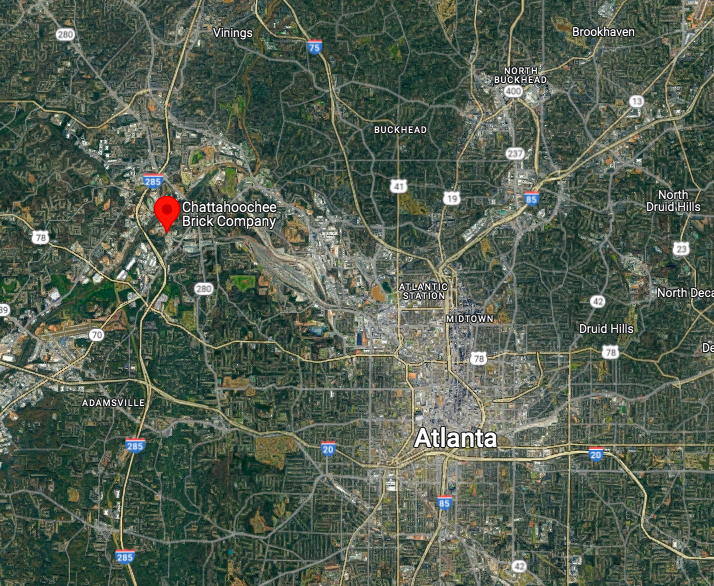 The former Chattahoochee Brick Company site near northwest Atlanta neighborhoods such as Whittier Mill Village, Scotts Crossing, and Riverside. Google Maps
...
Follow us on social media:
Twitter / Facebook/and now: Instagram
• Whittier Mill Village news, discussion (Urbanize Atlanta)