

Atlanta Beltline Inc. officials relayed this week they plan to exceed their goal of locking in a total of 5,600 affordable housing units near the city-altering trail system over the next four years.
The agency has reached 79 percent of that 2030 affordable housing goal to date, building or preserving 4,425 units within the Beltline Tax Allocation District, or TAD—with more on the short and long-term horizon.
That tally includes 299 units deemed affordable that came online in 2025.
According to Beltline officials, the agency has more than doubled the number of finished, price-and rent-capped units along the corridor since 2018—and of those, nearly 3/4ths were reserved for residents earning 60 percent of the Area Median Income or less.
As of last year, in the Atlanta region, households of four earning up to $91,350 annually qualify as low-income, and the affordable housing push is meant to ensure monthly rent or mortgage commitments can be met with enough money left over for life’s necessities.
What’s on tap for coming years near the Beltline, on the affordable housing front? The agency says it has secured 94 acres to create more affordable housing and non-market-rate commercial spaces to help boost small businesses.
Around the 22-mile loop, a pipeline of roughly 500 affordable units is actively in development in the Beltline TAD.
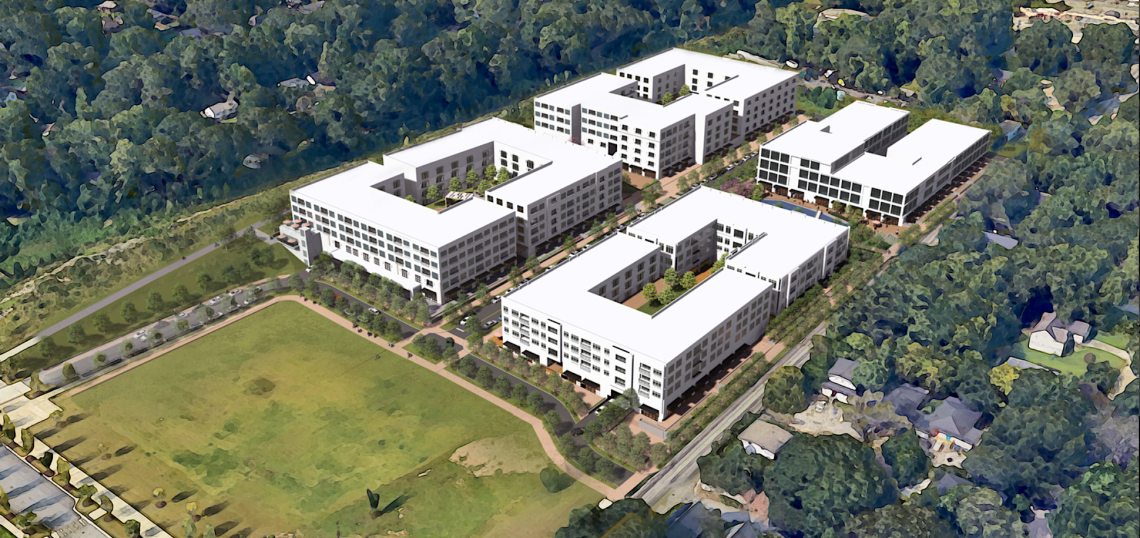
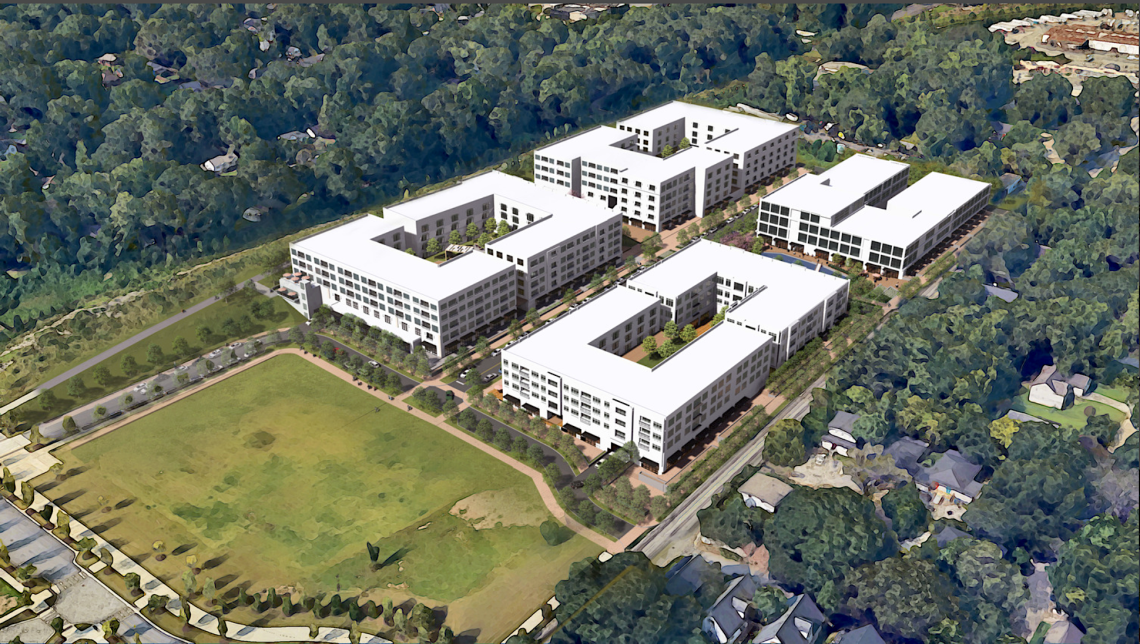 Placeholder overview of potential development scale at the cleared 356 University Ave. site in Pittsburgh Yards, a sizable Beltline-owned palette along the Southside Trail. Courtesy of Atlanta Beltline Inc.
Below are highlights of where those housing options could sprout—and where key projects stand—as provided by Beltline reps this week (edited for clarity and length).
- 356 University Avenue (Pittsburgh): Adjacent to Pittsburgh Yards, this 13.7-acre site has completed rezoning and a Request for Proposals process for a mixed-income, mixed-use development—requiring permanently affordable housing, light industrial uses, and discounted commercial space. It’s under an open procurement process, with public announcements anticipated later this year, per Beltline officials.
- 579 Garson Drive (South Buckhead): Expected to close in the second quarter of 2026, this development will deliver 130 units of permanently affordable housing and 8,000 square feet of commercial space, including micro-units for small businesses, per officials. Funded in part by a $2 million Beltline loan and more than $43 million in equity investment through 4 percent Low-Income Housing Tax Credit equity, the project is being developed in partnership with Pennrose and Radiant Development Partners. Expect a groundbreaking later this spring.
- 350 Chappell Road (Grove Park/Bankhead area): The 6.3-acre site was awarded 4 percent Low-Income Housing Tax Credits in February last year. Supported by $2 million in TAD Increment funding, the project will deliver 218 affordable housing units with 30 to 80 percent AMI and is expected to close this year, per Beltline officials.
- 425 Chappell Road (Bankhead): The 30-plus acre site has received rezoning approval from Atlanta City Council, and the Beltline is working to advance the first phase of development. That will deliver roughly 150 units of for-sale housing and 5,000 square feet of affordable commercial space.
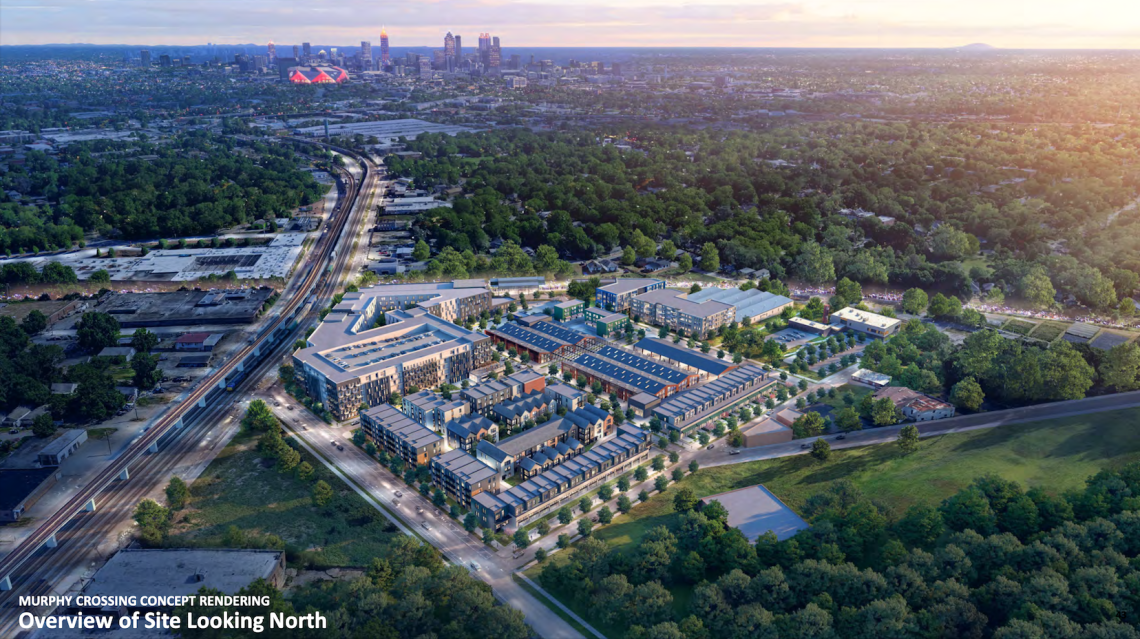
Murphy Crossing (Oakland City): This closely watched site has received rezoning approval from City Council and has completed the Development of Regional Impact review process. The Beltline is now working through predevelopment activities on the first phase, with demolition expected to complete by the fall.
Overview of revised Murphy Crossing plans, with active MARTA rail at left and downtown in the distance. Atlanta Beltline Inc.; Perkins + Will
- Bennett Street (Buckhead): Over the past two years, the Beltline completed a $29-million acquisition of a 3.2-acre assemblage near the intersection of Peachtree Road and Bennett Street in Buckhead, representing the first Beltline land acquisition along Peachtree Road. Existing buildings on the site are vacant; demolition is expected to be complete by this fall, per Atlanta Beltline Inc.
“We’ve accelerated our acquisitions over recent years because the communities we work in deserve transformative and community-centered development,” Dennis Richards, the Beltline’s vice president of housing policy and development, said in a statement. “Our dedicated housing team is using our expertise and resources to forge public private partnerships on these properties so that the Beltline achieves our mission of an equitable, inclusive, and sustainable Atlanta.”
One newer Beltline tool worth noting is the Affordable Housing Dashboard and web-based mobile app that launched in January. It’s meant to improve access to affordable housing information for residents and stakeholders as the agency strives for its 2030 goal.
...
Follow us on social media:
Twitter / Facebook/and now: Instagram
• Beltline news, discussion (Urbanize Atlanta)