

If it’s not a tale of two cities, it’s at least a case of the rich getting richer, so to speak.
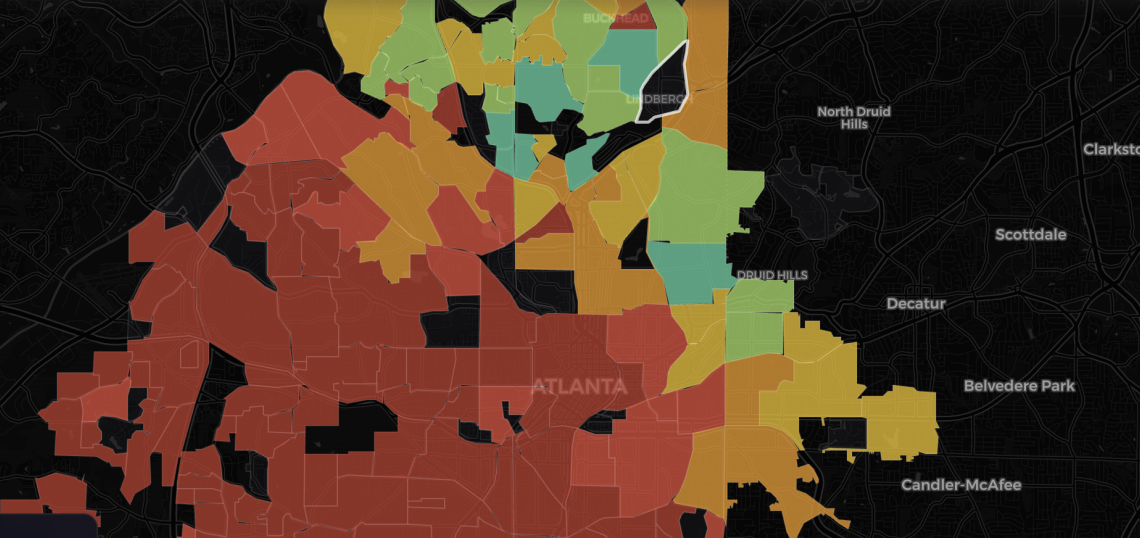
An interactive new Atlanta Neighborhood Appreciation Map helps paint the picture of how more than 200 intown neighborhoods are appreciating (or not) at different levels—and how that post-pandemic gap is widening across clear dividing lines.
The tool was compiled by David Holcombe, a Realtor and investment specialist with Keller Knapp Realty, to show neighborhood appreciation trends over the past three and five years across the City of Atlanta. Another map shows a forecast of where prices are expected to go over the next year.
Important note: The maps’ data applies only to single-family houses, not condos or townhomes.
Holcombe used city neighborhood mapping information and sourced data from the Zillow Home Value Index and Zillow Home Value Forecast, building the maps with Anthropic’s AI Claude.
What stands out most is how many places around Atlanta have actually lost value since 2021, and especially over the past three years, according to Holcombe’s findings. Traditionally expensive neighborhoods such as Collier Hills, Virginia-Highland, and Chastain Park have continued to see prices balloon. Trendy Midtown, meanwhile, has experienced almost flat growth over the past three years, as another example, per the data.
Perhaps it’s surprising that Old Fourth Ward—where Beltline hype has been home-price jet fuel for more than a decade—has seen prices dip by more than 2 percent in recent years‚ per Holcombe’s findings.
“It’s pretty wild to see what a tale of two markets it is,” Holcombe says. “I was pretty shocked by what a difference it was by price point.”
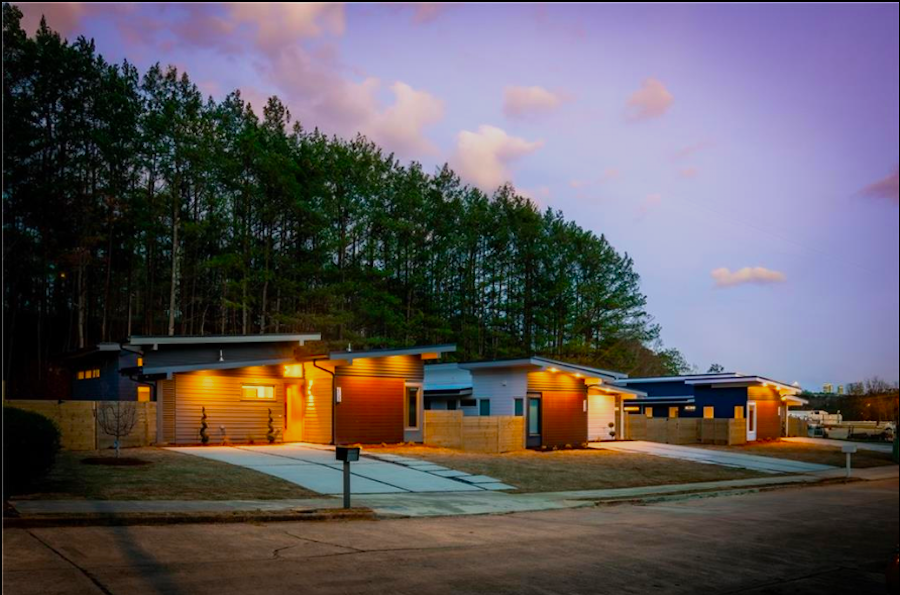 Home prices started in the high $500,000s at the 3 Palms project in northwest Atlanta's Carver Hills. Photo by Will Dodgen; courtesy of Jarred Bone Real Estate Services
Holcombe says the data points to a “K-shaped housing market” trajectory in Atlanta, or an economic term that describes an economy’s recovery moving in opposite directions.
For the past three years, top-performing neighborhoods have appreciated at a pace of roughly 5 to 6 percent every year. Atlanta’s least expensive neighborhoods—generally southwest of a straight line from Ormewood Park up to western Buckhead—have lost as much as 7 percent of value over the same time period, eating into owners’ equity.
As Holcombe notes in a summary, numerous factors can quickly change a neighborhood’s pricing forecast, such as the nearby opening of a major employer, a mixed-use development, or a fresh Beltline segment.
Such factors “can reshape a neighborhood’s trajectory faster than any historical trend line would suggest,” Holcombe writes.
So, Atlanta, have a go with these maps and, please, relay any revelations you find.
...
Follow us on social media:
Twitter / Facebook/and now: Instagram
• Reader poll: Is today's Atlanta unreasonably expensive? (Urbanize Atlanta)