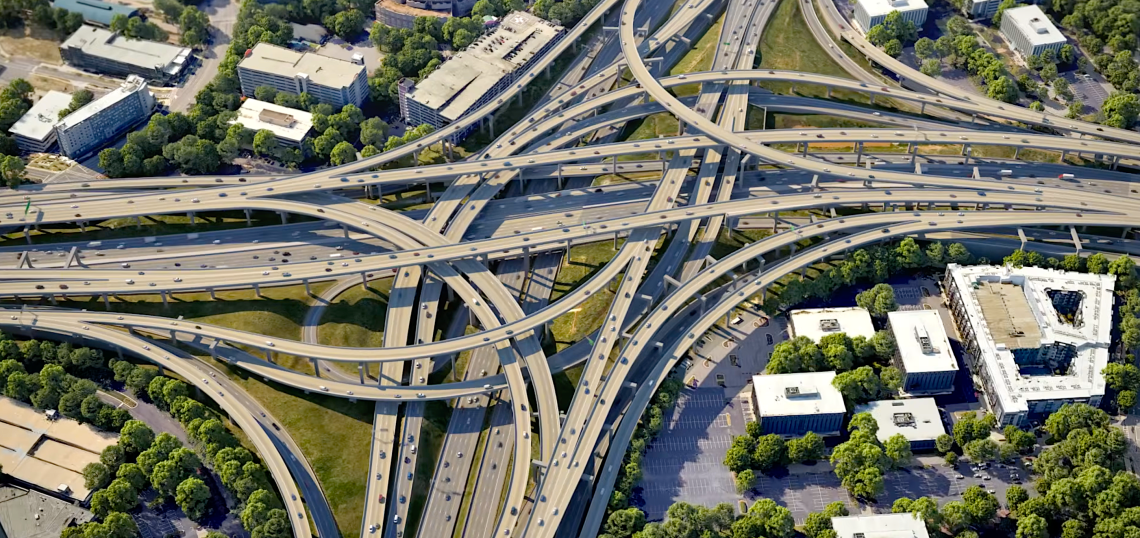
A mammoth, interstate toll-lane expansion project expected to cost billions took a key step forward last month, with the lofty stated goal to “transform mobility across north Atlanta.”
Now, on this Georgia midterm Election Day, it’s time to ask the people of the region how they really feel about it. And how much they’ll be willing to pay to avoid (theoretically) the northside's notorious traffic congestion.
The State Board of Transportation selected a private consortium of more than a half-dozen international infrastructure companies Oct. 15 to design and build the I-285 East Express Lanes project, a massive endeavor slated to be one of the largest in Georgia Department of Transportation history. The deal goes that the design-and-build team—collectively called Top End Mobility Group, or TEMG—would fund construction of toll lanes, eventually stretching from Sandy Springs around to I-20 in southeast Atlanta, and then collect toll revenue for half a century, as Axios Atlanta recently relayed.
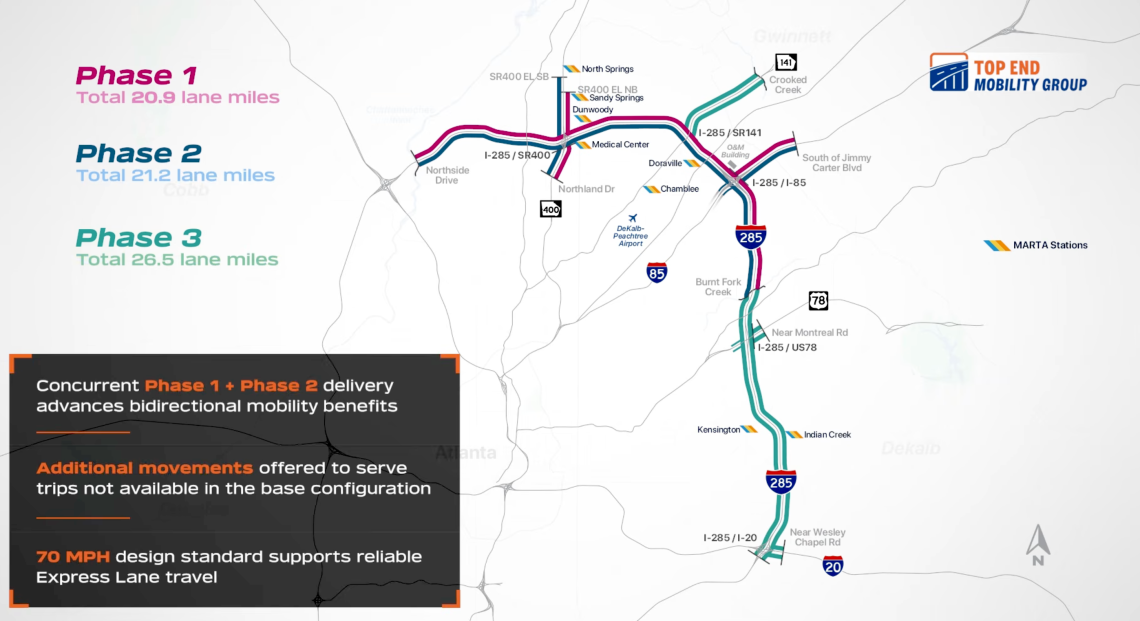
The project calls for 37.5 miles of new express lanes total, to be built across three phases. Axios reports the first phase alone will cost $8.9 billion.
 GDOT/Top End Mobility Group
Lanes will extend from Northside Drive at I-285 (roughly 11 on the clockface of Atlanta’s Perimeter) around to the I-285 and I-20 interchange on the city’s southeast side.
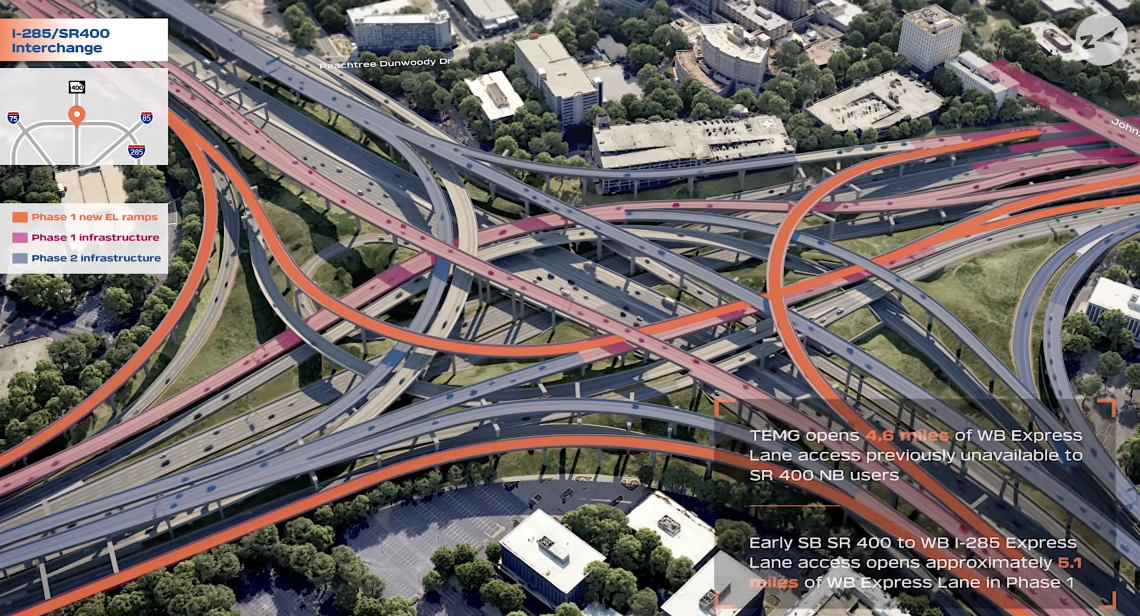
In between, plans call for new connections and express lane expansions at Ga. Highway 400, Peachtree Industrial Boulevard (Ga. Highway 141), and I-85.
The first and second phases would be built at the same time, adding more than 20 miles of express lanes in each direction across main population centers at the Perimeter’s very top end. The targeted opening date is 2034.
The third and last phase would see toll lanes added in each direction from Tucker down to I-20, along with the branch off I-285 along Peachtree Industrial Boulevard. Plans call for that to debut in roughly 2040.
TEMG’s designs call for 33 express-lane access points across I-285, which project heads say will reduce traffic delays by more than 3 million hours—or a reduction of 27 percent more than GDOT’s base designs for the project.
 GDOT/Top End Mobility Group
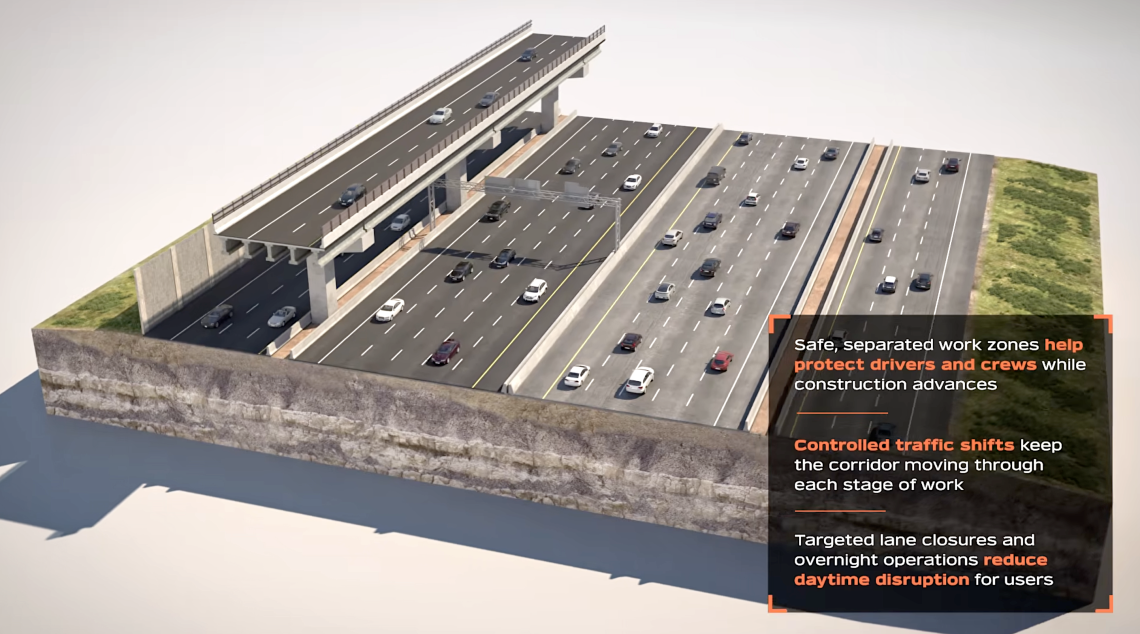
Beyond the nearly $9-billion price tag for initial work, the cost for drivers is expected to include years of construction delays, temporary lane alignments, and disruptions as structures are added, though a TEMG presentation states hiccups will be “minimal” and “supported by overnight operations when needed.”
What the actual “dynamic tolls” might eventually cost drivers around Atlanta hasn’t been specified. But the arrangement goes that Georgia’s State Road and Tollway Authority would set limits for what tolls cost.
According to TEMG, the lanes will be designed to keep cars moving at 70 mph.
The private companies involved bring a track record of 15 similar North American projects closed on time and within budget, totaling more than 1,300 lane miles in the U.S., in conjunction with three different public agencies, according to TEMG officials. Those include Interstate 66 express lanes in Virginia and TEXpress Lanes in Dallas-Fort Worth.
The financing and toll-collecting arrangement is similar to the $4.6-billion, tolled express lane project that’s underway along Ga. Highway 400 today. One key difference is the Ga. Highway 400 overhaul includes a Bus Rapid Transit component that links to MARTA rail.
 GDOT/Top End Mobility Group
Perks for the state, according to Axios, will include a $23.6-billion concession fee that TEMG would pay to GDOT in six annual installments.
Also, transit options such as public buses and vanpools registered with the state would be allowed to use the express lanes, but current plans don’t call for any new transit infrastructure such as stations.
As a next step, GDOT and TEMG are scheduled to sign a full agreement next month—and then spend the next year finalizing comprehensive designs for the project. The tentative schedule calls for construction to kick off in late 2027 or 2028.
This six-minute GDOT/TEMG video primer provides a step-by-step breakdown (read: borderline commercial) of plans, including the general outlook on road closures, “superstructure” placement, and examples of expanded “driver choice” across the full project.
Have a look at the video, if time permits on this pivotal Election Day, and please take a second to log a vote below: