

Plans for remaking a nearly century-old Atlanta school property while boosting a southside neighborhood with housing and jobs-producing commercial space have taken key steps forward this month.
In a unique partnership, Mayor Andre Dickens’ Administration, Atlanta Public Schools, and the city’s nonprofit housing subsidiary Atlanta Urban Development Corporation have formally picked a developer for the former Lakewood Heights Elementary School.
The chosen company is Ali-Graceline Development, a joint venture of Atlanta-based firms Ali Development LLC and Graceline Partners LLC, according to city officials.
The Atlanta Board of Education approved a development agreement and ground lease for the 335 Sawtell Ave. SE property on Sept. 1; that was followed by approval from the AUD Board on Thursday, according to city officials.
The approvals for Lakewood Heights mark the first development agreement between APS and AUD, and according to Dickens’ office, they’ll allow the project to start moving from planning and procurement into implementation.
In July last year, AUD released a Request for Qualifications seeking developers capable of turning the long-vacant, 1930s elementary school into a mixed-use hub that boosts the neighborhood.
Specifically, according to city officials this week, the redevelopment calls for preserving and adaptively reusing the 1932 school building as part of a project totaling nearly 55,000 square feet of space.
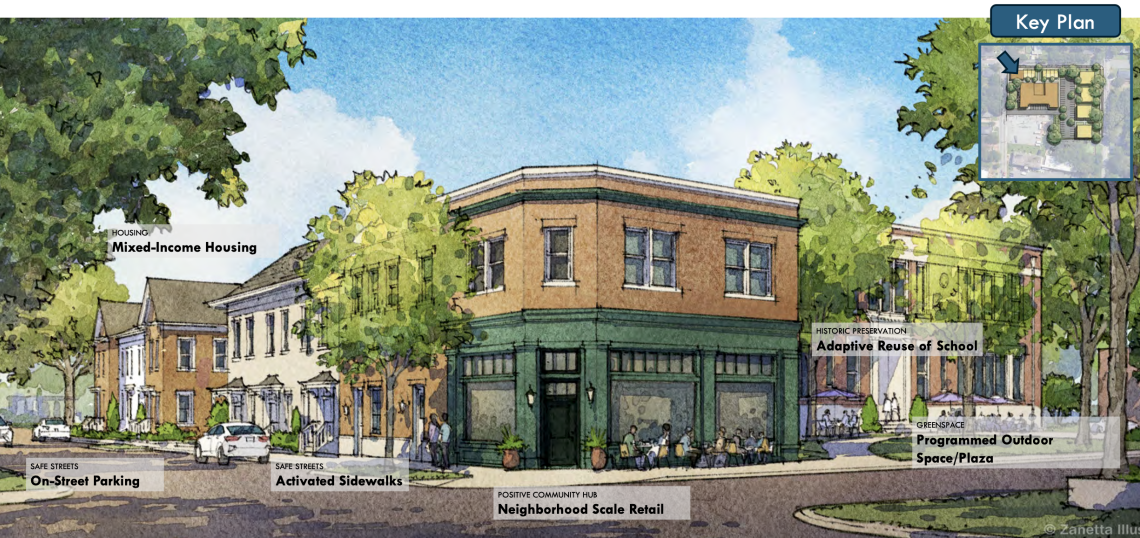
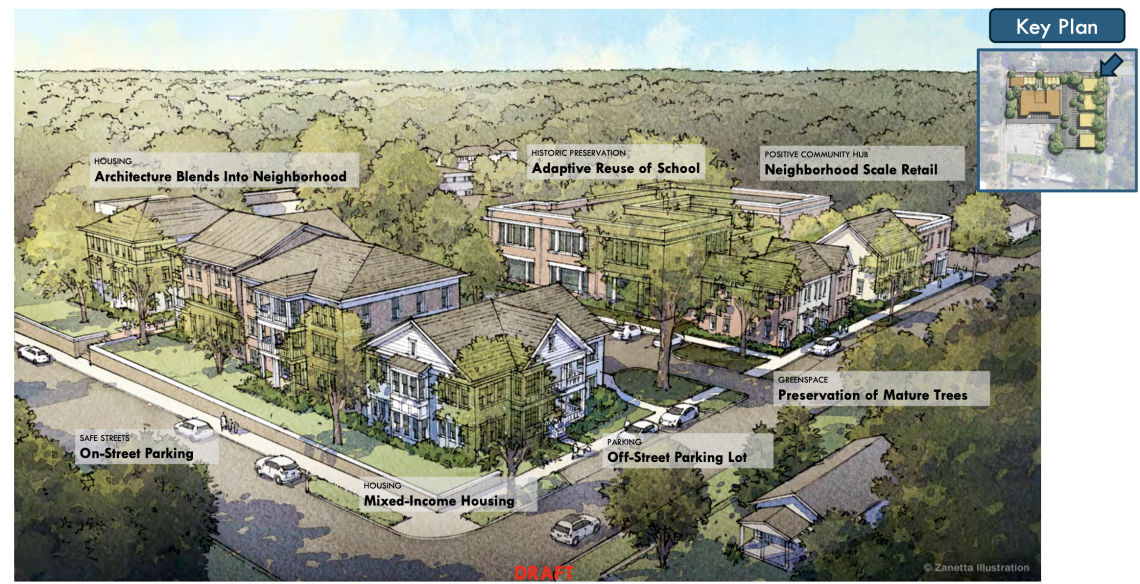 A draft aerial view over the intersection of Charleston and South Bend avenues with new on-street parking, apartments standing two and three stories, and the adaptively reused school. APS/Housing Innovation Lab/Atlanta Urban Development; designs, Zanetta Illustration
The breakdown calls for 12,000 square feet of commercial space onsite, alongside about 43,000 square feet of residences, a means of “returning the historic school property to active community use,” per a city announcement. No unit count or cost estimate was specified. (The RFQ sought development firms capable of turning the old school property into a “dynamic community asset,” with roughly 55 housing units, most of them two to three-bedroom rentals.)
The formal partnership agreement allows Ali-Graceline Development, APS, and AUD to move into design, financing, and other predevelopment phases.
According to city officials, the goal is to break ground in the fourth quarter of 2027.
The planned redevelopment, according to Dickens’ office, will incorporate what nearby residents and stakeholders stated they most want to see during a community-engagement process: Mixed-income housing, preservation of the school building, and “neighborhood-serving uses,” all with pedestrian-friendly designs.
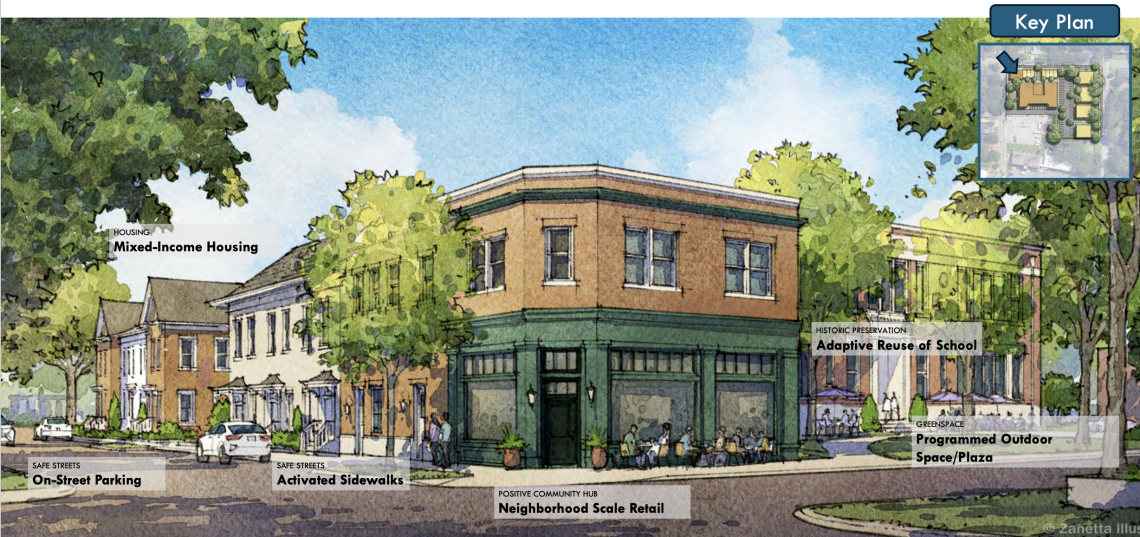 A draft concept for the corner of Charleston and Sawtell avenues shows a new commercial storefront, courtyard, and potential look of new townhomes, per the master plan. APS/Housing Innovation Lab/Atlanta Urban Development; designs, Zanetta Illustration
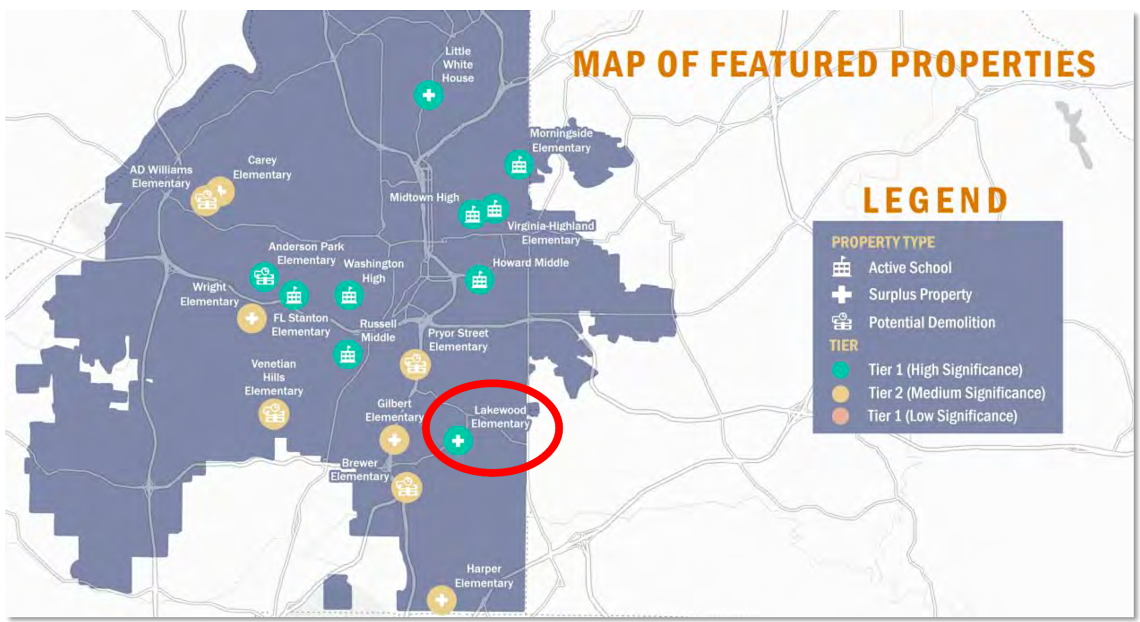 A map of historically significant Atlanta Public School properties, as compiled by Atlanta Preservation Center and APS.APS/Housing Innovation Lab/Atlanta Urban Development
The 2.1-acre Lakewood Heights site is one of eight “surplus” school properties planned for conversion into community assets around the city. The former school has been shuttered and vacant since 2004; three years ago, it was at risk of being demolished, but APS reconsidered and scrapped those plans, citing historical value.
In the partnership announcement, Dickens noted Lakewood Heights Elementary School is located within a Neighborhood Reinvestment Initiative, or NRI, priority neighborhood. NRI is a multi-year plan the Mayor’s office has estimated will generate $5 to $7 billion in Tax Allocation District dollars for underserved neighborhoods, though critics have argued it would pull vital resources from other places that need it, such as Atlanta schools.
“Public land,” noted Dickens in a statement, “should work for the public, and that means creating homes, opportunity, and stronger neighborhoods for the people who already call them home.”
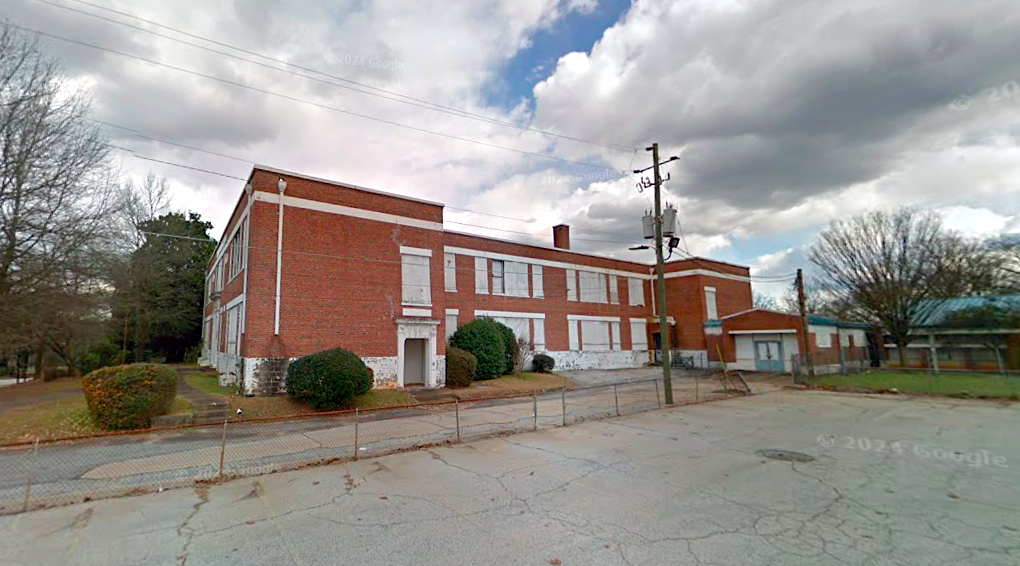 The former Lakewood Heights Elementary School. Google Maps
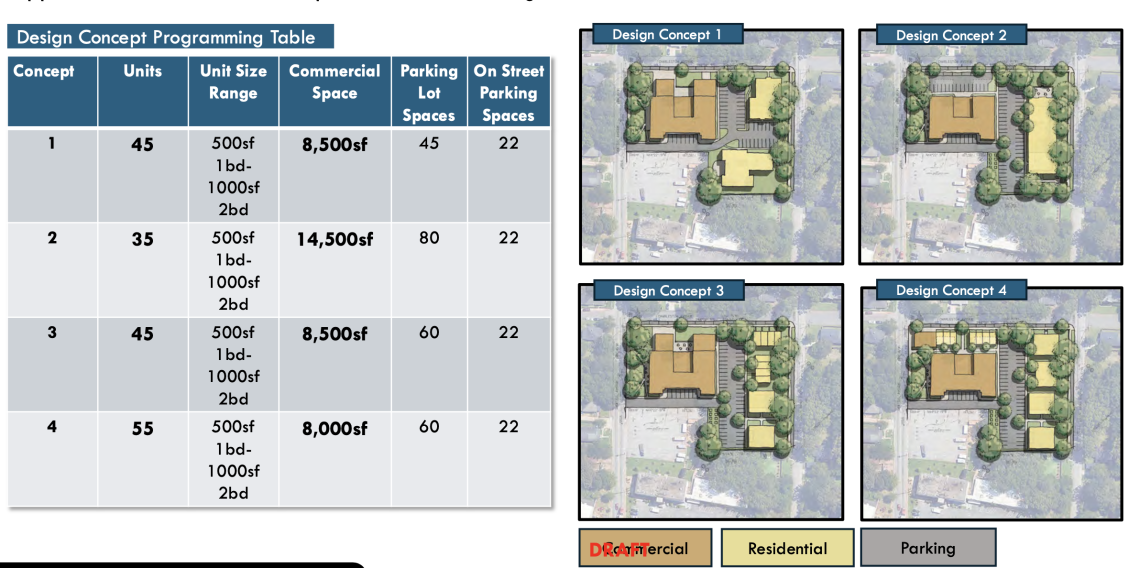 Four options for adaptive-reuse and new construction in Lakewood Heights compiled in early 2025. APS/Housing Innovation Lab/Atlanta Urban Development
John Majors, AUD’s president and CEO, said the “milestone” partnership illustrates what’s possible when entities align around preservation, housing, and neighborhood priorities.
“Lakewood Heights is about more than redeveloping a property,” said Majors. “It’s about preserving an important neighborhood landmark while putting public land to work to create housing that serves Atlanta families for generations.”
Find more context and draft visuals for the Lakewood Heights plans in the gallery above.
...
Follow us on social media:
Twitter / Facebook/and now: Instagram
• Lakewood Heights news, discussion (Urbanize Atlanta)