

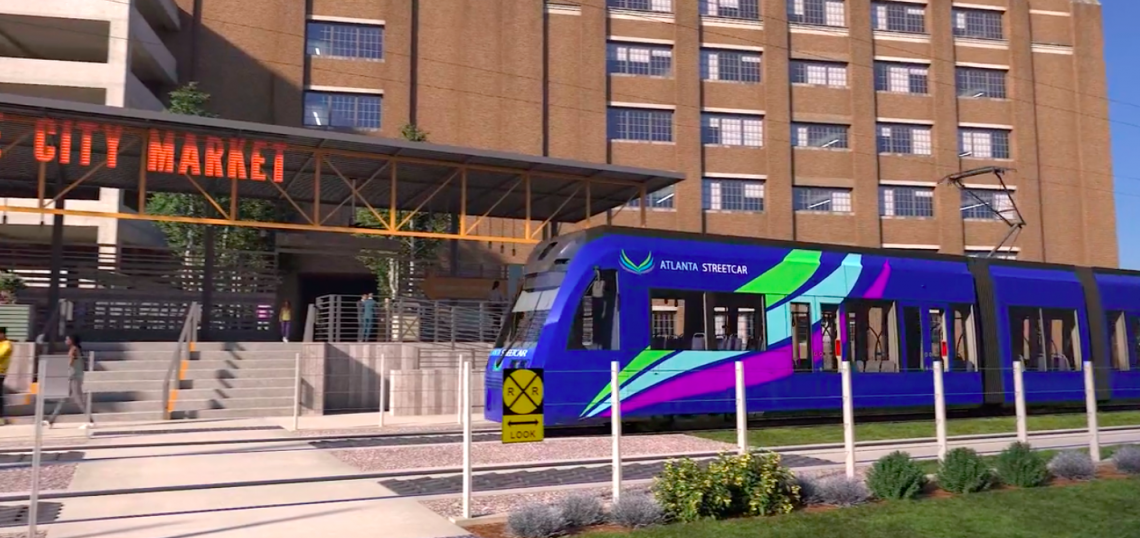
The concept of light-rail transit encircling Atlanta garnered a strong show of support Monday from City Hall, continuing renewed momentum in recent weeks for permanent transportation alternatives around the Beltline’s rapidly growing 22-mile loop.
But given the transit project’s estimated $3.5-billion cost and powerful opposition forces, is the effort going to ultimately matter?
During their regular meeting Monday, all present Atlanta City Council members unanimously voted 14-0 to support a resolution affirming city support for light rail in the Beltline corridor—and calling on MARTA, Atlanta Beltline Inc., and Mayor Andre Dickens’ office to quickly put together a funding and implementation plan.
The deadline for developing that light-rail game plan, according to the resolution introduced earlier this month by District 2 councilmember Kelsea Bond, is the end of January 2027. That’s about four months from now.
The resolution comes a year and ½ after Dickens publicly pulled support for light-rail transit on the Eastside Trail—but also three weeks after Beltline officials released final results of a three and ½ year, federally funded transit study, which has succeeded in bringing the transit topic to the forefront again and attracting political backing.
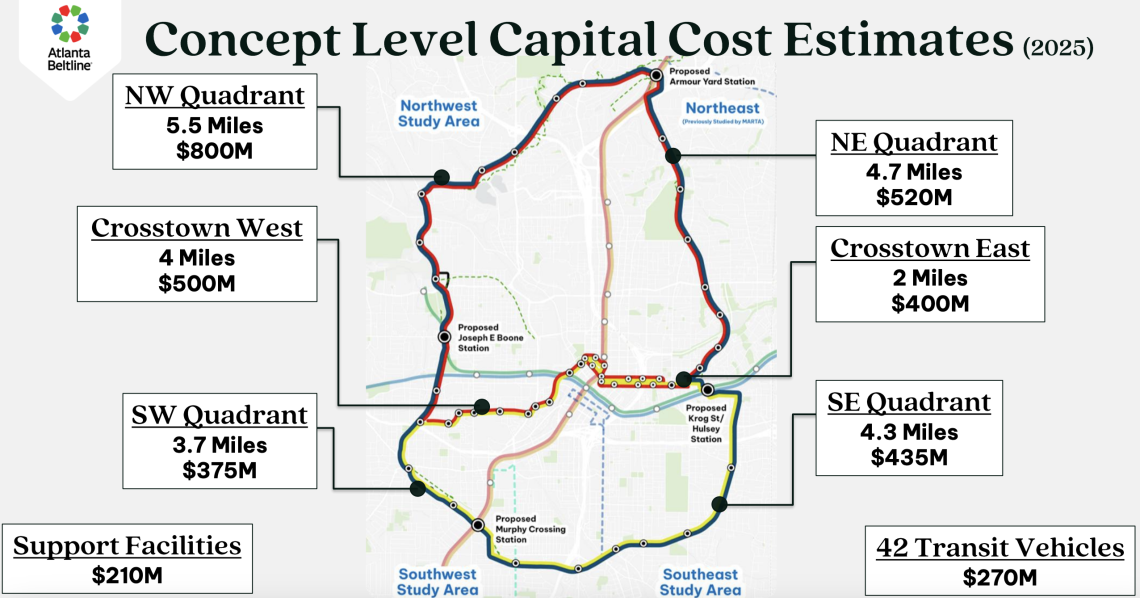 Breakdown of segment costs totaling $3.5 billion, excluding costs of installing train stops. Atlanta Beltline Inc.
The Beltline’s rail plan, while still only between 10 and 20 percent designed, would attract an estimated 4.2 million boardings per year. Beltline planners and engineering partners came up with a three-loop system, with light rail running both clockwise and counterclockwise along the full 22-mile oval; at the same time, two smaller loops—a north and south one—would operate the same way, providing connectivity to downtown and putting a train at each platform every 10 minutes, per Beltline officials.
The biggest looming question mark involves funding. Bond told WSB-TV on Monday that More MARTA funding taxpayers have been supplying for years will partly cover the estimated $3.5-billion price, but whether state and federal funding could materialize remains to be seen.
And even a unanimous city council vote, while a clear show of support, is less a law and more a symbolic suggestion that the mayor’s office can choose to ignore, as the AJC noted.
Nonetheless, for transit enthusiasts, it’s been a decidedly encouraging month in Atlanta. Given all the above, and being as realistic as possible, please take a second to log a vote in the new poll below.