


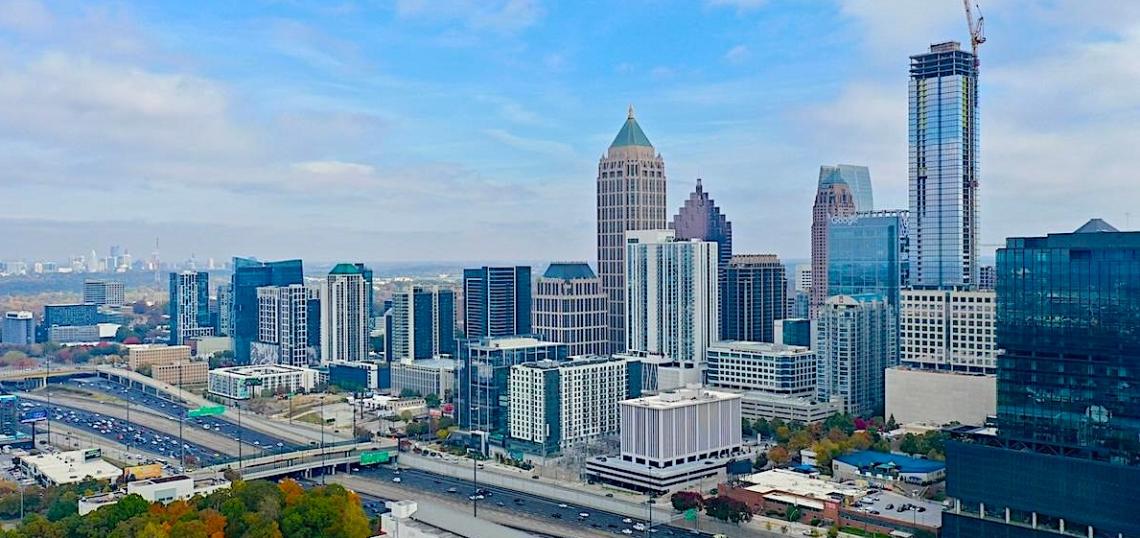
The City of Atlanta is nearing a population milestone it’s never before reached in nearly 200 years of existence.
That’s according to the Atlanta Regional Commission, which today released its annual metro-wide population estimates report, a reliable gauge for growth patterns in the region.
ARC’s findings show the metro is still growing but at a slower rate—a symptom, per the agency, of a widespread housing shortage and other factors.
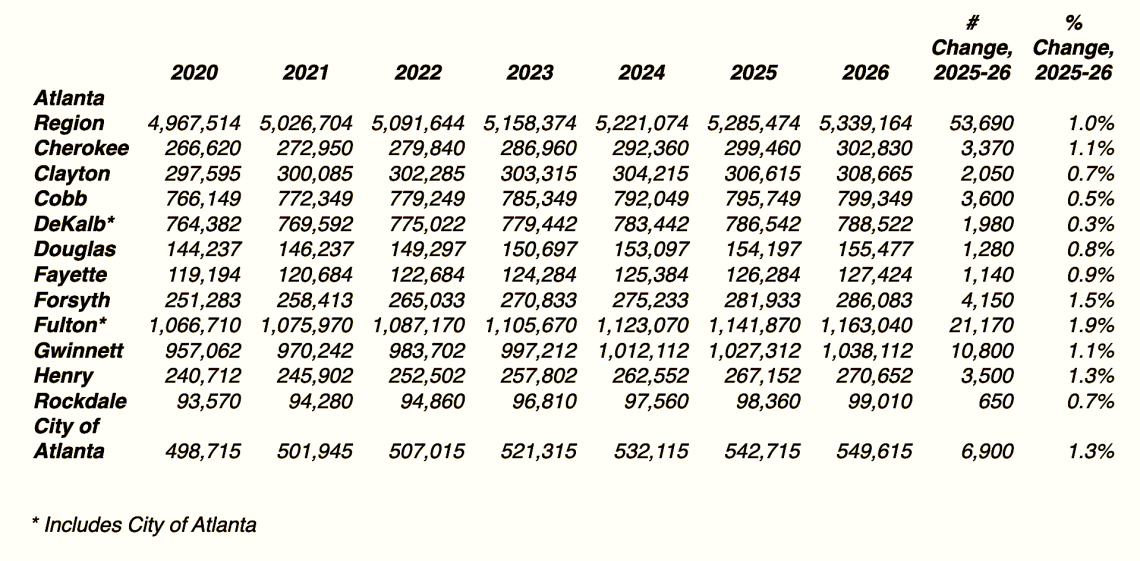
The City of Atlanta is a different story. Atlanta’s growth trajectory is more dramatic than in previous decades, and over the year ending in April, the city packed on an additional 7,000 residents for a population total of 549,615—the most in history. Per ARC officials, a multifamily housing boom in places such as Beltline neighborhoods and Midtown has contributed to the intown population uptick.
According to ARC’s tabulations, the population of the city proper has climbed more than 10 percent since the COVID-19 pandemic, packing on an additional 51,000 residents. (In so many places—including its freeways, unfortunately—the city simply feels more populated, right?)
Over the timeframe studied, ARC researchers found the City of Atlanta led the region in number of residential building permits issued (5,622), despite a much smaller land mass than most surrounding counties.
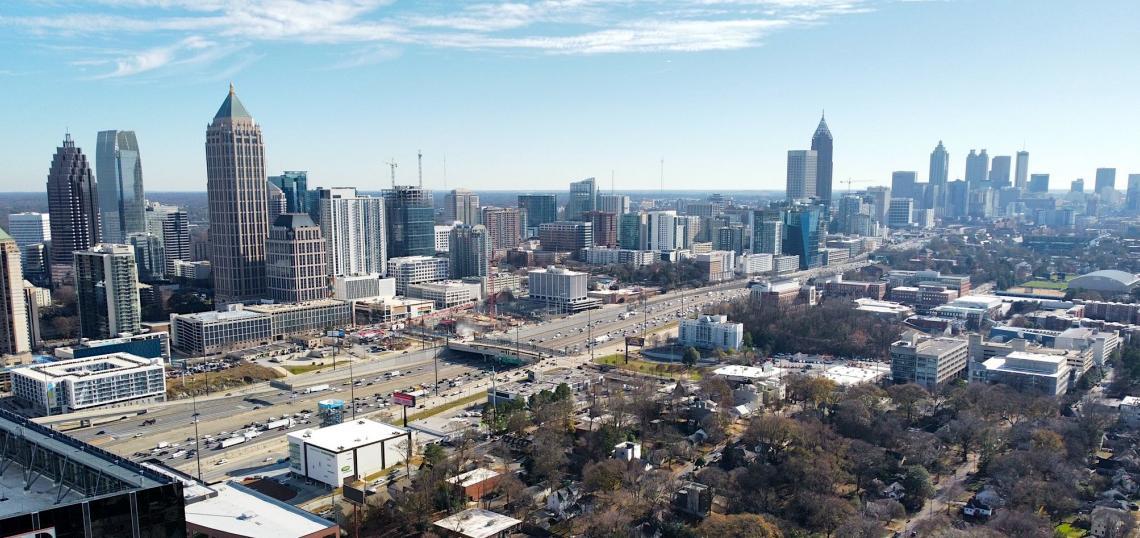 Midtown, left, and downtown Atlanta shown in the winter of 2020-2021. Photo courtesy of Conner Christie, @conner042505
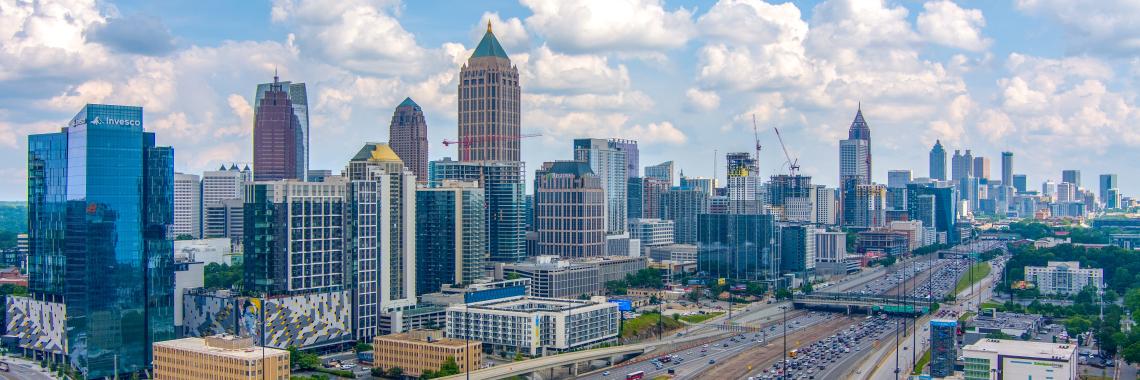 Growing skylines of Midtown and downtown Atlanta, as seen in 2023. Shutterstock
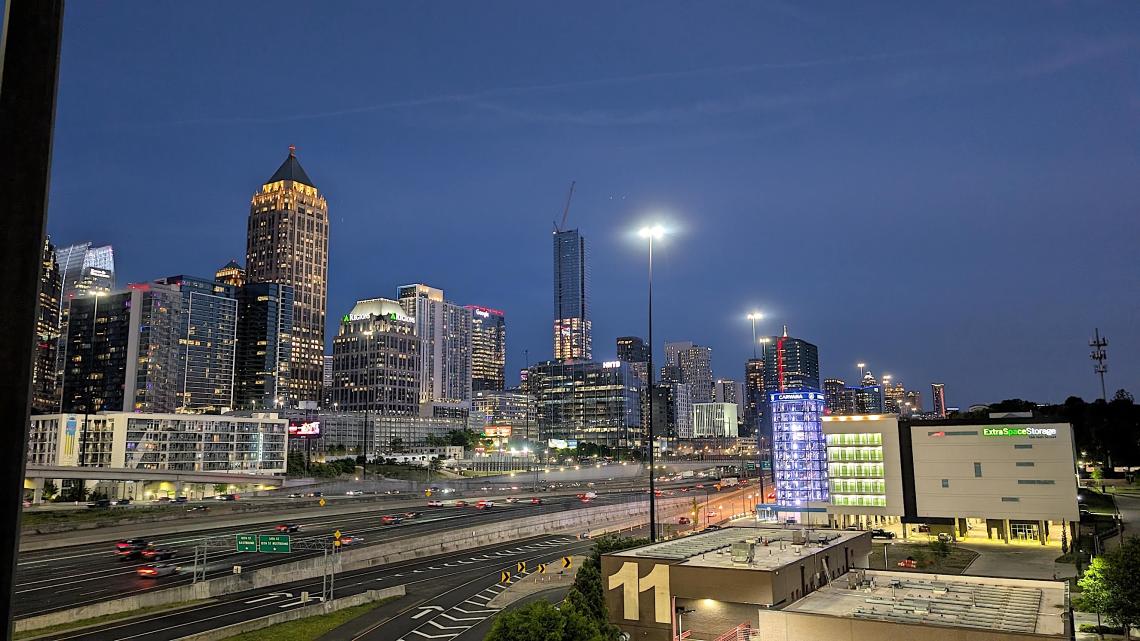 Midtown skyline with addition of Rockefeller Group's 1072 West Peachtree tower, as seen in April 2026. Josh Green/Urbanize Atlanta
The city’s growth rate (1.3 percent) did fall behind last year’s tally (2 percent), when the addition of sheer population (10,600) was higher. But every new Atlantan added represents a new benchmark for the city, following a previous peak of 497,000 residents in the 1970s.
More broadly, ARC found the 11-county metro added 53,690 residents over the year ending in April, with all counties showing growth (especially in exurbs and the urban core), for a total of 5.34 million. (Note: The U.S. Census Bureau defines metro Atlanta as 29 counties with a population of more than a million additional people—now good for sixth in the nation.)
The metro overall echoes a national population slowdown, per ARC officials, as tight housing supply and other factors continue to be issues.
Atlanta’s metro growth rate (1 percent) was a slight dip from last year (1.2 percent), which ARC officials attribute to several factors: declining home-building permits that remain below the historical average; a low housing supply that keeps prices elevated and dampens domestic migration; and the growing but flattening rate of new jobs across the Atlanta region.
The ARC’s population estimates, according to the agency’s chief research and innovation officer Ann Carpenter, will “give local leaders a clear, current picture of growth across the region and the data-informed foundation they need to plan for infrastructure, housing, and services.”
Some other interesting takeaways from the latest ARC report:
- The 24,015 residential building permits issued across the metro last year represented an 18-percent dip from a year earlier;
- Across the region, Fulton County (including the City of Atlanta) led overall population gain, growing by 1.9 percent. That was followed by Forsyth (1.5 percent), Henry (1.3 percent), and Cherokee and Gwinnett (both 1.1 percent) counties;
- Metro-wide building permit activity remains lower than pre-Great Recession permit levels and hovers below the 1980 to 2025 average annual level of 33,150;
- The region’s average annual growth rate of 1.2 percent between 2020 and 2026 is lower than the 1.5 percent of the 2010s, 2.0 percent in 2000 to 2010, and 3.3 percent in the 1990s.
- Fulton County (excluding the City of Atlanta) had the second-most housing permits issued at 4,038, with more than 900 more multifamily permits tracked than a year prior. “Much of [that] activity,” noted ARC researchers, “took place in the cities of Sandy Springs, Johns Creek, Union City, and College Park.”
Here's an ARC rundown, in numerical form:
 Atlanta Regional Commission
...
Follow us on social media:
Twitter / Facebook/and now: Instagram
• Atlanta climbs (back) to 6th largest metro in the United States (Urbanize Atlanta)