

When Dennis Tidwell made his townhome development pitch to the Cobb County Board of Commissioners at a June 16 zoning hearing, he began by saying this:
“Cobb County is facing a widening and well-documented gap between government-subsidized affordable housing and full market-rate housing,” said Tidwell, a development consultant with Bumblebee Capital and resident of the county himself. “In the middle are the people who keep this county functioning every single day: Teachers, nurses, first-responders, medical technicians, and the retail and service workers who support this entire corridor.”
Those people want to own homes, but Cobb County real estate prices have inflated to the point that’s impossible in many cases, per Tidwell and others. His team’s solution, as a workforce housing model? A pocket of relatively large new townhomes—15 total—that would claim 1.4 acres of vacant land at 1471 Bells Ferry Road, north of downtown Marietta. The site is currently a field off Interstate 75 that neighbors have considered a nuisance for years.
After hearing from John Pederson, Cobb County’s zoning division manager, who argued the requested density was too high for the Bells Ferry Road corridor and doesn’t conform with the area’s land use plan, the commissioners voted unanimously 5-0 last month to table Tidwell’s rezoning request until their monthly meeting Tuesday, allowing more time to mull it over.
“There is no attached housing on this part of Bells Ferry Road,” Pederson noted, “and we want to be consistent with the area’s character.”
It was a better outcome, in a way, for Tidwell and company than the Cobb County Planning Commission meeting on June 2, where officials voted 4-0 to deny his rezoning request, citing the land’s current zoning for single-family housing. That left the ball, in terms of approval or denial, in the county’s Board of Commissioners’ hands.
The project, as Tidwell sees it, speaks to a broader issue of homeownership attainability for working people who earn too much to qualify for grants or government subsidies but not enough to take on mortgages, even in suburbs far from Atlanta’s core. He believes the situation also points to an “unwritten density ban” and a “systemic practice” of rejecting change that could impact families across Georgia’s third largest county.
“The message being sent is unmistakable: Cobb County does not want workforce housing,” Tidwell wrote via email to Urbanize Atlanta. “It’s becoming clear why Cobb County has so few affordable or workforce‑housing programs. Unlike Atlanta—where housing is a priority and organizations like Invest Atlanta support it—Cobb County appears determined to keep low‑income and middle‑income families out.”
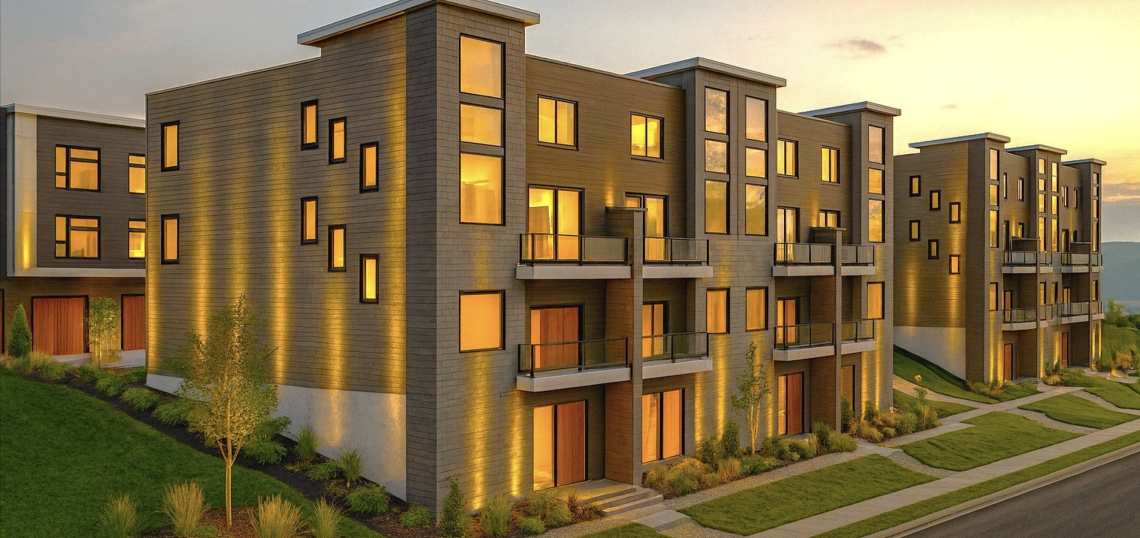
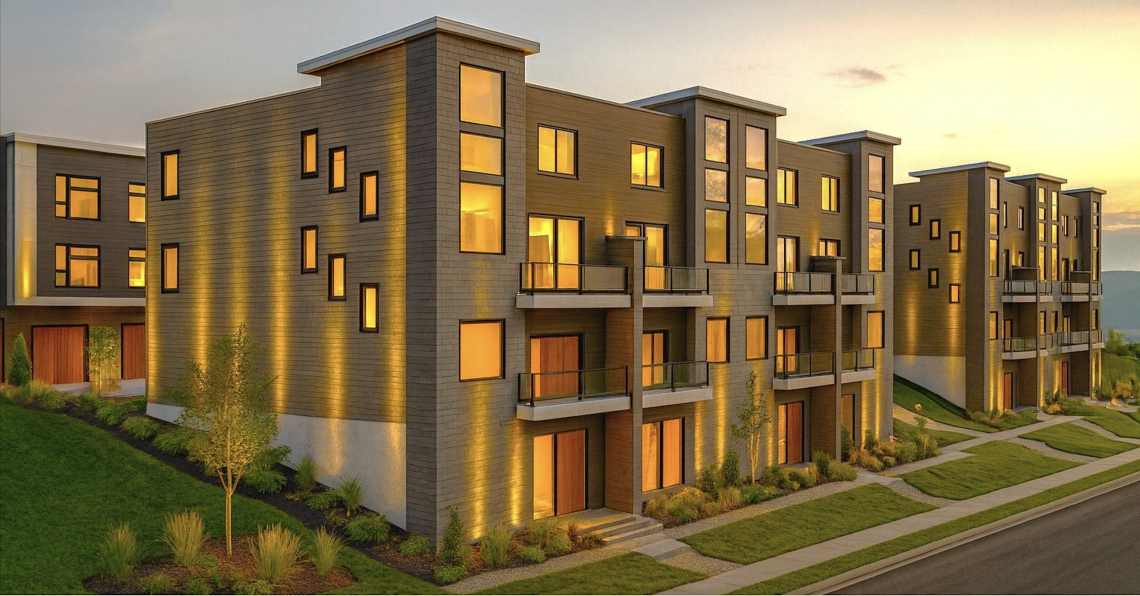 Planned look of facades at the 1471 Bells Ferry Road site, on currently vacant land. Courtesy of Bumblebee Capital; DT Designs
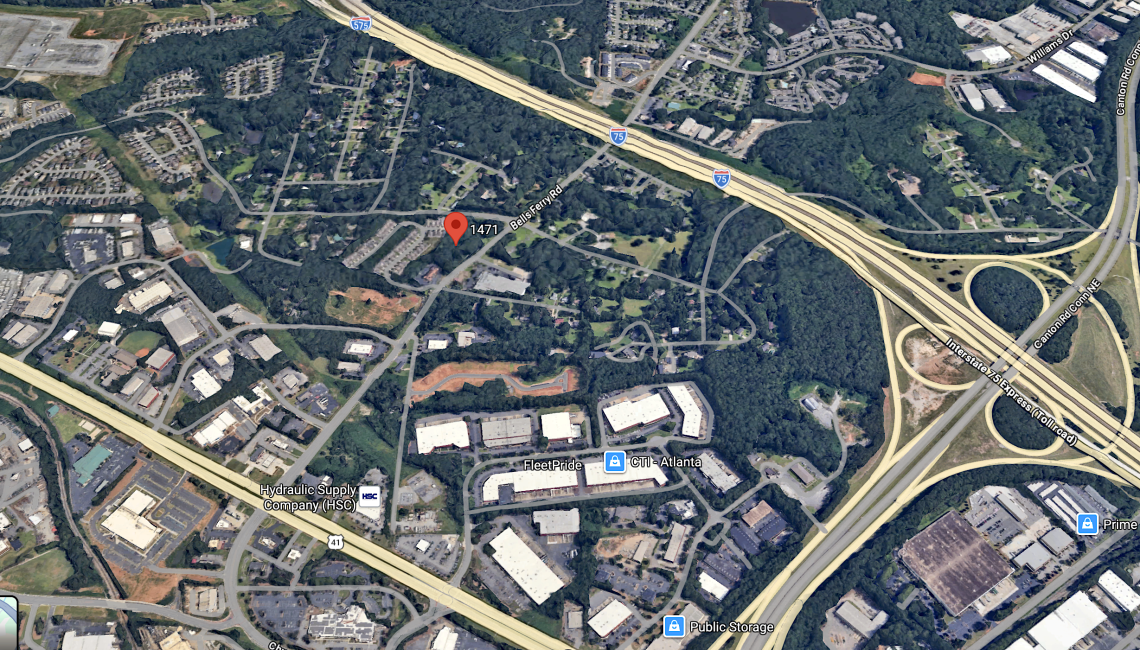 The 1.4-acre Bells Ferry Road site in Marietta, in relation to Interstate 75, U.S. Highway 41, and other landmarks. Google Maps
A Cobb County spokesperson said commissioners can’t discuss Tidwell’s proposal at this point, as it’s a standing zoning matter with a final decision pending.
During the June meeting the commission’s chairwoman, Lisa Cupid, acknowledged the situation is “difficult,” as she’s hearing from constituents “earning six figures” who can’t afford to buy housing in Cobb County now.
“A lot of times we hear that there’s a supply and demand issue,” Cupid said at the meeting. “So we’ve got to build, you know… If we’re not building, it’s just going to shoot up the price point.”
Commissioner Erick Allen pointed to attributes of Tidwell's proposal before worrying aloud the townhome density (10.7 units per acre) should be more in line with a cottage-style, single-family home community next door (5.3 units per acre).
“I would like to hold for one month to do a little more work on how we can make this work,” Allen told fellow board members. “I would not want to outright deny at this point.”
Prior to the June 16 meeting, Bumblebee Capital had tweaked its designs to subtract one townhome and meet previous county requests and requirements, including stormwater improvements between the area’s residential and commercial nodes, according to Tidwell. Removing even one more unit would make the project financially unviable or push its prices higher than metro Atlanta workforce-housing ceilings, based on 80 to 120 percent Area Median Income standards, per the development team.
According to Tidwell, the 15 three-story townhomes (some with additional basement levels) in current plans would range between 2,400 and 2,700 square feet.
They would include either four or five bedrooms, geared toward families, with tentative pricing between $477,000 and $499,000—price points that, according to Tidwell, align with 120 percent AMI maximums. To help sweeten the pot and address earlier county concerns, developers are offering a land‑deed restriction “to guarantee long‑term affordability,” per Tidwell.
“These figures represent the ceiling, not the floor,” he said. “Anything above those limits is not workforce housing.”
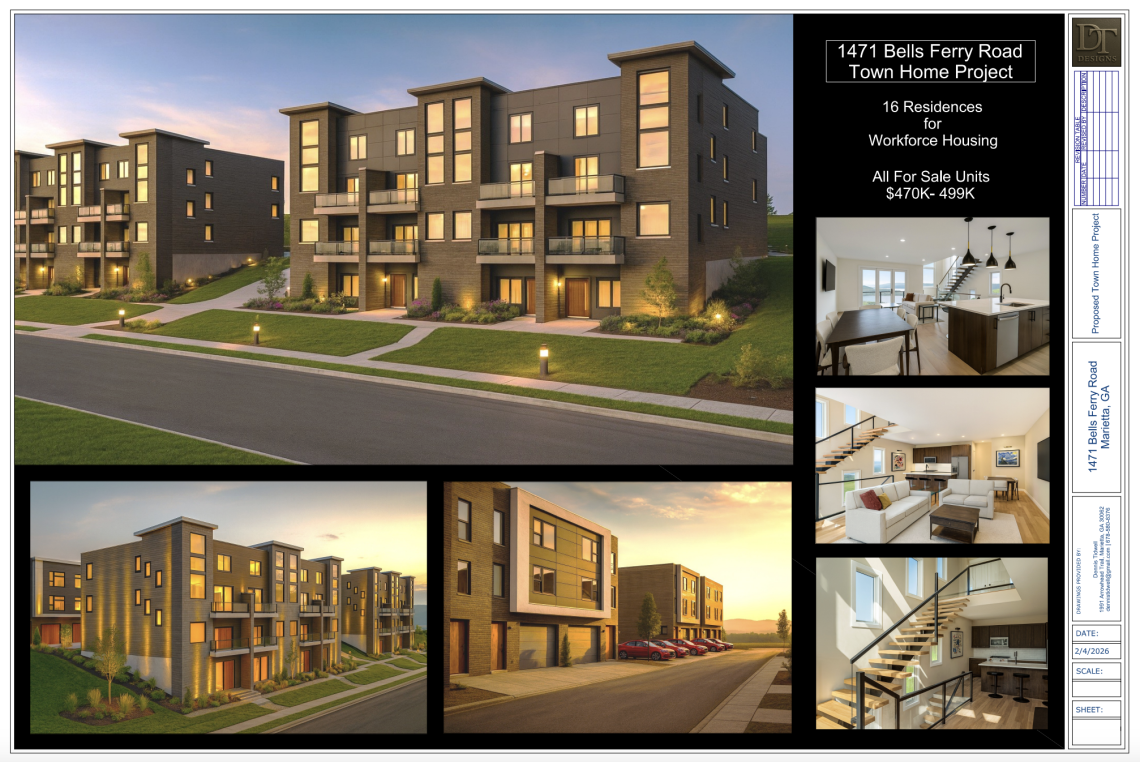 Courtesy of Bumblebee Capital; DT Designs
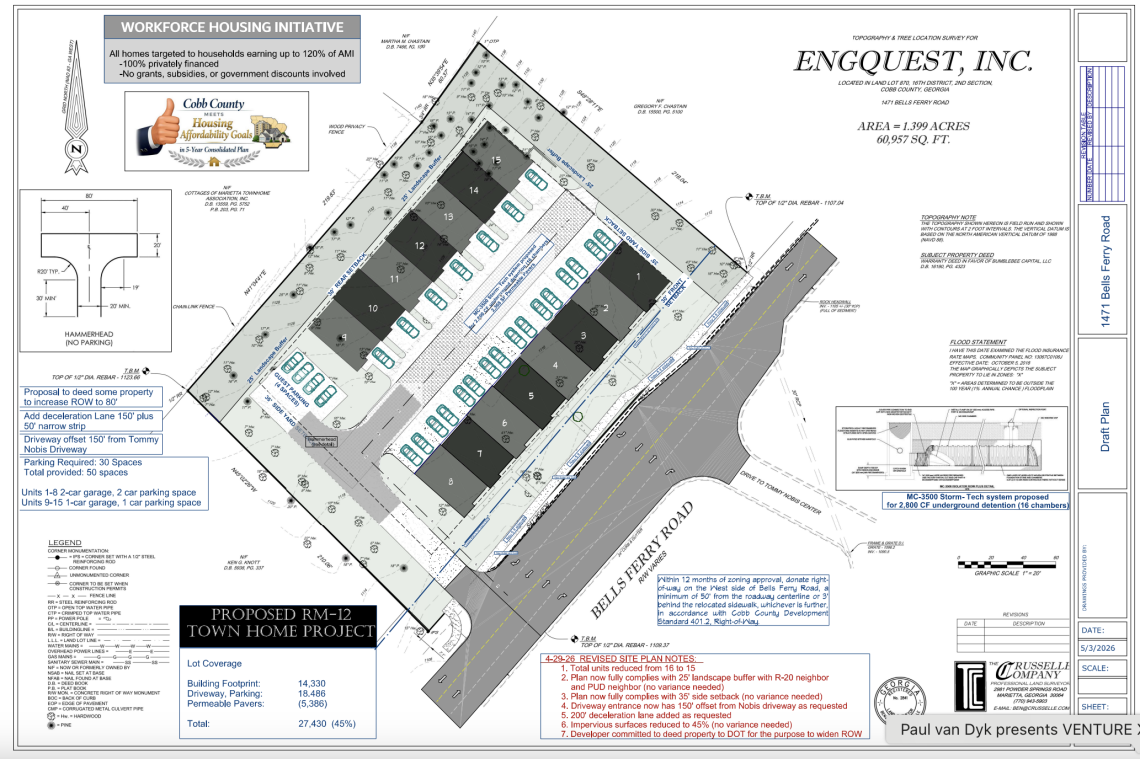 Breakdown of the current 15-unit townhome proposal. Courtesy of Bumblebee Capital
Redfin pegs the average sales price for the site’s 30066 zip code at about $458,000 right now—a year-over-year uptick of 1.5 percent—but that includes all housing. According to Tidwell, the average sales price for four-bedroom homes in the zip code has risen to $760,000, meaning that “even the [proposal’s] upper workforce‑housing limits are significantly below the prevailing market.”
As Cobb County developments go, Tidwell says the townhome project is unique in that it has vocal and written support from the Cottages at Marietta, a neighborhood of 50 single-family homes next door, which has labored to keep the site clean and safe for more than a decade. “[Neighbors have] repeatedly asked the county to address long‑standing homeless encampments on the parcel,” per Tidwell. “Residents report nightly screaming, open fires, open drug use, and visible weapons.”
Cobb’s Board of Commissioners is scheduled to vote Tuesday on whether to allow the townhome project the RM-12 zoning Bumblebee Capital has requested. The planning commission’s earlier recommendation was to reduce density to an RM-8 zoning designation. According to Tidwell, that would cut the townhome tally to 10, balloon prices by $50,000 to $60,000 per home, and knock the project out of “missing middle” housing parameters entirely.
“Developers will move on to other areas,” said Tidwell. “The real loss here is for Cobb residents—especially young families—who continue to face an affordability crisis that county leadership has acknowledged for years.”
...
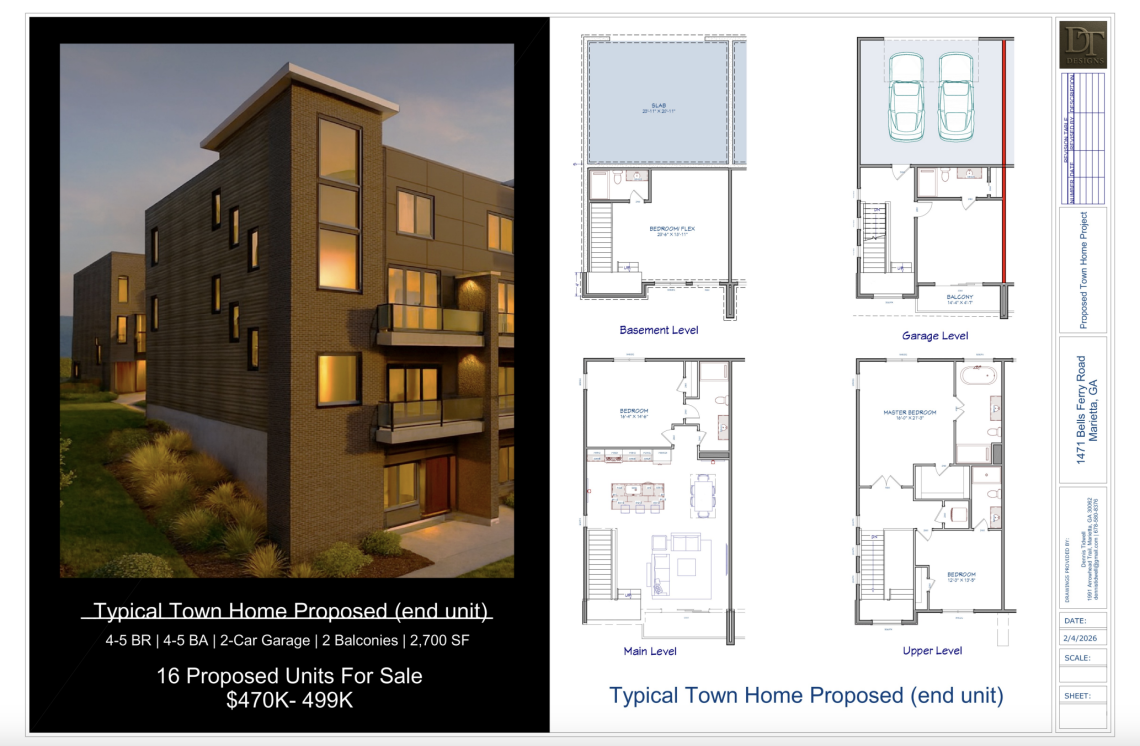 Courtesy of Bumblebee Capital; DT Designs
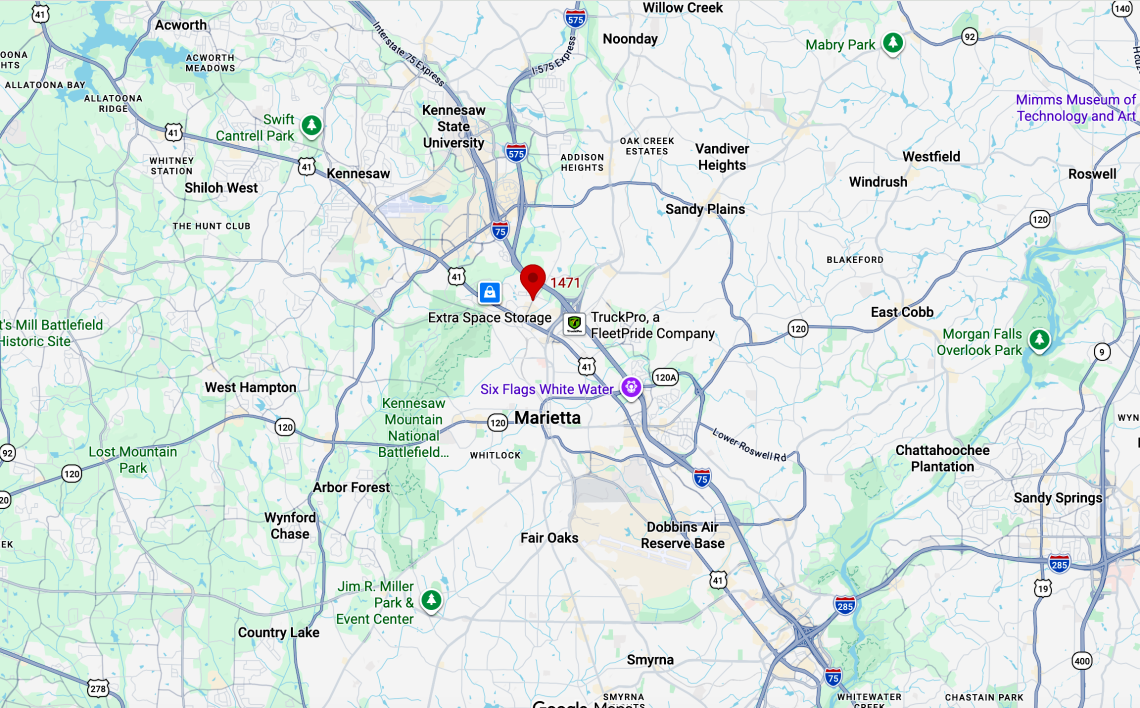 The 1471 Bells Ferry Road site northwest of Atlanta. Google Maps
...
Follow us on social media:
Twitter / Facebook/and now: Instagram
• Cobb County news, discussion (Urbanize Atlanta)