

A corporate windfall that’s being called Gwinnett County’s largest capital investment in history is expected to eventually spawn hundreds of high-wage jobs and an economic impact totaling several billion dollars, project officials announced today.
Following a national search, Brussels-based global biopharmaceutical company UCB has selected Rowen—a planned 2,000-acre mini city with a research and education focus off Ga. Highway 316 in Dacula—as the site of its new U.S. biologics manufacturing campus.
Officials with Gwinnett County, the Rowen Foundation, and State of Georgia called the project’s first tenant signing “a defining milestone” in Rowen’s quest to emerge as a mixed-use life sciences hub in eastern Gwinnett.
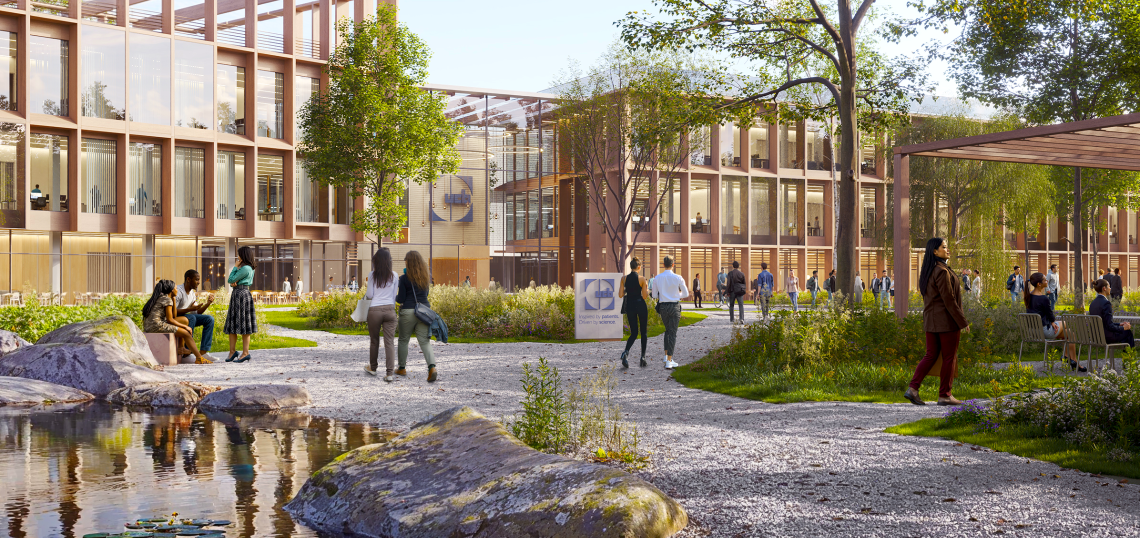
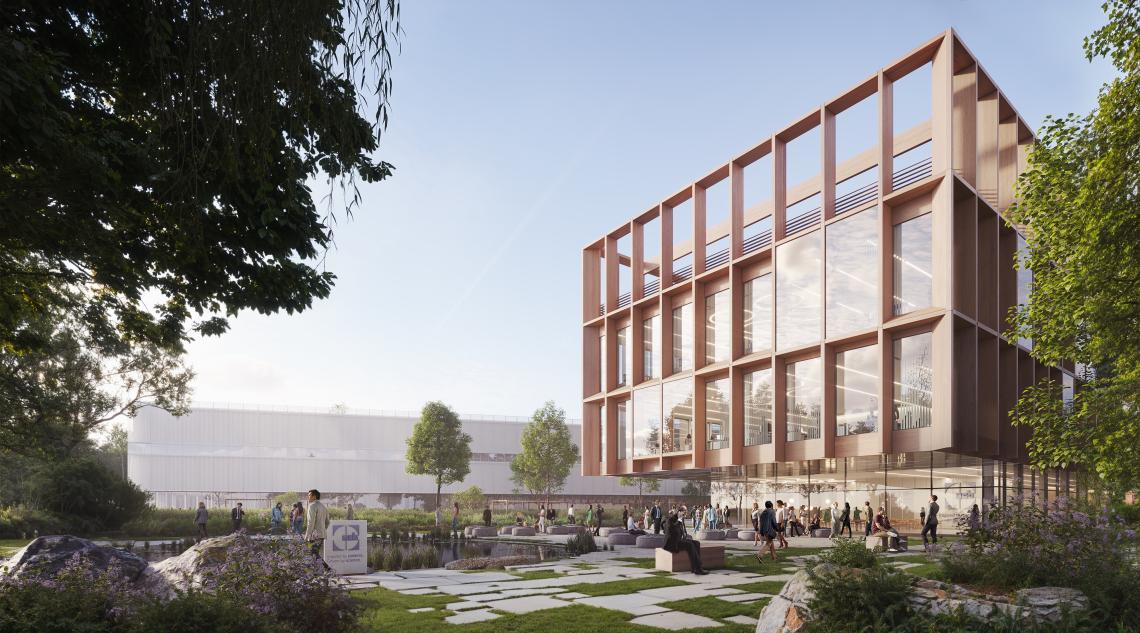
UCB plans to spend roughly $2 billion to develop a cutting-edge, 460,000-square-foot biologics facility that will generate more than 330 permanent jobs over the next several years and hundreds more during construction phases, according to officials.
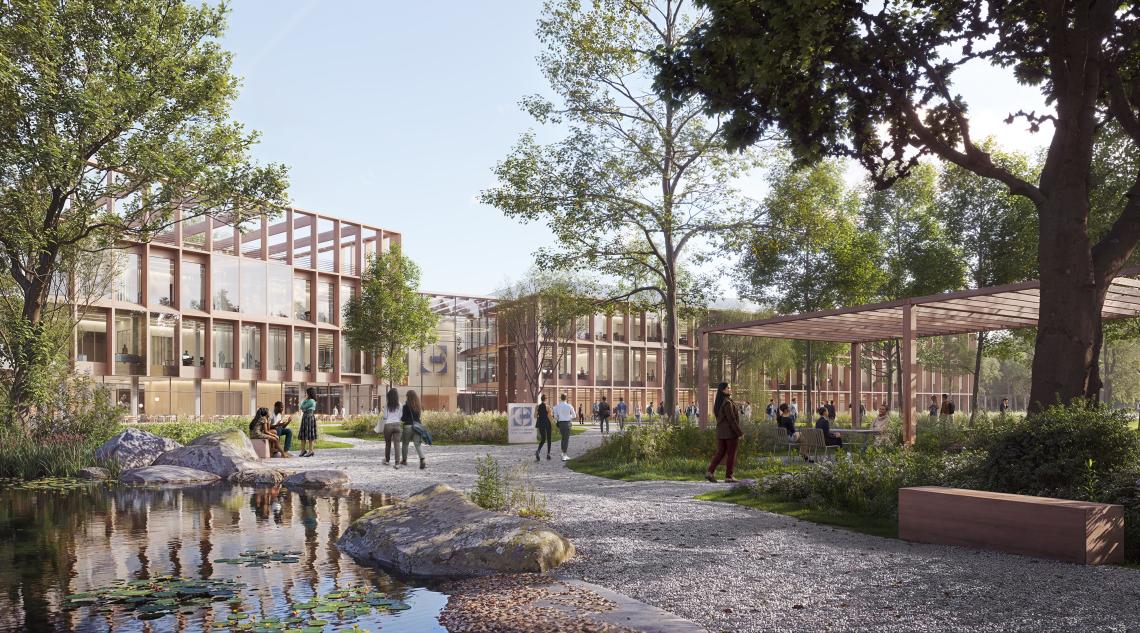 According to project officials, UCB’s 460,000-square-foot facility in Gwinnett County is being designed to have “a campus feel” on a wooded site at Rowen Parkway’s end. Courtesy of Rowen Foundation/UCB
The company’s focus is to develop innovative medicines—with the help of advanced manufacturing technologies including AI, robotics, and automation—for people grappling with severe autoimmune and neurological conditions. The Georgia manufacturing campus will help support growing demand across UCB’s portfolio and pipeline, per today’s announcement.
The campus footprint calls for claiming 79 acres off a main road, Rowen Parkway, within walking distance of the planned multipurpose Rowen Village.
But don’t brush off those resumes just yet. According to Rowen officials, design and construction of UCB’s campus is expected to take six to seven years alone.
Rowen’s long-term vision for life sciences innovation and collaborative environment were selling points, per project backers. According to Jean-Christophe Tellier, CEO of UCB, the biologics campus is forecasted to eventually generate roughly $5 billion in total economic impact. The company’s U.S. headquarters has been based in Georgia for more than three decades.
“We're strengthening our biologics manufacturing capabilities, supporting our innovation pipeline, and creating high-quality jobs in a state that offers outstanding talent, a strong manufacturing tradition, and an ecosystem designed for sustainable, long-term success,” said Tellier in a prepared statement.
 Courtesy of Rowen Foundation/UCB
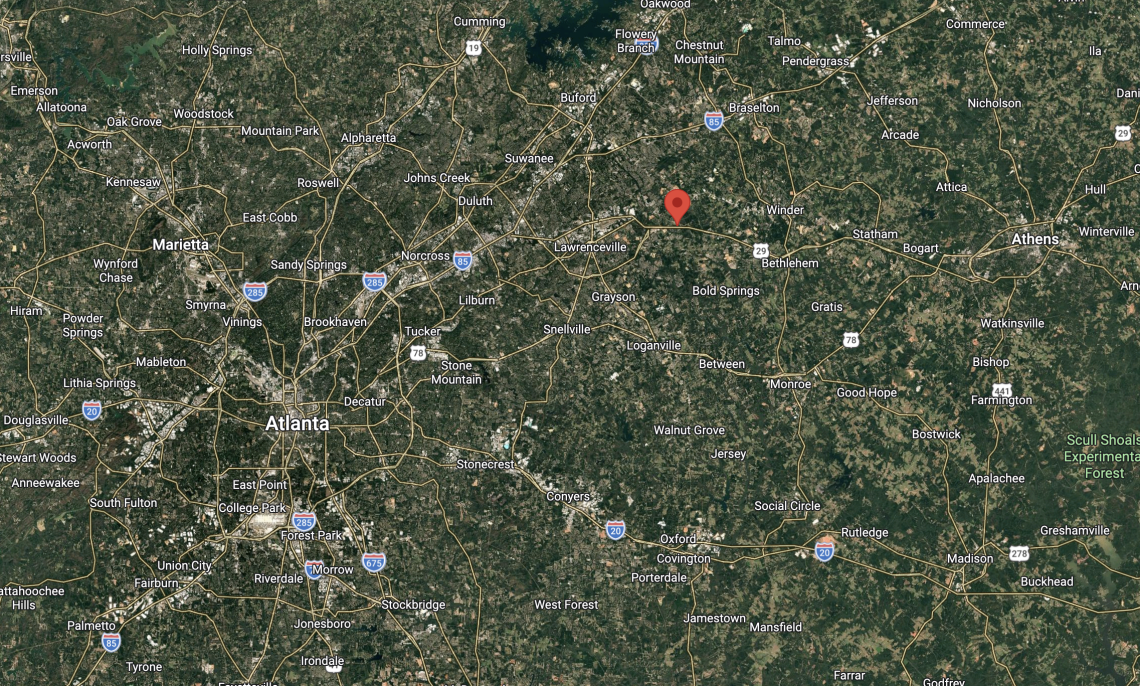 Rowen's 2,000-acre location off Ga. Highway 316 in Gwinnett. Google Maps
To date, Gwinnett County has committed roughly $174 million in incentives and infrastructure investments to support UCB’s project, including property tax abatements, fee waivers, and utility improvements, per officials. Recruitment efforts were led by the Georgia Department of Economic Development, alongside the Rowen Foundation, Gwinnett County, Partnership Gwinnett, the Metro Atlanta Chamber, and Georgia Power.
More than 1,900 acres at Rowen remain available. The project initially broke ground with much fanfare in December 2022.
Situated 35 miles from Atlanta, Rowen’s site is capable of supporting 22 million square feet of development overall, equivalent to almost 17 Bank of America Plaza towers, Atlanta’s tallest building, per project leaders.
Last year, Rowen completed a $32-million infrastructure project described by officials as “complete streets” across its former woodlands between Atlanta and Athens. Considered phase one of Rowen’s buildout, the two miles of finished roadway, greenspaces, and seven miles of multi-use pathways have made 800 acres of the property accessible to the public, while putting infrastructure in place for development. All utilities including power, water, sewer, fiber, and natural gas are in place for the section in question as well.
Ultimately, Rowen is envisioned as a mix of lab, office, clean manufacturing facilities, and civic spaces, alongside a mix of multifamily buildings, cafes, start-up hubs, parks, and public trails. Project heads have said the “gamechanger” concept will likely be a multi-decade buildout—up to 40 or 50 years, given the scope—but could come quicker, depending on market demand.
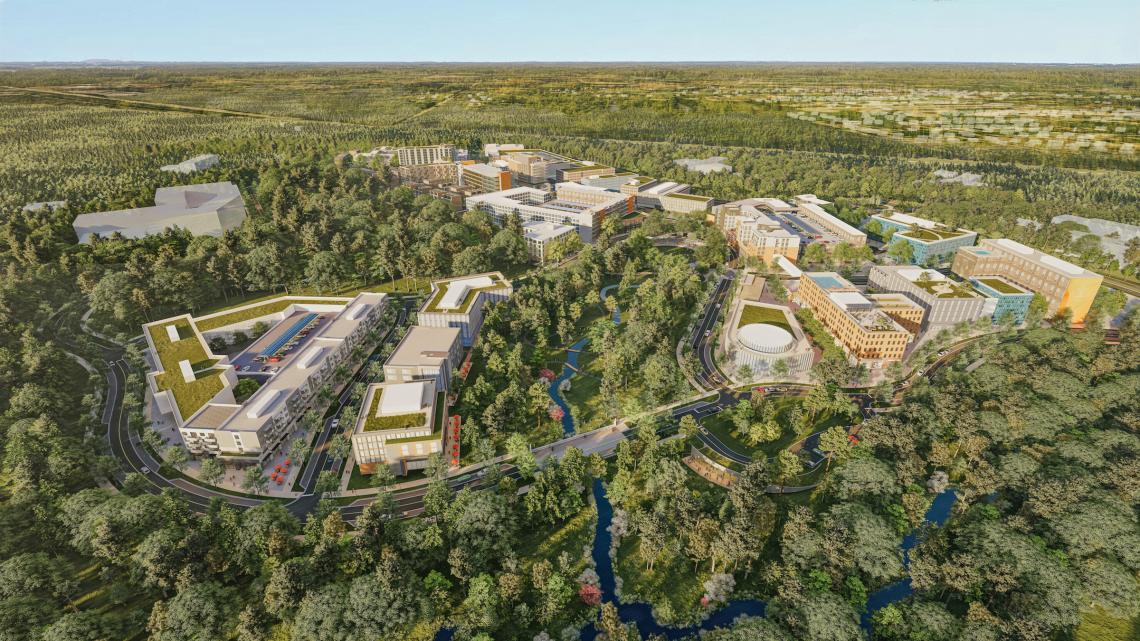 Rowen Village’s phase one is planned as an urban hub within Rowen, offering office, lab, research, and start-up space “intermingled with amenities such as public gathering space, parks, retail storefronts, multifamily residential, hospitality, and restaurants,” project leaders have said. Courtesy of The Rowen Foundation
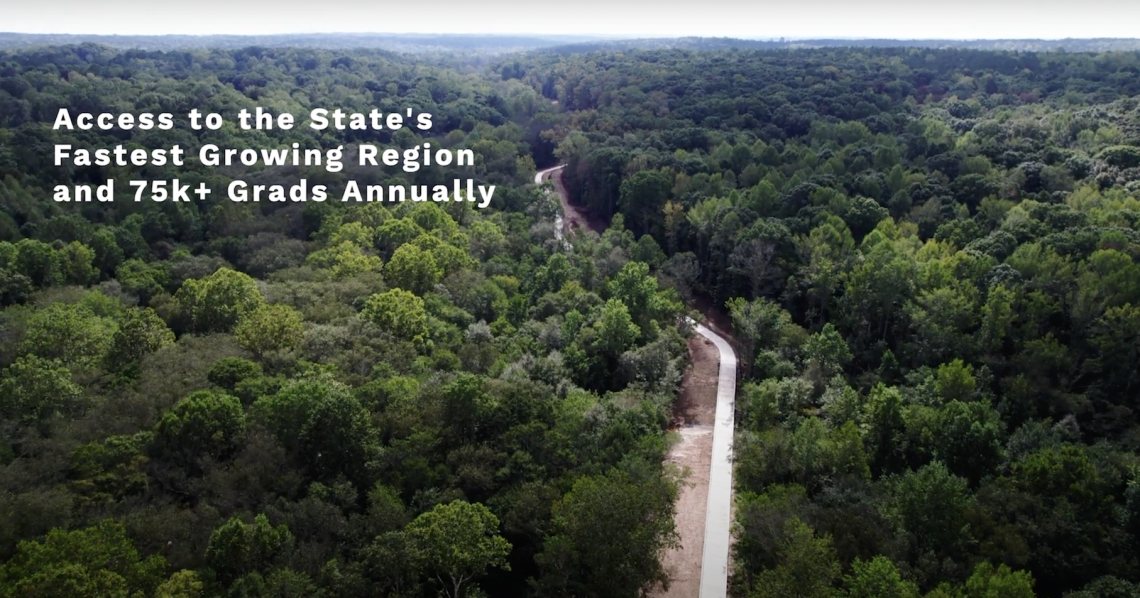 Aerial scenes included in a recent Rowen marketing video. Rowen Foundation/YouTube
Rowen’s board of directors, which governs the Rowen Foundation, is made up of leaders from the University of Georgia, Georgia Tech, Emory University, Georgia Gwinnett College, and others who are advancing the project for its economic and jobs-creation potential.
The Rowen Foundation says the project could ultimately produce 100,000 jobs across Georgia and contribute between $8 and $10 billion annually to the state’s economy.
...
Follow us on social media:
Twitter / Facebook/and now: Instagram
• Gwinnett County news, discussion (Urbanize Atlanta)